 Written by
 I remember sitting in my office at two in the morning, the smell of floor cleaner and old garlic hanging heavy in the air, staring at a stack of crumpled invoices that made absolutely no sense. I had spent twelve hours on the floor, but I was losing the battle to a pile of paper that didn’t tell me if I was actually making money or just donating it to my suppliers. Everyone tells you that you need some expensive, cloud-based, shiny new software to manage your margins, but that’s a lie sold by people who have never had to deal with a broken walk-in or a chef who forgets to log a spoiled crate of sea bass. Learning how to keep kitchen records isn’t about mastering a complex digital interface; it’s about having the discipline to track the truth before the truth decides to bankrupt you.
I’m not here to sell you a subscription or a dream of effortless automation. I’m going to show you the gritty, unglamorous reality of what actually works when the dining room is full and your hands are dirty. We are going to talk about the paper and the grit—the specific, manual habits that ensure you know exactly where every cent is hiding.
Why Digital Food Logs Save More Than Just Time

When I was running my sixteen-seater, our “records” were a stack of grease-stained notebooks and a prayer. If a health inspector walked in, we’d scramble like children caught with their hands in the cookie jar, frantically trying to reconstruct what temperature the walk-in fridge had been at 3:00 AM. It was a recipe for a panic attack. Transitioning to digital food logs isn’t about being “techy”; it’s about having a spine. It turns a chaotic scramble into a calm, organized reality where your data is actually there when you need it.
The real magic isn’t just the time saved on scribbling; it’s the peace of mind during kitchen audit preparation. When you use a system that automates food safety compliance, you stop treating sanitation like a chore and start treating it like the shield it is. It’s the difference between guessing if your prep station was cleaned and knowing, with timestamped certainty, that it was. You aren’t just checking boxes to satisfy a bureaucrat; you are building a paper trail that proves you actually give a damn about what’s landing on your customers’ plates.
The Truth About Daily Kitchen Checklists and Accountability
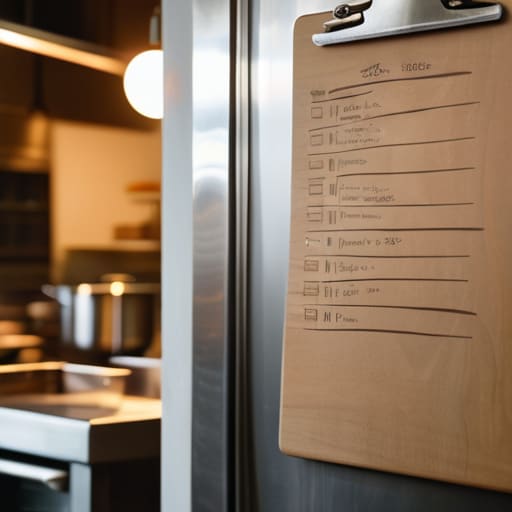
I’ve seen it a thousand times: a beautiful, handwritten clipboard hanging on the walk-in door, covered in half-hearted ticks and scribbles that look more like a doctor’s prescription than actual data. Most people think daily kitchen checklists are just a way to keep the health inspector happy, but that’s a narrow way to look at it. In my sixteen-cover room, those lists weren’t about bureaucracy; they were about sanity. When you’re short-staffed on a Friday night, you don’t have time to wonder if the prep cook actually checked the fridge temperatures or if the line was wiped down properly.
The real magic happens when accountability moves from a suggestion to a standard. If a junior chef knows that their name is tied to a specific sanitation monitoring task, they treat it with more respect. It stops being “someone else’s job” and becomes a matter of professional pride. You aren’t just checking boxes to satisfy a regulator; you are building a culture where everyone understands that consistency is the only thing standing between a successful service and a total disaster.
The Five Pillars of Not Losing Your Shirt in the Pantry
- Stop treating your waste bin like a black hole. If your team isn’t recording every bruised tomato and every overcooked steak, you aren’t managing your margins—you’re just watching your profit evaporate. A waste log isn’t a way to punish staff; it’s the only way to see if your prep levels are delusional or if your supplier is short-changing you on the weight.
- The “Eyeball Method” is a lie that will bankrupt you. I spent years thinking I knew exactly how much protein was in the walk-in just by looking at the crates, and I was wrong every single time. You need a hard number for your weekly stocktakes. If you don’t know your theoretical versus actual usage, you’re essentially running a charity for whoever happens to be hungry.
- Make your temperature logs a habit, not a chore. I’ve seen too many young chefs treat the HACCP sheets like a creative writing exercise, filling them out all at once five minutes before they leave. If they aren’t checking those fridges at the start of the shift and mid-service, they aren’t being “busy”—they’re being dangerous, and one health inspector’s visit will cost you more than a year of meticulous record-keeping.
- Tighten the leash on your delivery notes. The moment the driver leaves, the record is set in stone. If your receiving clerk isn’t checking the weight of the meat against the invoice and noting the quality of the greens immediately, you’re paying premium prices for sub-par produce. A discrepancy of fifty pounds across a month of deliveries is the difference between a good month and a month where you can’t pay the electric bill.
- Separate your labor from your logistics. Keep your staff rotas and your prep lists in the same orbit as your food costs. If you see your food cost spiking, the first thing you should look at isn’t just the price of scallops, but whether you had three extra hands on the line during a Tuesday service when you only needed one. The records should tell you the story of why the money left the building.
The Bottom Line on Keeping Track
If you aren’t tracking every ounce of protein and every cent spent on produce, you aren’t running a kitchen—you’re just running a charity that happens to serve dinner.
Paperwork isn’t just “admin” to be shoved in a drawer; it’s the only way to spot the slow bleed of waste before it becomes a hemorrhage in your bank account.
Good records take the guesswork out of the morning rush, ensuring your staff knows exactly what they’re working with so you aren’t left apologizing to a guest for a shortage you didn’t see coming.
The Cost of Guesswork
If you’re relying on a chef’s memory or a scrap of paper stuck to a walk-in door to tell you what’s in your pantry, you aren’t managing a kitchen—you’re just waiting for a bad month to happen. Real records aren’t about bureaucracy; they are the only way to see the money leaking out of your prep bins before it’s too late to stop it.
Rosalind Achterberg
The Ledger and the Line

At the end of the day, keeping records isn’t about satisfying some bureaucratic urge or making life harder for your sous chef; it’s about visibility. You can have the most talented brigade in the city, but if you aren’t tracking your waste, your yields, and your labor costs against your actual sales, you are essentially flying blind through a fog bank. Digital logs, meticulous checklists, and honest inventory counts are the only things that separate a sustainable business from a beautifully cooked disaster. You need to know exactly where the money is leaking—whether it’s through a poorly managed prep list or a fridge left open too long—before that leak becomes a flood that drowns your profit margins.
I know it feels like a chore when the tickets are flying and the dining room is humming, but remember that the numbers are just as much a part of your recipe as the salt or the acid. Respect the paperwork as much as you respect the produce. If you treat your records with the same discipline you bring to your mise en place, you aren’t just surviving the service; you are building something that lasts. A restaurant is a fragile, living thing, and accurate records are the bones that keep it standing when the heat gets turned up. Now, go check your stock levels—and then go get some sleep.
Frequently Asked Questions
I’ve got a team that’s been with me for years; how do I get them to actually use these logs without making them feel like I’m breathing down their necks?
You’ve got a team you trust, which is a blessing, but don’t mistake loyalty for an excuse for sloppy paperwork. If you frame these logs as “management checking up on you,” they’ll resent them. Instead, frame them as the shield that protects them. When a supplier short-changes you or a prep cook gets blamed for a mistake, those records are the only way to prove what actually happened. Make the data work for them, not against them.
When does the paperwork stop being "good management" and start becoming a distraction that pulls my chefs away from the actual cooking?
It stops being management the moment your chef is staring at a screen instead of a pan. If they’re spending twenty minutes logging every sprig of parsley while the risotto is turning to glue, you’ve failed. Paperwork should be a quick, sharp tool—like a well-honed knife—not a heavy, blunt instrument. If the data entry isn’t feeding the bottom line or preventing waste, it’s just expensive theater that’s killing your food.
For a small kitchen with razor-thin margins, is it actually worth investing in expensive inventory software, or can I get by with a well-kept notebook and a bit of discipline?
Look, I ran a sixteen-cover room for nearly three decades. I’ve used everything from grease-stained notebooks to fancy tablets. If you’re truly tight on cash, a notebook and a disciplined chef won’t kill you, but don’t mistake “discipline” for a magic wand. Software doesn’t fix a thief or a wasteful prep cook; it just shows you exactly how much they’re costing you. Buy the software if you can afford the monthly fee—it’s cheaper than guessing.
