 Written by
 I remember a Tuesday night in my old sixteen-seat dining room, watching a couple walk in at 9:45 PM with nothing but wide eyes and a hunger that felt like a personal insult. They thought they were just “grabbing a bite,” but they didn’t realize they were asking me to restart a whole engine just for two plates of pasta. Most people think restaurant schedules are just arbitrary numbers on a Google listing, but they don’t understand how restaurant timings work from the perspective of the person paying the electric bill. It isn’t about when the chef feels like chopping onions; it’s a delicate, often brutal calculation of labor costs versus seat turnover.
I’m not here to give you the polished, PR-friendly version of why a kitchen closes at ten or why a reservation window is so narrow. I’ve spent thirty-eight years on the wrong side of the pass, and I’ve learned that every minute of service is a battle against the clock and the bottom line. In this series, I’m going to pull back the curtain on the real mechanics of the clock—from the logic of prep shifts to the reason why a “late arrival” can actually break a small business.
The Invisible Math of Managing Table Turnover Rates
When people sit down, they think they’re just buying a meal, but what they’re actually doing is occupying a piece of real estate that has a very specific expiration date. In my old sixteen-cover room, I didn’t view a table as a seat; I viewed it as a timed unit of production. If a party of four lingers over a single bottle of Pinot for three hours without ordering another course, they aren’t just being “relaxed”—they are effectively stealing the profit margin from the next booking. Managing table turnover rates isn’t about rushing the guest or being rude; it’s about the delicate, often invisible choreography of ensuring the kitchen doesn’t get hit by a tidal wave all at once.
It’s a constant tug-of-war between the dining room and the line. If the front of house is too slow with the check, the kitchen sits idle, wasting expensive labor; if they’re too fast, the back of house gets crushed by a sudden surge of orders. Real restaurant service flow optimization happens when the server knows exactly when to swoop in with the dessert menu to nudge the evening forward, without ever making the guest feel like they’re being pushed out the door.
Why Peak Dining Hours Management Is a Survival Tactic
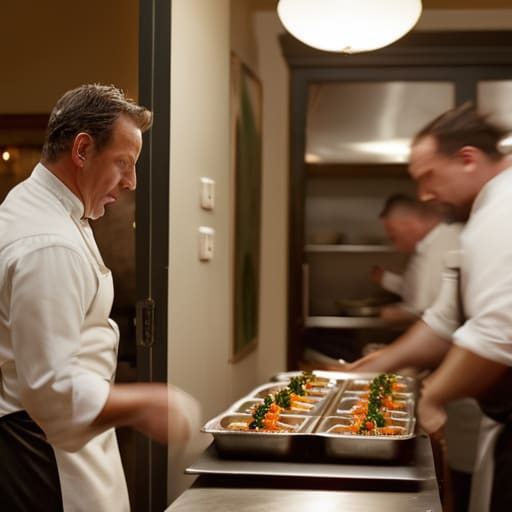
When people talk about peak dining hours management, they treat it like a suggestion for when to expect a crowd. In reality, it’s a battle for survival. If you miss your window or misread the rhythm of a Friday night, you aren’t just losing a few sales; you’re burning through your most expensive resource: your people. A disorganized rush creates a domino effect where the front of house vs back of house timing falls completely out of sync. When the kitchen is screaming for tickets and the floor staff is apologizing for slow drinks, you aren’t just providing bad service—you’re actively eroding your profit margins through wasted motion and stressed-out staff who will likely quit by Monday.
It’s about maintaining a steady kitchen workflow efficiency that prevents the dreaded “bottleneck.” I’ve seen too many young owners try to stretch their service too thin, thinking they can handle a surge by simply working harder. You can’t outwork a bad schedule. If your timing is off, you end up with a kitchen that is either idling and wasting labor costs, or drowning and producing sub-par plates that ensure no one ever books a table with you again.
Five Hard Truths About the Clock and Your Table
- Stop treating your “Last Orders” as a suggestion. If your kitchen closes at 10:00 PM, that is when the heat goes off, not when the last guest finishes their dessert. If you allow a table to linger until 10:15, you aren’t being hospitable; you are paying your prep cooks to stand around in a dark kitchen for forty minutes of unpaid labor.
- The “Golden Hour” isn’t just about the rush; it’s about the lull. A smart floor manager knows that the gap between 5:30 and 7:00 PM is when the real work happens—the heavy prep, the briefing, and the mental reset. If you try to squeeze service into those gaps, you’ll burn through your staff before the Saturday rush even hits.
- Respect the “Pre-Shift” as much as the “Service.” I used to see young managers skip the briefing to save ten minutes, only to spend two hours fixing mistakes caused by a server who didn’t know the daily special had run out. Ten minutes of standing in a circle is cheaper than a dozen comped mains.
- Learn to read the “Slow Eater” vs. the “Lingerer.” There is a massive difference between a couple enjoying a slow, meaningful meal and a group of four who have finished their food but are now using your tables as a cheap living room. One is a guest; the other is a drain on your margin. You have to train your staff to nudge the latter without being rude.
- Buffer your bookings, or they will bury you. If you book tables back-to-back with zero margin for error, one broken glass or one slow kitchen station will trigger a domino effect that ruins the entire night. A ten-minute gap between seatings isn’t “wasted time”—it is the breathing room that keeps your staff from snapping and your kitchen from crashing.
The Reality Behind the Clock
Timing isn’t about rushing your dessert; it’s about the delicate math of ensuring the kitchen doesn’t collapse under a sudden surge while making sure the staff isn’t standing around burning through labor costs during a lull.
A restaurant’s closing time is a hard boundary dictated by the bank account, not a suggestion, because every extra hour of lights, heating, and wages must be justified by a margin that actually exists.
Respecting the rhythm of service—like not asking for a full tasting menu ten minutes before the pass closes—is the simplest way to support the people who are working themselves to the bone to keep the doors open.
The Illusion of the Open Sign
Customers see a door and think it means service is available; I see a door and see a math problem where every minute a table sits empty is a leak in the roof, and every minute they linger after the kitchen has gone quiet is a theft of my staff’s dignity and my profit margin.
Rosalind Achterberg
The Clock and the Kitchen
At the end of the day, managing timings isn’t about being a drill sergeant with a stopwatch; it’s about balancing the delicate math of survival. We juggle turnover rates to keep the lights on, manage peak hours to prevent the kitchen from collapsing under its own weight, and set closing times to ensure our staff aren’t burning out for a margin that barely covers the electricity. Every decision, from the length of a reservation slot to the moment the last order is called, is a calculated move to protect the viability of the business. When you see a restaurant pushing you to move along, or refusing a table at 9:45 PM, remember that they aren’t being rude—they are simply trying to stay in business.
If you take anything away from this, let it be that the magic you feel when you sit down to a perfect meal is built on a foundation of rigid, invisible discipline. A great dining experience requires a choreography of timing that is as precise as any ballet, yet as gritty as any factory floor. Don’t just look at the menu; look at the rhythm of the room. When you respect the timing of a restaurant, you aren’t just being a “good customer”—you are participating in the fragile ecosystem that allows these places to exist. To the owners still fighting the clock every single night: keep the doors open, because the world needs the soul you pour into every service.
Frequently Asked Questions
If a restaurant is so focused on turning tables, does that mean I'm being rushed out the door the moment I finish my dessert?
Not necessarily, but you’ve touched on the tension that keeps owners up at night. If you’re at a corner table with a glass of port, we aren’t going to snatch your plate. But if you’re sitting through a third round of cocktails while a reservation for six waits in the foyer, you’ll feel the shift. It’s not about being rude; it’s about the math of the seat. We want you to linger, provided you aren’t costing us the next booking.
Why do some places have a strict two-hour limit on a table while others let you linger for half the night?
It’s not about being rude; it’s about the math of the seat. If I have a forty-seat room and a reservation book full of hungry people, I can’t afford to let one table turn a two-hour dinner into a four-hour marathon. That “lingering” is a luxury paid for by the places with empty tables or massive margins. When you see a time limit, you aren’t seeing a lack of hospitality—you’re seeing a business trying to survive the rent.
How much of the "closing time" is actually about the food, and how much is just the staff desperately wanting to go home?
It’s a bit of both, but don’t mistake the staff’s exhaustion for laziness. When the kitchen starts “closing,” it’s because the prep for tomorrow has already begun and the margins on a late-night order are razor-thin. If I let a table sit until 10:15, I’m not just paying for more service; I’m paying for the cleaning, the overtime, and the mental toll of one more hour of high-stakes pressure. We close to survive, not just to sleep.
