 Written by
 I once spent three thousand pounds on custom-made, mid-century modern chairs because a magazine told me they were the “soul of the room,” only to watch my best server nearly blow out her knee trying to navigate the narrow gap between them during a Friday rush. Most people will try to sell you a complete guide to restaurant atmosphere that reads like a furniture catalog, promising that the right shade of sage green or a specific brand of Edison bulb will fix a failing business. They’re lying. Atmosphere isn’t about how much you spend on velvet curtains; it’s about the invisible physics of how a human being moves, breathes, and feels while they’re waiting for their main course.
I’m not here to talk about color palettes or trendy playlists that cost a fortune but mean nothing. Instead, I’m going to give you the unvarnished truth about what actually makes a dining room work—and what makes it break. We’ll talk about the acoustic nightmare of hard surfaces, the way a poorly placed service station kills a mood, and why your lighting needs to be as functional as your kitchen line. This is a guide built on thirty-eight years of mistakes, designed to help you build a space that actually sustains a business instead of just looking good on Instagram.
Sensory Branding in Hospitality Why Feelings Drive the Bottom Line
Most owners think sensory branding in hospitality is about picking a nice scent for the foyer or choosing a playlist that doesn’t offend anyone’s ears. They treat it like a finishing touch, something you do once the heavy lifting of the kitchen and the books is sorted. But after twenty-six years of watching people eat, I can tell you that customers don’t fall in love with your menu; they fall in love with how they feel when they sit in your chairs. If the lighting is too bright, they feel exposed and hurry their meal, which might help your turnover but kills your wine sales. If the ambient music for dining is just a fraction too loud, they stop ordering that second bottle because they’re too busy shouting over a generic chill-out track.
It’s all about the subconscious. You can follow every one of the modern restaurant decor trends—the reclaimed wood, the industrial lighting, the succulents—but if you ignore the actual dining experience customer psychology, you’re just decorating a room where no one wants to linger. People eat with their nerves as much as their tongues. When the sensory cues are right, they relax, they open their wallets, and they forget the cost of the meal. When they’re wrong, they feel an inexplicable urge to leave.
The Psychology of Space Table Spacing and Flow as Financial Tools
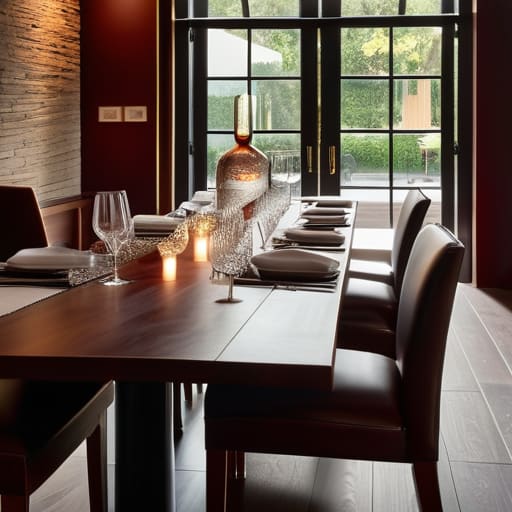
Most owners look at a floor plan and see a puzzle of how many chairs they can squeeze into a room to maximize the nightly turnover. They see seats; I see friction. If you pack your tables so tight that a guest has to apologize to the couple behind them just to pull out a chair, you haven’t increased your capacity—you’ve just decreased your dignity. Proper table spacing and flow isn’t about being polite; it’s about protecting the margin. When guests feel crowded, they feel rushed. When they feel rushed, they skip the second bottle of wine and the dessert menu, and suddenly your average spend per head plummets.
The same goes for the “invisible” paths. I used to watch new managers try to implement the latest restaurant interior design principles they saw on Instagram, only to realize they’d designed a labyrinth that forced their servers to dodge diners like they were in an obstacle course. A cramped floor plan creates a frantic energy that customers pick up on instantly. If your staff is constantly bumping into people, the service feels jagged. You want a flow that allows a waiter to glide in and out without breaking the spell of the meal, because smooth service is the silent engine of a profitable room.
The Unseen Mechanics: 5 Real-World Rules for Managing the Room
- Stop designing for the Instagram photo and start designing for the service flow. You can have the most beautiful, sculptural bar in the city, but if your servers have to dodge a guest’s chair every time they try to deliver a hot plate, your food will arrive lukewarm and your staff will quit within three months. Atmosphere is useless if it breaks the mechanics of the pass.
- Lighting is a budget item, not an afterthought. I’ve seen owners spend thousands on designer pendant lights only to leave the overheads on at full brightness because they forgot to buy dimmers. If your dining room feels like a hospital corridor at 8:00 PM, no amount of expensive linen will make a guest feel like spending fifty pounds on a bottle of wine.
- The acoustics of a room are a direct predictor of your average check size. If people have to lean across the table and shout to be heard, they will finish their meal quickly and leave, or worse, they won’t come back. A room that is too loud feels frantic and cheap; a room that is too quiet feels awkward. You need the hum of conversation, not the roar of a tunnel.
- Soundscapes are more than just a Spotify playlist. The music shouldn’t just be “good”; it needs to match the tempo of your service. If you’re running a high-turnover bistro, you need a certain energy. If you’re running a slow, expensive tasting menu, the music shouldn’t be fighting the rhythm of the courses. And for heaven’s sake, check the volume before the first guest walks in.
- Temperature is the most underrated part of the guest experience. You can have the most curated menu in the world, but if the dining room is a drafty cellar or a humid greenhouse, the guest’s body will be in a state of fight-or-flight. A guest who is physically uncomfortable is a guest who is looking for a reason to complain about the service.
The Hard Truths Behind the Vibe
Atmosphere isn’t a decorating budget; it’s a logistical strategy that dictates how fast people turn their tables and how much they’re willing to spend on that second bottle of red.
If your floor plan prioritizes “aesthetic” over the natural movement of a server carrying a heavy tray, you aren’t building a dining room—you’re building a bottleneck that will eventually cost you your best staff.
True sensory branding happens in the details you don’t notice, like the volume of the music during a rush or the way a chair feels after forty minutes, rather than the expensive art hanging on the walls.
The Cost of the Vibe
You can pour your entire profit margin into hand-blown glassware and bespoke lighting, but if the room feels like a stage set rather than a place to breathe, people won’t stay for dessert—and if they don’t stay for dessert, you’re just paying for the privilege of looking pretty.
Rosalind Achterberg
The Bottom Line of the Room
At the end of the day, atmosphere isn’t some ethereal magic trick you perform for the guests; it is a series of calculated, practical decisions that dictate whether you’ll be able to pay your staff on Friday. We’ve talked about how the scent of woodsmoke or the distance between two chairs isn’t just about “vibes,” but about controlling the tempo of the meal and the turnover of the seat. You can buy the most expensive linen in the city, but if your acoustics make it impossible for a couple to whisper, or if your lighting makes the food look grey and uninviting, you haven’t built an atmosphere—you’ve just built an expensive mistake. Every choice, from the weight of the cutlery to the volume of the playlist, is a financial lever that either invites a guest to linger for that third cocktail or pushes them toward the exit.
If you take anything away from this, let it be this: stop trying to design a “concept” and start designing a reality. A restaurant is a living, breathing machine made of people, and your atmosphere is the oil that keeps the gears from grinding. Don’t get so lost in the Pinterest boards that you forget how the room actually feels to the person working it. When you respect the space, the flow, and the senses, the guests will feel it—not because you told them to, but because you’ve built a place where they actually want to exist. Build it right, and the business will follow.
Frequently Asked Questions
How do I balance creating an intimate atmosphere with the absolute necessity of turning tables to stay profitable?
You’re asking about the oldest tug-of-war in the business: the tension between soul and spreadsheet. If you push the turnover too hard, you feel like a factory, and guests leave feeling rushed—which means they won’t come back. But if you let them linger for three hours on a Tuesday, you’re just paying for the privilege of watching them eat. The trick isn’t the clock; it’s the service rhythm. A well-timed check, a cleared plate, a subtle nudge with the bill—that’s not being rude, it’s managing the flow so the room stays alive without feeling like a conveyor belt.
At what point does "curated music" stop being an aesthetic choice and start becoming a distraction that drives away my regulars?
It becomes a distraction the moment your guests have to lean in to hear each other. I’ve seen owners try to be “edgy” with loud, pulsing tracks, forgetting that people go to restaurants to connect, not to attend a club night. If the music is the first thing they notice when they walk in, you’ve failed. Good music should be the wallpaper, not the centerpiece; it’s there to fill the gaps, not to compete with the conversation.
How much should I actually be spending on lighting and acoustics before I'm just throwing money at a problem that a better floor plan could have solved?
Listen, don’t go buying expensive acoustic panels until you’ve checked your floor plan. I’ve seen owners drop five grand on sound-absorbing foam only to realize their dining room is a literal echo chamber because they put hard marble against hard tile. Fix the layout first—soft surfaces, rugs, or even a heavy curtain can do more than a high-end tech fix. Spend on lighting to set the mood, but spend on acoustics to keep people from shouting.
