 Written by
 I once watched a young, bright-eyed manager try to run a wedding for two hundred people using nothing but a glossy, digital checklist and a sense of unearned confidence. He had all the “industry standards” downloaded to his tablet, but when the kitchen ran out of sea bass and the linen delivery arrived three hours late, that digital checklist didn’t do a damn thing to stop the slow-motion disaster unfolding in the dining room. Most of what people call the best practices for managing large events are really just expensive ways to dress up a lack of foresight. They focus on the aesthetics of the ballroom rather than the brutal, invisible logistics of how many trays can actually fit through a service door at once.
I’m not here to give you a lecture on how to pick the prettiest centerpieces or which software will make your spreadsheets look prettier. Instead, I’m going to tell you about the real machinery that keeps a crowd fed and happy without the staff breaking into tears. We are going to talk about staffing ratios that actually work, the hidden costs of “flexible” menus, and why your contingency plan is useless if you haven’t accounted for the human element.
Event Logistics and Planning the Math of Human Chaos

When people talk about event logistics and planning, they usually picture beautiful floor plans and color-coded spreadsheets. They don’t picture the frantic, sweaty reality of a loading bay at 6:00 AM when the florist’s van breaks down and the linen delivery is two hours late. A large event isn’t a static picture; it’s a living, breathing organism that wants to break itself. You can have the most expensive lighting rig in the city, but if your on-site event operations are built on guesswork rather than hard numbers, you’re just decorating a sinking ship.
You have to account for the friction. I’m talking about the “human” part of the math: how long it actually takes five hundred people to find a restroom, or the exact moment a buffet line turns into a bottleneck that halts the entire evening. True success in large scale crowd management isn’t about how many people you can fit in a room, but how many you can move through it without someone losing their temper or tripping over a rogue power cable. It’s about predicting the friction before it becomes a crisis.
Large Scale Crowd Management Preventing the Beautiful Disaster
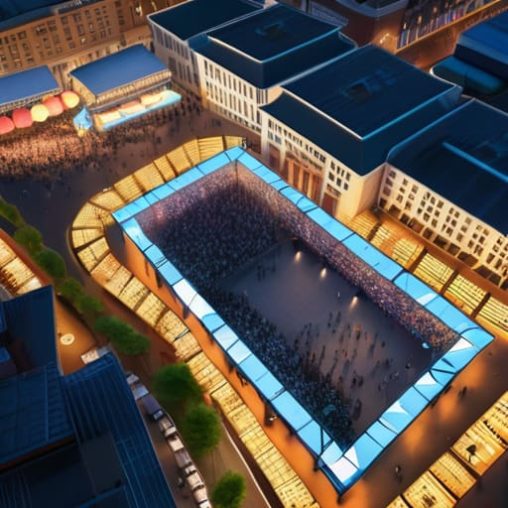
When you move from a sixteen-seat dining room to a hall holding five hundred, the physics of the room changes entirely. In my old place, if a guest felt crowded, I could see it in the way they gripped their wine glass. In a massive venue, you can’t see the tension until it turns into a bottleneck at the bar or a crush at the entrance. Effective large scale crowd management isn’t about having a thick manual; it’s about understanding flow. You have to map out the “invisible friction”—the spots where people naturally stop to chat, blocking the very paths meant for movement. If you don’t account for that, you aren’t hosting a gala; you’re managing a slow-motion riot.
This is where your event risk assessment strategies actually earn their keep. It’s not just about fire exits—though heaven knows those are non-negotiable—it’s about the psychological load of the space. If the lighting is too dim near the exits or the signage is too small to read from ten feet away, people get anxious. And an anxious crowd is a difficult crowd. You have to design the space so that the movement feels inevitable rather than forced.
The Invisible Levers: Five Things That Actually Keep a Large Event from Collapsing
- Stop obsessing over the centerpiece and start obsessing over the loading bay. You can have the most expensive floral arrangements in the world, but if your suppliers are fighting for space at the service entrance or your delivery driver can’t find the freight elevator, your entire schedule is dead in the water before the first guest even checks their coat. Logistics isn’t about the pretty stuff; it’s about the plumbing.
- Hire for temperament, not just a CV. In a large-scale event, things will go wrong—a caterer will be late, a microphone will fail, or a VIP will demand something impossible. I’ve seen brilliant planners crumble under pressure because they couldn’t handle a bit of heat. You need people who can look a panicked client in the eye, say “I’ve got it,” and then go solve the problem without making a scene.
- Respect the “Hidden Staff” math. Most people budget for the people they see—the servers, the hosts, the security. They forget the people who make the magic possible: the dishwashers, the technicians, the cleaners. If you don’t account for the sheer volume of laundry, broken glassware, and trash that a thousand people generate, you aren’t planning an event; you’re just scheduling a very expensive mess.
- Build in “The Buffer.” If your run-sheet says the keynote starts at 7:00 PM sharp, you are lying to yourself. Between the guest who wanders off to the restroom and the inevitable delay in the cocktail hour, you need a twenty-minute cushion built into every single transition. A professional knows that time is a fluid resource, and if you don’t manage the gaps, the gaps will manage you.
- Communicate via the chain, not the crowd. When a crisis hits—and it will—the last thing you need is every staff member running to the organizer for instructions. Establish a clear, rigid hierarchy of communication. If a server sees a spill, they tell the floor lead, not the event director. You need to keep the “engine room” quiet so the “bridge” can actually steer the ship.
The Ghost in the Machine
At the end of the day, managing a large-scale event isn’t about the glossy brochures or the fancy lighting rigs; it’s about the invisible math of people and movement. You can have the most expensive catering in the city, but if your floor plan creates a bottleneck at the bar or your staff doesn’t know the difference between a VIP and a person looking for the restroom, the whole thing will feel clunky and cheap. Success lives in the margins—in the precise timing of the kitchen, the clarity of the briefing, and the ability to see a crowd forming before it becomes a problem. It’s about realizing that logistics are the skeleton of the experience; without them, the body just collapses.
I spent twenty-six years watching people mistake “busy” for “organized,” and let me tell you, there is a massive difference. If you do your job well, the guests won’t notice the frantic coordination happening behind the swinging doors or the complex dance of the service team; they will only notice that everything felt effortless. That is the ultimate goal. Don’t aim to be the person everyone is talking about because something went wrong; aim to be the silent architect of a seamless evening. When the lights go down and the last guest departs, your greatest triumph isn’t the applause—it’s the fact that nobody noticed how hard you worked.
When the chaos of the floor meets the reality of a mounting guest list, you quickly realize that intuition only carries you so far; eventually, you need a system that actually holds water. I’ve learned the hard way that trying to wing the heavy lifting of coordination is just a recipe for a nervous breakdown behind the service station. If you’re looking for a way to tighten up your approach and find some actual structure amidst the madness, I’ve found that looking into the resources at w4m online can provide the kind of practical clarity that keeps a room from tilting on its axis when the pressure hits.
