
 Written by
I’ve sat at the pass long enough to see it happen a thousand times: a diner spends twenty minutes squinting at a wine list like they’re studying for a bar exam, sweating through their linen because they’re terrified of looking like an amateur. They think they need to drop names of obscure Bordeaux regions or use words like “tannic structure” just to prove they belong at the table. Let me tell you something from someone who has actually run the books: nobody cares if you know your vintages, and the real trick to how to talk to a sommelier isn’t about showing off your education. It’s about not making it a performance.
I’m not here to give you a lecture on grape varieties or teach you how to sound like a textbook. Instead, I’m going to tell you how to get a world-class bottle in your glass without feeling like you’re being audited by the tax man. We’re going to talk about what actually matters—your budget, what’s on your plate, and how to treat the person holding the decanter like a professional partner rather than a servant or a judge.
The Art of Asking for Wine Recommendations
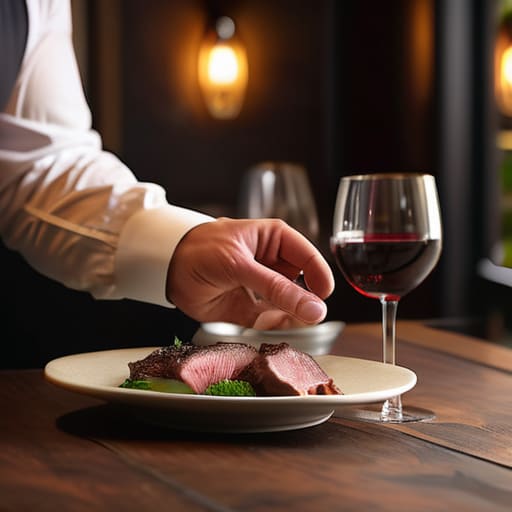
When you sit down and look at a wine list, don’t feel like you have to perform a feat of memorization. Most people approach understanding wine lists like they’re sitting for a final exam, staring at the page until their eyes glaze over. You don’t need to know the soil composition of a specific slope in Burgundy to get a good glass. Instead, start with what you actually like. Do you want something that cuts through the fat of that ribeye, or something that won’t fight with the acidity in your vinaigrette?
The secret to asking for wine recommendations without feeling like an amateur is to give them a boundary. If you tell a sommelier, “I like crisp whites but nothing that tastes like petrol,” you’ve given them a map. If you just say, “What’s good?” you’re leaving them to guess your budget and your palate, which is a recipe for a very expensive mistake. Be honest about your price point, too. A professional won’t judge you for a forty-pound bottle, but they will struggle to help you if you won’t admit you’re looking for a bargain.
Communicating Flavor Preferences Without the Fluff

Stop trying to sound like a textbook. I’ve sat in my own dining room and watched guests lean over a wine list, whispering about “tannic structures” and “mineral finishes” as if they were reading a script. It’s exhausting, and frankly, it doesn’t help the person trying to serve you. When you’re communicating flavor preferences, the most useful thing you can do is be brutally honest about what you actually like to drink. If you hate oak, say you hate oak. If you want something that tastes like a summer garden rather than a dark cellar, just say so.
You don’t need to master the entire art of wine tasting etiquette to get a great bottle. In fact, the best way of ordering wine at a restaurant is to treat the sommelier like a collaborator rather than a vending machine. Tell them your budget—and be realistic, please—and then tell them what’s on your plate. If you say, “I want something crisp to cut through this fatty pork,” you’ve given them more to work with than any fancy descriptor ever could. They want to win, too; they want you to love the wine as much as the food.
Five Rules for Not Making the Sommelier’s Life Miserable
- Give them a budget, not a riddle. Don’t lean in and whisper, “I want something special but not too expensive,” as if you’re negotiating a spy contract. That tells them nothing. Tell them, “I want to stay under eighty pounds,” or “I’m looking for something mid-range.” A sommelier can work with a number; they can’t work with a mystery.
- Stop using “big” words you don’t understand. If you ask for something “earthy” because you saw it in a magazine, but you actually hate the taste of mushrooms, you’ve just wasted twenty minutes of their time and probably forty pounds of your own. If you don’t know the term, describe the sensation: “It shouldn’t be too heavy,” or “I want something that cuts through the fat of the duck.”
- Respect the “Sold Out” sign. When a sommelier tells you a specific vintage is gone or that the bottle you want is sitting at a price point that would make your accountant weep, believe them. They aren’t trying to upsell you to a more expensive bottle out of spite; they are trying to prevent you from having a bad time at the end of the meal.
- Remember that they are part of the service, not a separate entity. I’ve seen diners treat a sommelier like a vending machine for expensive liquids, often ignoring the server who is doing the heavy lifting with the food. If you’re having a great time, acknowledge the person who just spent ten minutes explaining the soil composition of a vineyard in Burgundy.
- Don’t be afraid to ask “Why?” If they suggest a bottle that sounds odd for your dish, ask them why it works. A good sommelier loves this—it’s the only time they get to actually do the job they trained for instead of just acting as a glorified bottle opener. If they can’t give you a reason that makes sense to your palate, trust your gut and move on.
The Bottom Line for Your Next Bottle
Stop playing the expert; if you don’t know what you’re looking for, tell the sommelier your budget and your protein, and let them earn their commission.
Remember that a “difficult” wine isn’t a personal insult to the cellar, but a tool for the sommelier to find the exact profile that makes your meal work.
Respect the service, but don’t mistake a long wine list for a guarantee of quality—a smart sommelier is more valuable than a massive cellar.
The Real Language of the Cellar
Stop trying to sound like you’ve spent your life in a tasting room; a sommelier can smell a fake from the coat check. Just tell them what’s on your plate, what’s in your pocket, and whether you want something that bites or something that hugs—they aren’t there to judge your vocabulary, they’re there to make sure you don’t end the night regretting the bottle.
Rosalind Achterberg
The Last Pour

At the end of the day, talking to a sommelier isn’t about proving you’ve read the right books or knowing the difference between a volcanic soil and a limestone one. It’s about stripping away the performance. Tell them your budget, tell them what’s on your plate, and for heaven’s sake, tell them what you actually like to drink. If you want something crisp and easy, say so. If you’re looking to celebrate something big, say that too. When you stop treating the wine list like a test you’re about to fail and start treating it like a collaborative tool, you stop being a customer and start being a guest. They are there to help you enjoy your evening, not to judge your lack of a cellar.
I spent twenty-six years watching people sit stiffly in my dining room, terrified of making the wrong choice, only to realize later they hadn’t enjoyed a single sip because they were too busy being performative. A great bottle of wine is a living thing, and it deserves to be enjoyed, not interrogated. Don’t let the fear of looking foolish keep you from the very thing you paid to experience. The best way to honor the craft of the person pouring your glass is to simply trust the expertise and lean into the pleasure of the moment. After all, we aren’t here to study history; we’re here to have a drink.
Frequently Asked Questions
What do I do if the bottle they suggest is way more expensive than I wanted to spend?
Look, don’t freeze up and pretend you didn’t hear the price. It’s awkward for everyone. If they suggest a bottle that makes your stomach drop, just be blunt: “That’s a bit north of what I wanted to spend tonight.” A good sommelier won’t be offended; they’ll just pivot. They’ll look for something with a similar profile but a more sensible price point. They aren’t there to fleece you; they’re there to find the right match.
Is it rude to ask for a taste of the wine before I commit to the full glass?
It isn’t rude, but it is a transaction. When you ask for a taste, you aren’t just testing the wine; you’re asking the sommelier to commit a small piece of their inventory to your indecision. If you’re at a casual bistro, go ahead. But if you’re at a place with white tablecloths and a cellar that costs more than my first house, do it with grace. Don’t haggle over a corked bottle—just ask politely to check it.
How much do I actually need to know about wine regions to avoid looking like I'm faking it?
Look, you don’t need a map of the Loire Valley memorized to have a decent conversation. If you try to name-drop obscure sub-regions when you don’t know the difference between a Pinot and a Nebbiolo, you’ll smell like a fraud from across the room. Just know your basics—what’s heavy, what’s crisp, what’s bubbly. If you know you like a dry white from a cool climate, you’ve done enough. Let the professional fill in the geography.
