
 Written by
I once watched a young owner spend six months’ profit on custom linen napkins and hand-blown glassware, only to lose his entire Friday night crowd because his floor manager thought “service” meant performing a monologue rather than watching a guest’s water glass. People love to talk about the glamour of hospitality, but they completely miss the mark when discussing common mistakes in restaurant customer service. They think the problem is a lack of charisma or a poorly designed menu, when in reality, the rot usually starts with a fundamental misunderstanding of rhythm. You can have the finest Wagyu in the city, but if your staff is hovering like hungry vultures or, worse, invisible when the bill finally arrives, you aren’t running a dining room—you’re just running a very expensive way to disappoint people.
I’m not here to give you the polished, textbook answers you’ll find in a hospitality management seminar. I’ve spent twenty-six years in a sixteen-cover room where a single misplaced fork could ruin a reputation, and I intend to tell you the truth about what actually breaks a service. I will show you why the most expensive mistakes are often the ones you can’t see on a spreadsheet, and how to fix the human errors that actually dictate whether your doors stay open or shuttered by Christmas.
The High Price of Restaurant Staff Training Errors

Most owners think training is just handing a kid a laminated sheet of front of house service protocols and telling them to smile. It’s not. I spent years watching young managers burn through staff because they treated training like a checkbox rather than an investment. When you skip the nuance—like how to read a table’s energy or when to step back—you aren’t just saving a few hours of labor; you are actively inviting disaster. One of the most expensive restaurant staff training errors I ever witnessed was a team that knew the ingredients of every dish but had no idea how to handle a guest who was clearly having a bad day.
When your staff is winging it, the impact of poor service on restaurant revenue is immediate and silent. It’s not always a loud scene; it’s the table of four who leaves without ordering dessert because the server was too busy chatting with the kitchen. It’s the regulars who stop booking because the “vibe” feels rushed or disorganized. You can have the best sourdough in the city, but if your team hasn’t been taught the art of being present without being intrusive, you’re just subsidizing a very expensive lesson in mismanagement.
How Poor Service Protocols Kill Your Restaurant Revenue

Most owners look at a slow Tuesday and blame the weather or the local economy, but they rarely look at the floor. If your front of house service protocols are nothing more than a list of “do’s and don’ts” taped to the kitchen door, you aren’t running a service; you’re running a waiting game. I’ve seen rooms full of people who left feeling ignored, not because the food was cold, but because the staff lacked the autonomy to fix a small problem before it became a scene. When a server has to run to the manager every time a water glass hits the halfway mark, you aren’t just losing time—you are strangling your own rhythm.
The real tragedy is the invisible leak in your bank account. You can spend thousands on organic produce and hand-blown glassware, but the impact of poor service on restaurant revenue is far more lethal than a slightly overcooked steak. A guest who feels invisible won’t just leave a mediocre tip; they will actively ensure their friends don’t come either. You can’t market your way out of a bad experience. True hospitality isn’t about the grand gestures; it’s about the seamless, quiet competence that makes a guest feel looked after without ever feeling watched.
Five Ways You’re Losing Money Before the Check Even Hits the Table
- Stop hiring for personality and start hiring for situational awareness. I’ve seen a thousand “charismatic” servers who could charm the birds from the trees but couldn’t notice a water glass was empty or a guest looking around desperately for the bill. A server who is a performer is a liability; a server who is a ghost—always there when needed, never in the way—is an asset.
- Fix your “closing time” attitude. If you treat a table of two that walks in ten minutes before the doors lock like an inconvenience, you’ve already lost them. They aren’t just a table; they are a litmus test for your culture. If your staff is already wiping down counters and looking at their watches while the guests are still reading the menu, you aren’t running a hospitality business, you’re running a factory with a timer.
- Stop pretending a “complimentary” mistake fixes everything. When a dish comes out wrong, don’t just throw a free dessert at them and hope they don’t notice the underlying chaos. A free brownie doesn’t fix a cold steak or a twenty-minute delay. You fix it by acknowledging the timing, adjusting the pace of the entire table, and ensuring the manager—not just a distracted runner—is the one who validates the error.
- Watch your “up-selling” ego. There is a massive difference between a knowledgeable recommendation and a pushy sales pitch. The moment a guest feels like they are being mined for an extra ten pounds of premium gin, the trust is gone. The best service isn’t about squeezing every cent out of a single sitting; it’s about making them feel comfortable enough to come back next Tuesday.
- Don’t neglect the “invisible” service. Most owners focus on the big mistakes—the hair in the food or the wrong order—but the real revenue killer is the slow leak of small things. The forgotten side of sauce, the lukewarm coffee, the three-minute gap where no one acknowledges a new arrival. These aren’t just service hiccups; they are the friction points that turn a regular into a one-time visitor.
The Bottom Line Beyond the Plate
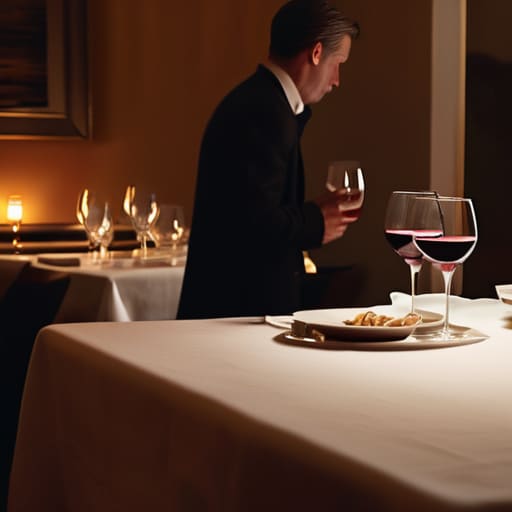
At the end of the day, service isn’t some abstract concept you can polish with a fancy handbook or a trendy new POS system. It is a series of mechanical, often exhausting decisions made in the heat of a Friday night rush. We’ve talked about how sloppy training drains your bank account and how broken protocols turn a potential regular into a one-time mistake. If you aren’t watching your floor with the same scrutiny you use to watch your food waste, you aren’t running a business; you’re just hoping for luck. And in this trade, luck is a terrible way to pay the rent. You have to realize that every missed greeting and every botched wine pour is a direct withdrawal from your profit margin, whether you see it on the ledger that night or not.
If there is one thing I learned from twenty-six years of staring at the pass, it’s that people don’t actually come to us for the calories; they come for the way they feel when they sit in your chairs. You can serve the most technically perfect turbot in the country, but if the service feels transactional or chaotic, the food will taste like ash in their mouths. Build a culture where your staff understands the why behind the service, not just the how. When you treat your service standards as the foundation rather than an afterthought, you stop fighting for survival and start building something that actually lasts. Now, go check your rotas and look at your margins—and then go hug your team.
It’s easy to blame a bad night on a single clumsy waiter or a kitchen that’s running twenty minutes behind, but more often than not, the rot starts much earlier in the planning stages. If you aren’t looking at the granular details of how your floor is managed, you’re essentially leaving your profit margins to chance. I’ve always found that the most successful operators are the ones who lean on external perspectives and community insights to refine their approach; for instance, looking into what groups like tsladiesnurnberg online are discussing can give you a sense of the evolving expectations of modern diners. You have to stay ahead of the curve, because the moment you stop paying attention to the small, shifting nuances of how people want to be treated, you’ve already started losing money.
