 Written by
 I remember a young sommelier at my old place—bright eyes, expensive suit, and a vocabulary that could make a stone weep—trying to explain to a regular why her Cabernet felt like she’d been chewing on a handful of pencil shavings. He spent ten minutes dancing around the chemistry, using words like “polyphenols” and “molecular structure,” when all the woman wanted to know was why her mouth felt like it had been scrubbed with sandpaper. Most people treat the science of wine like a secret society, but if you want to understand how tannin works, you don’t need a degree; you just need to recognize that texture is a physical sensation, not a lecture.
I’m not here to sell you on the romance of the vineyard or some overpriced, pretentious jargon that makes your head spin. Instead, I’m going to tell you the truth about that drying, grippy sensation in your mouth and why it matters when you’re staring at a menu. We’ll look at why a heavy red needs fat to cut through the grit, and why a “smooth” wine isn’t always a better wine. This is about understanding the mechanics of what you’re drinking so you can stop guessing and start actually enjoying your dinner.
The Chemical Structure of Tannins and Their Invisible Grip
Now, don’t let the science lecture scare you off; you don’t need a lab coat to understand what’s happening in your glass. At its simplest, we are dealing with polyphenolic compounds in wine, which is just a fancy way of saying these molecules are the structural scaffolding of the liquid. Think of the chemical structure of tannins as a series of tiny, microscopic hooks. When you take a sip, those hooks reach out and latch onto the proteins in your saliva.
That’s where the magic—and the friction—happens. The astringency sensation explained isn’t actually a taste like salt or sugar; it’s a tactile reaction. As the tannins bind to your saliva, they effectively strip away the lubricating film in your mouth, leaving your gums and cheeks feeling dry and slightly puckered. It is that specific mouthfeel and tannins relationship that separates a flimsy, juice-like red from one that has real backbone. In my old dining room, I’d look for that grip; if a wine felt “flabby” or lacked that structural tension, it usually meant it wouldn’t survive a heavy steak or a long night in the cellar.
Astringency Sensation Explained Why Your Mouth Feels the Cost
When people talk about the “dryness” in a heavy Cabernet, they often mistake a physical sensation for a flavor. But if you’ve ever sat in a dining room and felt that sudden, sandpaper scratch across your tongue, you’ve experienced the real astringency sensation explained by science. It isn’t a taste like salt or sugar; it is a tactile reaction. Those polyphenolic compounds in wine are essentially looking for something to bind to, and when they find your saliva, they grab hold of the proteins that keep your mouth lubricated. Once those proteins are stripped away, you’re left with that puckering, parched feeling.
In my old dining room, I used to watch guests react to a high-tannin vintage like they’d just swallowed a mouthful of wool. They’d reach for their water, thinking the wine was “sharp,” but they were actually just feeling the structural tension of the grape. It’s the same thing you feel when you drink a tea that’s been steeping far too long—the tannins in tea and grapes both work through this same mechanism of protein binding. It’s not a flaw; it’s just the wine exerting its presence on your palate.
The Restaurateur’s Guide to Not Fighting Your Wine
- Stop looking for softness in a young Cabernet. If you’re expecting a silk ribbon and you get sandpaper, it’s not a “bad” wine; it’s just a wine that hasn’t finished its work yet. Tannin is a structural component, not a flaw, and trying to force a high-tannin red to taste “smooth” before its time is like trying to force a sourdough to rise in ten minutes.
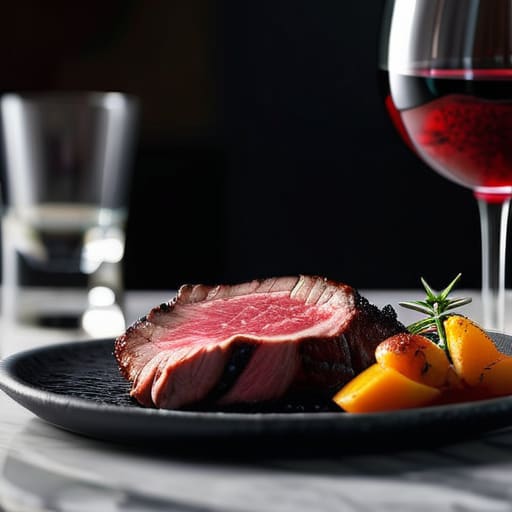
- Match the grip to the fat. I learned this the hard way in my own dining room: if you serve a heavy, tannic Bordeaux with a lean piece of grilled sea bass, the wine will absolutely bully the fish. You need protein and fat—think ribeye or a slow-braised lamb—to act as a buffer. The fat coats your tongue, providing a landing strip for those tannins to hit so they don’t feel like they’re stripping the moisture right out of your mouth.
- Respect the decanter, but don’t treat it like a magic wand. Decanting isn’t just about showing off for the table; it’s about controlled oxygenation. For those big, tightly wound reds, a bit of air helps soften the edges of the tannin structure. But don’t go overboard with a fragile, older vintage; you can bruise a wine just as easily as you can a piece of fruit, and once those tannins become “dusty” or disjointed, there’s no fixing it.
- Watch the temperature, or the tannins will turn on you. If you serve a big red too warm—say, in a room that’s been heating up all evening—the alcohol will jump out and the tannins will feel heavy and cloying. A slight chill, just a few degrees below room temperature, keeps the structure disciplined and prevents the wine from feeling like a thick, syrupy mess on the palate.
- Understand that tannin is a window into the wine’s lifespan. When I was doing the ordering for my restaurant, I looked at tannin as a clock. High tannin is a sign of longevity; it’s the preservative that keeps a wine from turning to vinegar in a year. If you’re buying for tonight, look for integration; if you’re buying for a cellar, look for the grip. Just don’t confuse the two, or you’ll end up with a very expensive bottle of disappointment.
The Bottom Line on the Bite
Tannins aren’t just a chemistry lesson; they are the structural integrity of a wine, acting like the bones in a body that keep the fruit from collapsing into a sugary mess.
That drying sensation in your mouth is a physical signal—it’s your body telling you how much “grip” is in the glass, which is the difference between a wine that lingers and one that simply disappears.
Understanding tannins helps you see past the hype; it allows you to judge whether a bottle is built for a long, slow cellar life or if it’s meant to be polished off in one sitting before the structure fails.
The Invisible Staffing of a Bottle
“Don’t mistake that dry, puckering sensation for a flaw; think of tannins as the kitchen’s prep work. Just as a well-organized mise en place holds a service together when the rush hits, tannins provide the structural backbone that keeps a wine from collapsing under its own fruit. Without that grip, you aren’t drinking a fine vintage—you’re just drinking expensive juice that won’t know how to behave by the time it reaches the bottom of the glass.”
Rosalind Achterberg
The Bottom Line on the Bite
At the end of the day, tannins aren’t some abstract science experiment meant to trip you up; they are the structural integrity of the wine. We’ve looked at how those polyphenols bind to your salivary proteins—essentially stripping away the lubrication in your mouth—to create that unmistakable sensation of grip and dryness. Whether it’s the aggressive, sandpaper texture of an underripe Cabernet or the silky, integrated velvet of a well-aged Nebbiolo, it all comes down to how those molecules interact with your palate and the food on your plate. Understanding this isn’t just for the sommeliers; it’s for anyone who wants to know why a certain bottle demands a fatty piece of ribeye to soften its edges, rather than just swallowing it whole.
I spent decades watching people shy away from “big” wines because they feared the astringency, but I’ve learned that the most memorable bottles are often the ones that challenge you just a little bit. Don’t be afraid of a little friction. That drying sensation is simply the wine’s way of telling you it has the stamina to last in the cellar and the strength to stand up to a real meal. Next time you find yourself staring at a heavy red, don’t just look for smoothness; look for the architecture. A wine without tannin is a house without a foundation, and I’ve always preferred a meal—and a life—with a bit of substance and structure.
Frequently Asked Questions
If tannins are what give a wine its structure, why do some expensive bottles feel so soft and "velvety" rather than grippy?
It’s the difference between a cheap suit that bites at your neck and a bespoke silk lining. Those expensive bottles aren’t lacking tannins; they just have better-integrated ones. In a young, poorly made wine, the tannins are like jagged rocks hitting your palate. But with time and careful winemaking, those molecules polymerize—they link up and grow larger, becoming smoother and more rounded. You’re still feeling the structure, but the edges have been sanded down by patience.
How much does the way a wine is stored or aged actually change the way those tannins hit your palate?
Think of tannins like a raw ingredient—take a green tomato or a piece of unaged leather. If you leave them alone, they’re harsh, aggressive, and frankly, a bit of a nuisance on the palate. But time and temperature act like a slow simmer. Proper aging allows those molecules to link up and settle, turning that sandpaper grit into something velvety. If you store them poorly, though? You’re just paying for a bottle of bitter regret.
Is there a way to balance a high-tannin wine with food without the whole meal feeling like a battle between the meat and the glass?
You don’t fight a heavy tannin with a heavy sauce; you negotiate. If you’re serving a big, grippy Cabernet, don’t reach for a rich, sugary reduction—that just makes the wine feel aggressive and the sauce feel cloying. Instead, lean into fat and protein. A well-marbled ribeye or a piece of fatty pork acts as a buffer, the proteins binding to the tannins so they don’t grab your mouth. It’s about softening the blow, not winning the war.
