
 Written by
 I remember a Saturday night in 2004, standing in my tiny kitchen with a broken dishwasher, a sous-chef who had just walked out, and a dining room full of people who thought their steak was three minutes late. My heart wasn’t just racing; it felt like it was trying to kick its way out of my ribs. People love to hand you glossy brochures about “mindfulness workshops” or “wellness retreats” when they talk about how to manage stress in hospitality, but let’s be honest: a yoga mat isn’t going to help you when you’re staring down a stack of dirty linen and a mounting pile of unpaid invoices. You don’t need a breathing exercise; you need a functional system that doesn’t rely on you being a martyr.
I’m not here to sell you on some expensive, HR-approved fantasy that will evaporate the moment the Friday rush hits. Instead, I want to talk about the practical, gritty reality of staying sane when the heat is actually on. I’ll show you how to look at your rotas, your prep lists, and your staffing levels through a lens of operational logic rather than just sheer willpower. We are going to discuss the real ways to protect your people—and your own sanity—without pretending that the chaos isn’t part of the job.
Preventing Hospitality Industry Burnout Before the Doors Close

You can’t wait until your head chef is staring blankly at a prep list to start thinking about hospitality industry burnout prevention. By then, the damage is already done, and you’re just playing triage. I learned the hard way that a “positive atmosphere” isn’t something you conjure up with a staff meal once a month; it is built in the quiet moments of a Tuesday afternoon. It’s about having a rota that actually respects a human life, rather than treating your team like interchangeable components in a machine. If you aren’t actively improving workplace culture in hospitality by setting boundaries on overtime and respecting the sanctity of a day off, you aren’t running a business—you’re running a countdown to a mass exodus.
Real management means recognizing that a high-pressure service environment doesn’t have to be a pressure cooker. I used to think that being “tough” meant expecting everyone to thrive on adrenaline and caffeine alone, but that’s a lie we tell ourselves to justify poor planning. You need to build in the breathing room before the rush hits. This means training your staff not just on how to carry a tray, but how to recognize the signs of a colleague hitting a wall. If you ignore the cracks in the foundation, the whole house eventually comes down.
Managing High Pressure Service Environments Without Breaking Your Staff

When the tickets start printing faster than the printer can spit them out and a table of six is complaining that their drinks are late, the atmosphere in the kitchen changes. It goes from professional focus to a frantic, jagged kind of desperation. If you’re managing high-pressure service environments, you know that tension is infectious; it jumps from the pass to the floor like a live wire. The mistake most owners make is thinking they can “motivate” their way out of a crisis with a shouted encouragement or a quick pep talk. That’s nonsense. What you actually need is a system that breathes. You need a kitchen layout that doesn’t require three people to cross paths just to reach the walk-in, and a floor plan that doesn’t turn your servers into bumper cars.
Real improving workplace culture in hospitality isn’t about pizza parties or a “wellness” poster in the staff room; it’s about the quiet dignity of a well-run service. It’s about ensuring your commis isn’t doing the work of a demi-chef because you’re too cheap to staff the line properly. When the pressure mounts, the only thing that keeps a team from fracturing is the knowledge that the person next to them is competent and that the person running the show has their head screwed on straight. Structure is the only true antidote to chaos.
Five Hard Truths About Keeping Your Head Above Water
- Stop treating your rota like a math problem and start treating it like a human one. You can’t just plug numbers into a spreadsheet and expect a person to perform miracles for twelve hours straight; if you don’t build in breathing room for a decent meal and a moment of quiet, you aren’t managing a team, you’re just managing a countdown to someone quitting.
- Watch the energy in the kitchen, not just the tickets. If the pass starts feeling like a combat zone because the prep was botched or the supplier let you down, don’t just yell for more speed—address the bottleneck. Stress usually comes from a lack of tools or a lack of time, and shouting at a cook who is working with a broken fridge won’t fix the temperature of the soup.
- Learn to value the ‘invisible’ wins. In my sixteen-cover room, the best nights weren’t the ones where we broke records, but the ones where the service flowed so smoothly you didn’t even notice the chaos behind the scenes. Celebrate the staff who handle a difficult customer with grace or a spilled glass of red without breaking a sweat; if you only reward the big, loud successes, you’ll lose the quiet professionals who actually keep the doors open.
- Fix the small, repetitive frustrations before they turn into resentment. It’s rarely the big crisis that breaks a good waiter; it’s the fact that the POS system crashes every Tuesday, or the linen is always damp, or the side station is perpetually disorganized. These tiny frictions act like sandpaper on morale, and as an owner, it is your job to sand them down before they wear your people thin.
- Own your own mistakes in front of the floor. There is nothing that kills a team’s spirit faster than a manager who blames the ‘system’ or a junior staffer for a mistake they themselves caused by poor ordering or bad scheduling. If you’ve messed up the milk delivery or misread the booking diary, say it, fix it, and move on—it shows them that while the pressure is high, the accountability is shared.
The Real Price of the Rush: Lessons from the Pass
Stop pretending a “team player” is someone who just absorbs everyone else’s mistakes; if your best server is silently carrying the weight of a disorganized kitchen, you aren’t building a team, you’re just subsidizing poor management with your staff’s mental health.
Burnout isn’t a character flaw or a lack of grit, it’s a math problem—if your rotas are consistently cutting corners on sleep and sanity just to shave a few pounds off the weekly wage bill, you’ll eventually pay for it in turnover costs that are twice as high.
The most effective way to lower the temperature during a chaotic service isn’t a pep talk or a frantic shouting match, it’s having a clear, predictable system where everyone knows their station so well they don’t have to think twice when the tickets start piling up.
The Invisible Cost of a Smooth Service
You can talk all you want about ‘resilience’ and ‘grit,’ but you can’t patch a hole in your service with willpower alone. If you’re expecting your team to absorb every mistake, every difficult customer, and every broken piece of equipment without a word of complaint, you aren’t managing a kitchen—you’re just running a countdown to the day your best person walks out the door mid-service.
Rosalind Achterberg
The View From the Other Side of the Pass
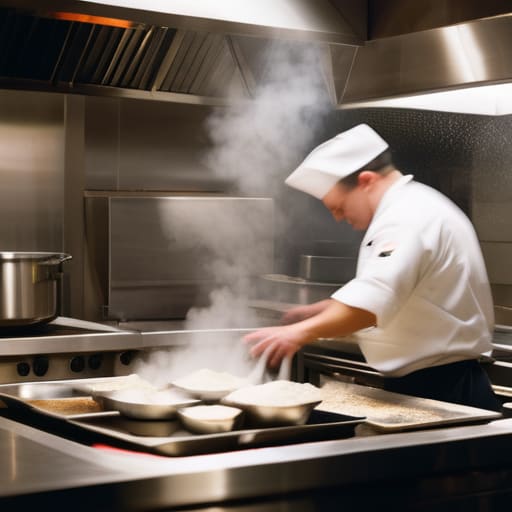
At the end of the day, managing stress isn’t about some lofty wellness seminar or a bowl of fruit in the staff room; it is about the structural integrity of your business. It is about realizing that a menu with too many components is a recipe for a frantic, error-prone kitchen, and that a rota built on the assumption that no one ever gets sick is a ticking time bomb. You have to look at your staffing, your pacing, and your systems through the lens of human capacity. If you don’t protect your people from the chaos, they will eventually find a way to protect themselves by simply walking out the door, leaving you to face the dinner rush alone.
I spent twenty-six years watching the ebb and flow of service, and I can tell you that the most successful rooms weren’t the ones that never felt the heat, but the ones that knew how to cool down. This industry is a beautiful, exhausting, relentless machine, and it will take everything you give it if you let it. But if you build your business on a foundation of respect and realistic expectations, you won’t just survive the season—you’ll build something that lasts. Don’t just aim to serve a perfect plate; aim to build a kitchen worth working in, and the rest will follow.
Frequently Asked Questions
How do I balance the need for a disciplined, tight service with the reality that my staff are human beings who can't run on adrenaline for twelve hours straight?
You have to stop treating your staff like kitchen equipment. A line cook isn’t a stainless steel prep table; you can’t just wipe them down and expect them to work the same way tomorrow. Discipline comes from the system—the prep lists, the mise en place, the clear station ownership—not from shouting. If your service relies on adrenaline, you’re not running a restaurant; you’re running a crisis, and crises aren’t sustainable.
When the margins are this thin, how am I supposed to invest in better staffing or mental health support without compromising the business's survival?
You don’t invest by writing a bigger check to a therapist; you invest by fixing the leaks in your own house. If you’re bleeding money on food waste or letting a disorganized prep list turn your kitchen into a war zone, you’ve already lost the ability to care for your people. Efficiency isn’t just about profit; it’s about removing the unnecessary chaos that breaks a human being. Tighten your systems first, then use those saved pennies to buy some breathing room.
How do I spot the difference between a staff member who is just having a bad shift and one who is genuinely hitting a breaking point before they walk out mid-service?
A bad shift is loud; a breaking point is quiet. When someone is just having a rough night, they’re usually frustrated, snappy, or visibly flustered—they’re still fighting the chaos. But when someone is hitting the wall, the fight leaves them. They become hollow. They’ll follow the ticket rail perfectly, but their eyes go vacant, and they stop flagging the small errors. If a once-sharp server suddenly becomes a ghost who just follows orders without soul, they aren’t having a bad night. They’re already halfway out the door.
