 Written by
 I once watched a young, eager sommelier spend ten minutes performing a theatrical ritual with a vintage Bordeaux, swirling, sniffing, and lecturing a table of two as if he were delivering a sermon. The guests sat there, frozen and uncomfortable, while the candlelight flickered over their untouched appetizers. Most people will tell you that a complete guide to wine service is about the elegance of the pour or the prestige of the label, but they are lying to you. In a real dining room, wine service isn’t a performance; it is a logistical dance that either smooths the evening over or grinds the entire momentum of the restaurant to a halt.
I’m not here to teach you how to look important while holding a decanter. I’m going to give you the truth about what happens when the dining room is full, the kitchen is screaming, and a guest asks for a recommendation that isn’t on your margin. This is a guide built on thirty-eight years of seeing how a single misplaced cork or a slow pour can break a service. We will talk about the mechanics, the math, and the quiet, invisible movements that separate a professional from a pretender.
Opening a Bottle of Wine Professionally Without the Theater
I’ve seen too many young servers treat a bottle of Bordeaux like a prop in a stage play, performing some grand, sweeping ritual that serves nothing but their own ego. In my sixteen-seat room, we didn’t have time for theater; we had a dining room to run. Opening a bottle of wine professionally isn’t about the flourish of the corkscrew or the dramatic presentation of the label—it’s about quiet competence and respect for the liquid inside. You aren’t there to perform; you are there to facilitate.
The real work happens in the silence. It’s the steady hand that ensures the foil is cut cleanly, preventing those jagged edges from ruining a guest’s experience, and the careful extraction of the cork without a single pop that sounds like a gunshot in a quiet room. If you’re rushing, you’re risking a broken cork, and a broken cork is a lost profit margin and a frustrated customer. True sommelier service standards aren’t about being seen; they are about being so seamless that the guest forgets the mechanics entirely and focuses solely on the conversation.
The Silent Math of Correct Wine Glass Shapes
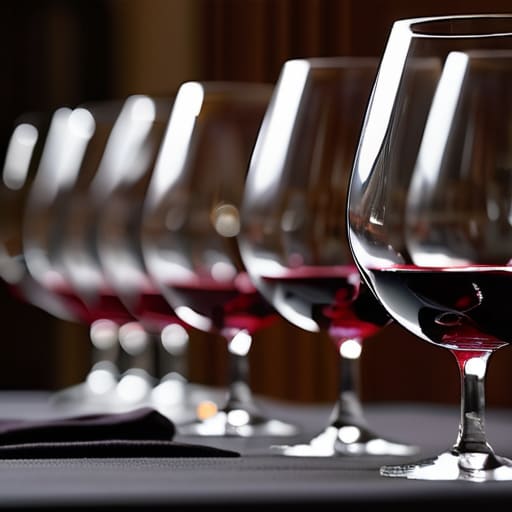
People love to talk about the “romance” of glassware, but in a working dining room, a glass is a tool, not a piece of jewelry. When I look at a table, I’m not checking if the crystal sparkles under the pendant lights; I’m looking at whether the stem is sturdy enough to survive a busy Friday night and if the bowl is actually doing its job. Using the correct wine glass shapes isn’t about being precious or following some arbitrary sommelier service standards just to look important. It’s about physics. If you serve a heavy, tannic Cabernet in a narrow, upright flute, you’re essentially suffocating the wine, forcing the guest to pay for a vintage that tastes like nothing but closed-off fruit and bitterness.
The real cost, however, is in the breakage and the inventory. Every time a server reaches for a delicate, oversized Burgundy balloon and clips the rim against the edge of a plate, that’s money straight out of the food budget. You have to balance the aerating wine benefits of a wide bowl against the practical reality of a small, high-turnover room. A glass that is too large is a liability; a glass that is too small is a disservice. You want the shape that lets the wine breathe without making the guest feel like they’re drinking out of a fishbowl.
Five Realities of the Floor That They Don't Teach You in Sommelier School
- Watch the guest, not the label. A common mistake is getting so caught up in the prestige of a Grand Cru that you miss the fact that the diner is actually looking for something crisp to cut through a fatty sauce. The service isn’t about showing off your knowledge; it’s about reading the table’s hunger.
- The “Invisible” Refill. If you’re hovering every time a glass hits the halfway mark, you’re an interruption, not a professional. The best service happens in the gaps—refilling a Cabernet when the conversation is flowing, but leaving a white wine alone if the guest is clearly mid-sip. You want to be a ghost, not a stagehand.
- Temperature is a non-negotiable cost. I’ve seen too many young managers let a bottle of Chardonnay sit on a warm sideboard because they were short-staffed. When you serve warm white wine, you aren’t just failing a technical standard; you are actively devaluing the inventory you spent three weeks’ profit to stock.
- Master the art of the “No.” If a guest asks for a bottle that is clearly past its prime or a pairing that will fight the dish, don’t just nod and take the order. It costs more in lost reputation and wasted food than the price of the bottle. Suggest the alternative with enough grace that they feel guided, not corrected.
- Managing the corkage politics. When a guest brings their own bottle, don’t treat it like a personal insult to your cellar. Treat it as a logistical task. You still have to provide the glassware, the temperature control, and the labor to serve it. Charge the corkage fee firmly, but do it with a smile that says you’re happy to facilitate their ritual.
The Bottom Line on the Pour
Good service isn’t about the performance; it’s about the precision that prevents waste, because every ounce poured down the drain is a direct hit to the house margin.
Stop treating glassware like an aesthetic choice and start seeing it as a tool for flavor management—the right glass justifies the price point on the menu.
The goal of professional service is to be seamless, not spectacular; if the guest notices the “theater” of the opening, you’ve likely interrupted the flow of the meal and the rhythm of the room.
The Real Cost of a Bad Pour
Most people think wine service is about the ceremony or the label, but it’s actually about the math; if your server spills a heavy pour or fails to manage the temperature, they aren’t just being clumsy—they are actively eroding the razor-thin margin that pays the rent and keeps the kitchen staff from walking out.
Rosalind Achterberg
The Last Pour
At the end of the day, good wine service isn’t about the choreography or the fancy French terms that make a novice feel important. It’s about the fundamentals: knowing why you chose that specific glass, why you’re handling that cork with respect, and why you aren’t performing a circus act at the table. When you strip away the theater, you’re left with the reality that every pour is a calculation of precision and timing. If you get the temperature wrong or let a bottle sit too long because you were too busy being “professional” to actually notice the guest, you haven’t provided service; you’ve just provided a distraction. Remember, the goal is to ensure the wine does the talking, while you remain the invisible, steady hand that makes it possible.
I spent twenty-six years watching people try to impress me with their knowledge, only to realize that the most talented servers were the ones who simply made the room feel easy. Wine can be intimidating, expensive, and temperamental, but your job is to be the bridge between the liquid in the glass and the person drinking it. Don’t aim for perfection—perfection is brittle and breaks the moment a kitchen ticket gets slammed. Aim for grace under pressure and a genuine respect for the product. If you can master the quiet mechanics of the service, you won’t just be pouring drinks; you’ll be protecting the very soul of the dining experience.
Frequently Asked Questions
How do I handle a guest who insists on opening a bottle that’s clearly past its prime without making them feel like a fool?
You don’t make it a confrontation; you make it a collaboration. Never say, “This is dead.” Instead, pour a tiny taste and say, “This vintage is behaving quite temperamental tonight—would you like to try it as is, or shall I bring the list so we can find something more vibrant?” You’re not correcting their taste; you’re protecting their experience. It’s about saving their evening, not winning an argument over a cork.
When is it actually acceptable to charge corkage, and when am I just being greedy and driving away regulars?
Corkage isn’t a penalty; it’s a cover charge for the glass, the ice, the linen, and the person who has to polish it. If a guest brings a bottle that costs less than your house markup, you’re subsidizing their dinner with your overhead. Charge it when you’re providing the service and the infrastructure. But if a regular brings a special vintage to celebrate a milestone? Waive it. That’s not greed; that’s building a relationship.
How much of my profit margin am I actually losing by letting staff pour "just a splash" for a tasting?
It feels like nothing, but that “just a splash” is a leak in your bucket. If a server pours a heavy two-ounce taste for every guest, you’re losing nearly an entire bottle for every twelve tables. In a business where we fight for every percentage point, that’s not just hospitality; it’s giving away your rent. Control the pour, use a graduated tasting glass, and teach them that every drop is a line item on the ledger.
