 Written by
 I once spent three weeks watching a manager at a high-end bistro attempt to teach his staff through a thick, laminated binder of “service standards” that read more like a legal contract than a way to treat people. He thought he was perfecting the art of hospitality, but all he was doing was teaching his team how to look like terrified statues instead of capable professionals. Most people approach the question of how to train front of house by obsessing over the wrong things—the exact angle of a fork or the precise wording of a wine description—while completely ignoring the fact that a waiter who can’t read a room is just a walking liability.
I’m not here to give you a checklist of polite phrases or a lecture on the “magic” of a smile. I’m going to tell you how to build a team that actually understands the mechanics of a service, from the subtle art of timing a course to the grit required to handle a broken glass during a rush. We’re going to talk about the stuff the textbooks skip: how to teach intuition, how to manage the invisible tension between the kitchen and the floor, and how to ensure your staff knows that they aren’t just serving food, they are managing the business’s reputation one table at a time.
The Onboarding Process Building People Not Just Placing Shifts

When a new face walks through your door, the temptation is to hand them a clean apron, show them where the extra napkins are kept, and throw them straight onto the floor for a “trial by fire.” I spent years doing that, and I can tell you now: it’s a bloody expensive way to lose a good person. A proper restaurant staff onboarding process isn’t about checking off a list of chores; it’s about teaching them the rhythm of the room. You aren’t just filling a gap in the rota; you are introducing a human being to the soul of your business.
If they don’t understand the why behind the way you do things, they’ll never master the how. This means more than just basic menu knowledge training—though God knows, a server who can’t explain the difference between two sauces is a liability. It means sitting them down and explaining that when a guest asks for a recommendation, they aren’t just selling a dish; they are managing an expectation. You have to build their confidence before the first order ticket ever prints, or you’ll spend your entire service playing damage control.
Menu Knowledge Training Why Ignorance Costs More Than Ingredients
I’ve seen it a thousand times: a server nods confidently at a guest, only to retreat to the kitchen five minutes later to ask the chef if the scallops are local or if the sauce contains dairy. That retreat is a silent killer. Every time a waiter has to leave the table to find an answer, you aren’t just losing time; you are eroding the guest’s confidence. In my sixteen-seat room, a lack of menu knowledge training wasn’t just an embarrassment—it was a direct hit to the bottom line. When a server can’t describe a dish with authority, they can’t upsell the wine that pairs with it, and they certainly can’t guide a guest through a premium tasting menu.
Ignorance is expensive. It’s the cost of a returned dish that was ordered incorrectly, or the lost revenue from a table that sat for twenty minutes because no one knew how to explain the specials. True hospitality service excellence isn’t about memorizing a list of ingredients; it’s about understanding the soul of the plate. Your staff needs to know why the chef chose that specific acidity or why the sourdough is fermented for forty-eight hours. If they don’t care about the story, the guest won’t care about the price tag.
The Real Lessons: Five Things They Don't Teach You in the Manual
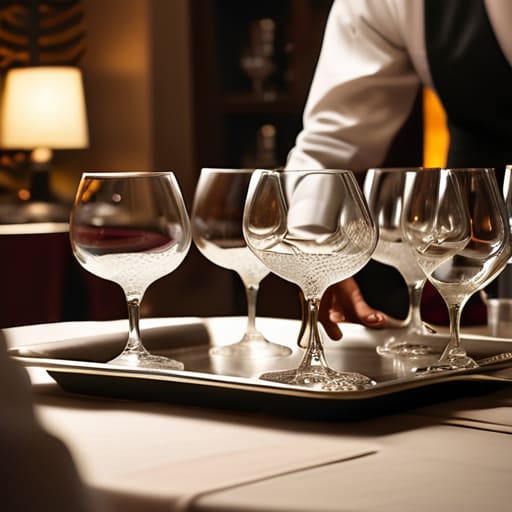
- Teach them the “Art of the Pivot.” It isn’t about knowing which fork is for the fish; it’s about knowing how to move through a crowded room when a server has just dropped a tray of sparkling water without making the guests feel like they’re in a disaster zone.
- Prioritize situational awareness over rote memorization. I’d rather have a waiter who can read the body language of a couple having an argument and knows to give them space, than one who can recite the tasting notes of a Malbec but can’t tell when a water glass has been empty for ten minutes.
- Explain the “Why” behind the math. If a staff member understands that a spilled bottle of expensive Burgundy isn’t just a mess to clean up, but a hit to the week’s margin that affects everyone’s tips, they’ll handle the glassware with a lot more respect.
- Master the graceful recovery. Mistakes are going to happen—the kitchen will lag, or the steak will be overdone—but a trained staff member knows that a sincere, immediate apology and a proactive solution are worth more than any scripted “corporate” apology.
- Train for the quiet moments. The best staff aren’t the ones performing for a full house; they are the ones who maintain the same standard of professionalism and attention when there are only two tables in the room and the energy has dipped.
The Bottom Line: What Your Floor Staff Actually Needs to Carry
Stop training for perfection and start training for awareness; a waiter who knows how to read the energy of a table is worth ten who have simply memorized the ingredients of the risotto.
Knowledge isn’t just about the menu; it’s about understanding the math of the room, so they know why suggesting a second bottle of wine is a service to the guest and a lifeline to the business.
Invest in the person, not just the position, because a staff member who feels like a cog in a machine will never have the intuition required to save a service when the kitchen hits a wall.
The Cost of a Quiet Mistake
You don’t train a server just so they can recite the ingredients in a risotto; you train them so they have the backbone to tell a guest ‘no’ when the kitchen is drowning, and the grace to do it without making the guest feel like a burden. A staff member who knows the menu is an asset, but a staff member who knows how to read the energy of a room is what keeps your lights on.
Rosalind Achterberg
The Bottom Line Behind the Service
At the end of the day, training your front of house isn’t a box-ticking exercise to be completed in a dusty staff handbook; it is the single most important investment you will make in your P&L. When you get the onboarding right, when your team actually understands the cost of a wasted bottle of wine or the delicate rhythm of a busy Friday night, you aren’t just improving service—you are protecting your margins. You are moving away from a culture of firefighting and toward a business that actually functions with intention. Remember, every mistake your staff makes on the floor is a mistake you are paying for, usually with interest.
Running a dining room is a heavy, beautiful, and often exhausting business, and your staff are the ones who carry that weight alongside you. If you treat training as a chore, they will treat the guests as a burden. But if you invest the time to build their confidence and their intuition, they will become the heartbeat of your room. Don’t aim to build a team of robots who can recite a wine list; aim to build a team of professionals who can read a room. It’s much harder to do, and it takes a lot more patience, but it’s the only way to ensure that when the lights go down and the last guest leaves, you still have a business worth waking up for tomorrow.
Frequently Asked Questions
How do I train a staff member to handle a difficult customer without them losing their composure or making me look bad in front of the dining room?
You don’t train them to “win” an argument; you train them to de-escalate it before the sound carries to the next table. Teach them the ‘silent retreat’: if a guest is making a scene, the server acknowledges, offers a solution, and then steps back to let the heat dissipate. Most importantly, give them the authority to make small, instant fixes—a free drink or a quick swap—without asking permission. If they have to hunt you down to fix a mistake, the damage is already done.
When a restaurant is short-staffed on a Friday night, how do I teach my team to prioritize service without the whole floor falling apart?
You don’t teach them how to handle a crisis when the tickets are already hitting the floor; you teach them how to triage. When you’re short-staffed, the goal isn’t perfection—it’s momentum. I used to tell my team: “Eyes up, water filled, and never walk empty-handed.” Teach them to prioritize the “touchpoints” that prevent guest anxiety. A guest can forgive a slow main course, but they won’t forgive a dirty table or a forgotten drink.
At what point does "learning the ropes" end and actually being trusted to run a section on their own?
It ends the moment they stop asking you where the extra napkins are and start anticipating the guest who looks slightly lost. You don’t hand over a section based on a checklist; you do it when you stop feeling the need to hover. It’s a gut feeling. When you can walk into the walk-in to check an order and trust that the room won’t descend into chaos while your back is turned, they’re ready.
