
 Written by
 I remember sitting in my office at two in the morning, staring at a spreadsheet that told me I’d had a record-breaking Saturday night, yet my bank balance suggested I’d been robbed. I had sold every plate, the wine was flowing, and the guests were raving—but I was losing money on every single order. Most people will try to sell you a “complete guide to food cost control” that involves expensive software or some magic mathematical formula that promises to turn your kitchen into a Swiss watch. Let me tell you something: software doesn’t peel potatoes, and a fancy algorithm won’t stop your prep cook from throwing away half a bag of wilted herbs because they were too lazy to rotate the stock.
I’m not here to give you a lecture on theoretical percentages or academic nonsense. I’m going to give you the truth about where the money actually disappears—from the way you talk to your suppliers to the exact moment a chef decides to “eyeball” a portion of protein. This is my unvarnished roadmap to plugging the leaks that sink even the most talented kitchens. We aren’t just chasing numbers; we are fighting to keep the lights on, and I intend to show you exactly how to win that fight.
Why Standardized Recipe Costing Is Your Only Lifeline

I once knew a chef—lovely man, brilliant with a knife—who thought he could run a kitchen on “vibes” and a handful of memory. He’d cook a spectacular sea bass, but he wasn’t measuring the weight of the garnish or the amount of butter hitting the pan. By the time the month ended, his sales were up, but his bank account was empty. That is the danger of flying blind. Without standardized recipe costing, you aren’t actually selling a menu; you’re playing a high-stakes game of roulette with your own livelihood.
Every time a cook “eyeballs” a portion of protein or a heavy hand reaches for the truffle oil, your restaurant profit margins evaporate. It’s not just about the big items, either. It’s the cumulative weight of a dozen unmeasured ingredients that quietly pulls you under. You need to know exactly what a plate costs down to the penny, including the waste you account for during your yield testing methods. If you don’t know the math behind the meal, you don’t have a business—you just have an expensive hobby that’s slowly draining your life savings.
The Brutal Truth About Yield Testing Methods and Waste

Most chefs treat yield testing as a chore for the slow Tuesday afternoons, something to be scribbled on a damp napkin and forgotten. But if you aren’t actually measuring what’s left in the bin after you’ve butchered that whole salmon or trimmed those carrots, you’re just guessing. You might think you’re paying £20 a kilo for a prime cut, but if your prep team is hacking away like they’re clearing brush in a forest, your actual cost per usable ounce is much higher. This is where the math stops being academic and starts being the difference between a healthy bottom line and a forced sale.
You cannot rely on the “gut feeling” of a seasoned cook to manage your margins. Even the best hands have bad days, and bad days translate directly into shrinking restaurant profit margins. I’ve seen too many beautiful dining rooms go under because they ignored the gap between what the invoice said and what actually made it onto the plate. You need to implement rigorous yield testing methods that account for the bone, the skin, and the trimmings. If you don’t know exactly what your usable product costs, you aren’t pricing your menu; you’re just playing a very expensive game of roulette.
The Five Leaks That Will Sink You Before the Dessert Course
- Stop treating your inventory like a suggestion. If you aren’t doing a physical count of every single bottle of oil and every kilo of protein at the end of the week, you don’t actually know your food cost—you’re just guessing and hoping for the best. You can’t manage what you don’t measure, and “eyeballing it” is just a slow way to go bankrupt.
- Watch your prep, not just your plates. Most owners focus on what the customer sends back, but the real money is being thrown into the bin during the morning prep session. If your prep cooks are trimming more fat off a tenderloin than necessary because they’re in a rush, that’s pure profit disappearing into the compost.
- The “Special” is a dangerous game. I love a chef with creativity, but every time you add a “daily special” that isn’t on your established cost sheet, you are flying blind. If you haven’t calculated the exact cost of that seasonal scallop dish down to the gram, you aren’t running a kitchen; you’re running a high-stakes gamble.
- Tighten the screws on your receiving process. It sounds tedious, but if you aren’t checking every delivery against the invoice, you’re letting suppliers bleed you dry. I’ve seen more money lost to shorted crates of tomatoes and heavy-handed weight discrepancies than to actual kitchen errors. If it’s not on the invoice, it doesn’t go in the walk-in.
- Respect the power of the “small” items. People obsess over the price of the ribeye and ignore the cost of the butter, the salt, and the garnishes. Those tiny, incremental costs are what bridge the gap between a profitable month and a month where you’re scrambling to meet payroll. A restaurant dies by a thousand cuts, and usually, those cuts are the things you thought were too small to matter.
The Bottom Line: What You Can’t Afford to Ignore
If you aren’t costing your recipes down to the gram, you aren’t pricing your menu—you’re just guessing, and hope is not a line item on a profit and loss statement.
Stop treating “waste” like an inevitable part of the job; every bruised tomato or over-portioned steak is a direct withdrawal from your personal bank account.
Real food cost control happens in the quiet moments between deliveries and service, not in a frantic spreadsheet at the end of a month when the money has already vanished.
The Myth of the Magic Margin
You can have the most talented chef in the city and a dining room full of regulars, but if you aren’t counting every gram of butter and every bruised sprig of thyme, you aren’t running a restaurant—you’re just subsidizing your guests’ dinners with your own retirement fund.
Rosalind Achterberg
The Bottom Line Isn't on the Plate
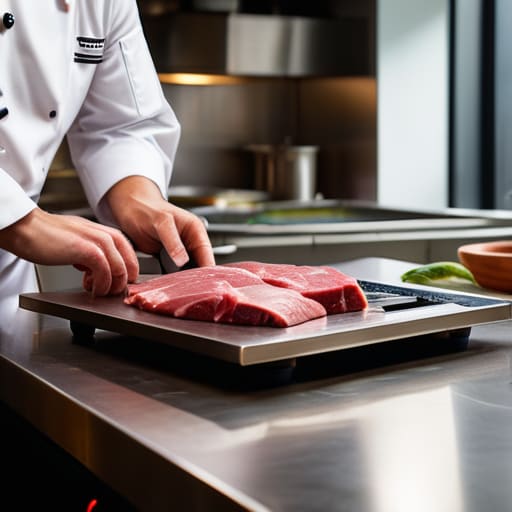
At the end of the day, food cost control isn’t about being stingy with the butter or obsessing over a single bruised tomato; it’s about the discipline of knowing exactly where every cent is hiding. You’ve looked at the recipes, you’ve fought the battle against yield loss, and you’ve realized that if you aren’t measuring your portions, you aren’t managing a business—you’re just subsidizing your customers’ appetites. It’s a relentless, daily grind of checking the invoices, watching the bin, and making sure the staff understands that a wasted kilo of protein is a kilo of profit gone forever. You can have the most talented chef in the city, but if they don’t respect the math behind the menu, all that talent is just a very expensive way to go broke.
I know it feels heavy sometimes, staring at those spreadsheets after a sixteen-hour shift when all you want to do is sit down and forget the kitchen exists. But remember why you do this: you control the costs so that you can afford to keep the lights on, pay your team a fair wage, and actually enjoy the food you serve. Mastery of the numbers is what gives you the freedom to be creative. Once you stop the bleeding, you stop playing defense and start building something that actually lasts. Don’t let the numbers scare you; make them work for you, because a well-run kitchen is a beautiful thing to behold.
Frequently Asked Questions
If I’m already weighing my portions, why am I still seeing my margins slip at the end of the month?
Because weighing the protein is only half the battle. You’re likely obsessing over the fillet but ignoring the “invisible” theft: the heavy-handed pour of olive oil, the handful of herbs tossed on without thought, or the prep cook who “samples” three scallops during service. If your margins are slipping despite your scales, your problem isn’t the portion size—it’s the lack of discipline in the small, unmeasured things that add up to a massive leak.
How much of my food cost is actually being stolen by "invisible" waste like seasoning, oil, and the scraps my prep cooks are tossing?
It’s the “death by a thousand cuts.” You won’t see it on a single invoice, but it’s there. If you aren’t weighing your salt, measuring your oil, or tracking your trim, you’re likely losing 3% to 5% of your margin to the bin. It’s the heavy-handed seasoning, the “extra” splash of expensive oil, and the prep cook who hacks a cauliflower into useless chunks. That’s not just waste; that’s your profit evaporating.
When should I actually bite the bullet and change my prices versus just trying to squeeze more efficiency out of my current suppliers?
Don’t play games with your margins for too long. If you’re spending more time haggling with your veg supplier over a two-percent increase than you are actually looking at your P&L, you’ve already lost. Efficiency has a ceiling; eventually, you’re just asking your staff to work harder for less. When your food cost percentage creeps up because the market has shifted—not because your team is being sloppy—it’s time to raise your prices. Better to be honest with your guests than to go broke being “fair.”
