
 Written by
 I remember a rainy Tuesday in my old sixteen-cover dining room, standing over a service well that looked more like a crime scene than a professional station. My head waiter, a bright lad with more ambition than sense, thought he could “wing it” by simply throwing a damp cloth over the garnishes and calling it a night. He didn’t realize that knowing how to close a service well isn’t about tidying up; it’s about the invisible math of the next morning. If you leave a single lime wedge to rot or a milk jug sitting in the lukewarm air, you aren’t just being messy—you are actively throwing your profit into the bin before the sun even comes up.
I’m not here to give you a sanitized, corporate checklist that reads like it was written by someone who has never had a shift from 6 PM to midnight. Instead, I’m going to tell you how to close a service well so that your morning prep is a breeze rather than a desperate scramble. We’ll talk about the real costs of laziness, the specific way to protect your stock, and how a disciplined close is the only thing standing between a successful business and a slow, expensive collapse.
Why Restocking Service Well Duties Dictate Your Morning Sanity

I used to watch my morning prep cooks walk into the kitchen at 6:00 AM. If I’d left the service well a disaster zone the night before, I could see it in the way they moved—shoulders slumped, eyes scanning the chaos instead of the prep list. When you skip the proper restocking service well protocols, you aren’t just being “efficient” by leaving for the night; you are effectively stealing time from the person who has to open. A messy station means the morning crew spends their first hour hunting for misplaced garnishes or scrubbing dried syrup off a rail instead of actually getting the room ready for service.
It’s a matter of operational momentum. If your end of shift duties are treated like an afterthought, you create a bottleneck that ripples through the entire day. I always told my staff that a clean, fully stocked well is the difference between a calm setup and a frantic scramble. You want your morning team walking into a station that is ready to perform, not a crime scene that requires a deep clean before they can even crack an egg.
The Cruel Math of Poor Closing Side Work Efficiency

People think “side work” is just a list of chores to keep the boss happy, but in a real kitchen or bar, it’s a calculation of survival. When a staff member treats their end of shift duties like a suggestion rather than a mandate, they aren’t just being lazy; they are actively stealing from the next shift. If the person closing the well leaves the garnishes depleted and the ice bin half-empty, they’ve just handed the morning crew a forty-minute deficit. That’s forty minutes of labor costs that shouldn’t exist, eaten up by the sheer friction of fixing someone else’s negligence.
It’s a math problem that most owners don’t catch until the bank statement arrives. Poor closing side work efficiency ripples through the entire P&L. You see it in the wasted prep, the frantic, uncoordinated rushes when the morning crew is playing catch-up, and the eventual burnout of your best people. When you don’t respect the ritual of the close, you aren’t just leaving a mess; you are eroding the very foundation of your profit margins, one unwashed glass and one empty well at a time.
Five Ways to Stop Your Morning Shift from Being a Total Write-Off
- Don’t just “top up” the garnishes; audit them. If you’re leaving a half-empty squeeze bottle of aioli or a weeping container of sliced chilies for the morning crew, you aren’t being efficient, you’re being lazy. You’re forcing the opener to play detective with your leftovers instead of letting them get straight to the prep that actually pays the bills.
- The “Dry Wipe” is non-negotiable. I don’t care how tired your hands are at 11:00 PM; if you leave sticky residue or dried juice on the well’s edge, you’re inviting fruit flies to a banquet. A clean well isn’t about aesthetics; it’s about not spending the first hour of tomorrow’s service fighting pests instead of serving guests.
- Check your stock levels against the actual prep list, not your gut. There is nothing more expensive than a cook arriving at 8:00 AM to find the well is “full” of visually appealing but practically empty containers. If you’re running low on the essentials—lemons, herbs, or salt—write it on the board. A note costs nothing; a missed order costs a customer.
- Organize the heavy hitters. The items you use every single minute—the salt, the oils, the most-used citrus—should be positioned so they don’t require a reach or a scramble. If your closing team leaves the well in a chaotic heap, the morning team will spend their energy fighting the layout rather than the lunch rush.
- The final sweep of the refrigeration seals. If you’re closing a service well and ignoring the gaskets on the under-counter fridges, you’re essentially throwing money into the bin. A seal that isn’t wiped clean or seated properly is a slow leak of electricity and temperature, and in a small room, those utility bills are the silent killers.
The Real Cost of Cutting Corners at the Close
A messy service well isn’t just an aesthetic failure; it’s a hidden tax on your morning labor costs, forcing your opening team to spend their first expensive hour cleaning up yesterday’s laziness instead of prepping for today’s service.
Treat your closing side work as a financial audit of your prep levels—if you aren’t restocking precisely to your par levels, you’re either over-ordering and watching money rot in the walk-in, or you’re setting your morning chef up for a panicked, expensive rush.
The discipline of a clean well is the difference between a kitchen that runs on rhythm and one that runs on adrenaline; if you don’t master the close, you’ll spend your entire career fighting fires that could have been extinguished with twenty minutes of organized diligence.
The Cost of a Messy Station
If you think skipping the service well reset at midnight is just saving ten minutes of sleep, you’re wrong; you’re actually signing a contract to pay for that time twice tomorrow morning, in wasted prep, frantic searching, and the kind of expensive mistakes that only happen when a kitchen starts the day already behind.
Rosalind Achterberg
The Last Look Before the Lights Go Out
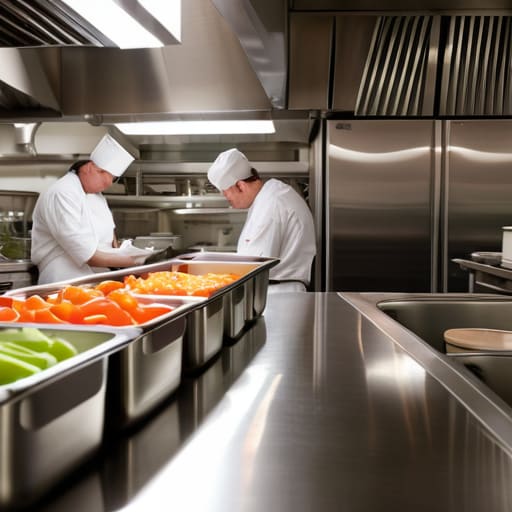
At the end of the day, closing a service well isn’t about checking boxes on a laminated sheet or making sure the spoons are straight; it’s about the integrity of the setup. If you leave the station a mess, you aren’t just being lazy, you are actively stealing time from the person who has to walk in tomorrow morning. You’re forcing them to spend their first precious hour of prep fighting your ghosts instead of getting the mise en place ready for service. Whether it’s the math of the wasted stock or the sheer mental drain of a disorganized station, a poorly closed well is a silent tax on your profit margins and your team’s morale.
I spent twenty-six years watching how a single shift could set the tone for the entire week. When you take those extra ten minutes to scrub the rails, restock the garnishes, and organize the backups, you aren’t just cleaning—you are building a foundation. You are deciding that the restaurant you run deserves to succeed tomorrow as much as it did today. It’s a quiet, unglamorous kind of discipline, but it is the only way to survive in this business long-term. Go home knowing the station is ready, the books are straight, and you’ve given your morning self a fighting chance.
Frequently Asked Questions
If I’m running a tiny room with only two staff on the close, which parts of the well can I realistically compromise on without ruining the morning prep?
Look, when it’s just you and one other soul against the clock, you have to triage. Don’t touch the heavy prep or the deep cleaning—that’s what kills your morning. Focus on the “high-friction” items: the sauces, the proteins, and the essential garnishes. You can skip the fancy infusions or the decorative herb sprigs, but if you show up to a dry well and empty squeeze bottles, you’ve already lost the service before the first order hits.
How do I stop my closing team from treating the service well like a dumping ground for whatever prep wasn't finished during the rush?
You have to stop treating “closing” like a suggestion and start treating it like a handover. If they’re dumping unfinished prep into the well, they aren’t just being lazy; they’re stealing time from the morning crew and sabotaging the service rhythm. You need a hard checklist that isn’t just a list of tasks, but a standard of readiness. If the well isn’t reset to zero, the shift isn’t over. Period. No exceptions, no “we’ll get it tomorrow.”
At what point does a "deep clean" of the well stop being about hygiene and start becoming a waste of expensive labor hours?
It becomes a waste the moment you’re scrubbing a stainless steel surface that was spotless twenty minutes ago just to satisfy a sense of martyrdom. Deep cleaning is about the grime you can’t see—the gaskets, the undersides, the drains. But if you’ve got a line cook standing there at midnight, eyes glazing over, scrubbing a dry rail because the manager wants “perfection,” you aren’t cleaning; you’re burning daylight you can’t afford to buy back tomorrow.
