 Written by
 I remember a rainy Tuesday in my old dining room, watching a young, bright-eyed manager try to explain to a waiting couple why their 7:00 PM reservation was being pushed to 7:30 PM. He was using all the right corporate jargon, apologizing profusely while looking at a tablet, but he was missing the point entirely. He thought the problem was the software, when the real issue was that he hadn’t mastered how to handle bookings and walk ins without sacrificing the dignity of the person standing in the doorway. You can have the most expensive reservation system in the world, but if it doesn’t account for the human friction of a sudden rush or a late arrival, it’s just an expensive way to make people feel unwelcome.
I’m not here to sell you on some shiny new app or a complex algorithm that promises to “optimize your floor.” Instead, I want to talk about the actual mechanics of the room—the math of the gap between tables and the psychology of the wait. I’m going to show you how to protect your booked guests without making your walk-ins feel like an afterthought, because a restaurant that only works when everything goes perfectly is a restaurant that is destined to fail.
Balancing Seating Capacity Without Breaking Your Staff
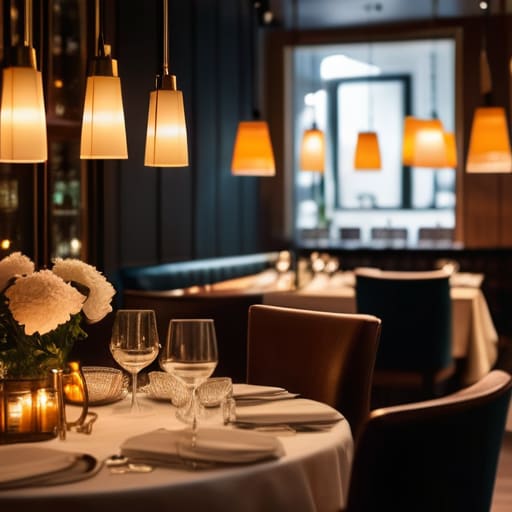
The mistake most new owners make is looking at their floor plan like a game of Tetris, trying to cram every available inch with a body. They think a full room equals a profitable night, but they forget that a restaurant is run by humans, not machines. If you focus solely on balancing seating capacity by squeezing an extra table into a corner, you aren’t increasing revenue; you’re just increasing the heat in the kitchen and the tension on the floor. When the room is too tight, the service begins to fray at the edges. Your servers stop being hosts and start being frantic runners, and that is exactly when the quality of the food—and the soul of your business—starts to slip.
You have to find the sweet spot where you are optimizing table turnover rates without making your staff feel like they are running a marathon in a burning building. I learned the hard way that a slightly slower turn with a happy, well-paced team is infinitely more profitable than a frantic rush that leaves your best waiter crying in the walk-in at midnight. Don’t let the pursuit of a “full house” turn your front of house operations into a battlefield.
Optimizing Table Turnover Rates to Keep the Lights on
Everyone talks about turnover like it’s a stopwatch race, but in a small room, it’s more like a heartbeat. If you push too hard, you create a frantic, hollow atmosphere that sends guests running for the exit; if you’re too slow, you’re essentially paying your staff to stand around watching the clock tick while your margins evaporate. Optimizing table turnover rates isn’t about rushing the dessert coffee; it’s about the invisible choreography of the kitchen and the floor. It’s knowing that if the mains hit the table ten minutes late, you’ve already lost control of your entire evening.
The real secret to handling peak hour demand without losing your mind is preparation, not speed. I used to think a faster waiter meant more money, but I was wrong. A faster waiter often just means more mistakes, more comped drinks, and a stressed-out kitchen. True efficiency comes from a seamless flow where the clearing of one table is timed perfectly with the arrival of the next. You want your guests to feel like they have all the time in the world, even while you are meticulously managing the clock to ensure the next booking can sit down the moment the crumbs are swept.
Five Hard Truths About Protecting Your Floor
- Stop treating walk-ins like a nuisance or a goldmine; they are a variable, and if you don’t account for that variable in your floor plan, your booked tables will be the ones who suffer.
- Learn the art of the “soft no”—never tell someone you’re full, tell them you’re at capacity for the next hour, and offer them a drink at the bar to keep them in your orbit rather than walking out the door.
- Your reservation book isn’t a suggestion, it’s a contract, so if you find yourself overbooking to “fill the gaps,” you aren’t being smart, you’re just setting your service staff up for a breakdown.
- Use your staff as your eyes and ears; the person running plates knows more about the actual rhythm of the room than any digital booking software ever will, so listen to them when they say the kitchen is drowning.
- A walk-in shouldn’t mean a rushed dessert; if you seat someone ten minutes before the kitchen closes, you have to be honest with them immediately about what’s available, or you’ll spend the next hour apologizing for a menu that’s already dead.
The Hard Truths to Carry Out of the Dining Room
A reservation is a promise, not a guarantee; if you don’t have a clear policy for late arrivals, you aren’t being “hospitable,” you’re just letting one table’s tardiness cannibalize the profit from the next three.
Stop treating walk-ins like an inconvenience to be managed and start treating them like a test of your floor’s agility—if your staff looks panicked when a duo walks in, your system is broken, not the customers.
Never sacrifice the quality of the service for the sake of a faster turnover; a table that leaves feeling rushed is a table that won’t come back, and no amount of extra seatings can fix a dying reputation.
The Cost of a Full House
A reservation is a promise you’ve already made to someone, but a walk-in is a test of your hospitality; if you let the person standing at the door ruin the experience for the person who booked three weeks ago, you haven’t just mismanaged your floor, you’ve broken your reputation.
Rosalind Achterberg
The Final Count
At the end of the day, managing your floor isn’t about mastering a piece of software or having the most complex spreadsheet; it’s about the human reality of the room. You have to balance the predictability of a booked table against the spontaneous energy of a walk-in, all while ensuring your kitchen doesn’t hit a wall and your staff doesn’t hit a breaking point. Remember that every decision—whether you turn away a hungry couple at 9:30 PM or squeeze an extra table into a corner—is a trade-off between protecting your margins and protecting your reputation. If you chase every single pound of revenue by overstuffing the floor, you’ll end up paying for it in high staff turnover and a dining room that feels more like a bus station than a restaurant.
If there is one thing I learned during my twenty-six years behind the pass, it’s that a restaurant lives and dies by the rhythm of its service. You can have the most efficient booking system in the world, but if you lose the soul of the room by treating guests like numbers in a queue, you’ve already lost the battle. Run your business with your eyes wide open to the costs, but keep your heart in the hospitality. A well-managed floor is a quiet, invisible dance where everyone—from the dishwasher to the person sitting at table four—feels like they are exactly where they are meant to be. That is how you stay open for another year.
Frequently Asked Questions
How do I know when to stop taking bookings and start holding tables for walk-ins without leaving money on the table?
You stop when your “buffer” is smaller than your staff’s ability to recover. If you’ve booked every seat to the brim, one spilled glass of red or a table lingering over espresso turns your floor into a battlefield. I always held two tables near the door—not because I loved walk-ins, but because those spontaneous diners are the heartbeat of a healthy margin. They fill the gaps that rigid bookings create, provided you aren’t too exhausted to greet them.
What’s the right way to tell a hungry person at the door that we’re full without making them feel like they’ve wasted their evening?
You never just say “we’re full.” That’s a door slamming in their face. You offer them an alternative, or at least a sense of being seen. “We’re fully committed for the next hour, but if you can wait, I can squeeze you in at 8:30,” or better yet, “We can’t seat you now, but there’s a lovely little bistro two doors down that’s perfect for a quick bite.” It’s about managing the rejection.
When a reservation is twenty minutes late, at what point do I stop waiting and give that table to someone actually standing in front of me?
The twenty-minute mark is where the math meets the manners. If you haven’t heard a word, you hold for fifteen. At twenty, you call them; if they don’t pick up, you release the table. You aren’t being rude, you’re being professional. A ghost reservation is a thief—it steals a seat from a paying customer and leaves your staff standing around staring at an empty linen. Protect your floor, not a no-show.
