 Written by
 I’ve sat in enough dining rooms to know that nothing kills the mood faster than a host who treats a greeting like a scripted chore. I see it all the time: staff reciting some hollow, rehearsed line about “how to greet a guest properly” while their eyes are glued to a POS terminal or, worse, scanning the room for a more profitable table. It’s a performance, and guests can smell the lack of sincerity from the sidewalk. When I ran my sixteen-seat place, I knew that a greeting wasn’t about the words you used; it was about the split second where a person realizes they aren’t just another transaction, but a guest who has been expected.
I’m not here to give you a manual on hospitality etiquette or a list of fancy phrases to memorize. Instead, I’m going to tell you what actually happens in those first thirty seconds when the floor is slamming and the kitchen is in the weeds. I’ll show you how to master the art of the welcome without breaking your service rhythm or burning out your staff, because real hospitality is about presence, not perfection. We’re going to talk about the human mechanics of making people feel seen, even when you’re one person short on the floor.
Mastering Professional Hospitality Etiquette Before They Sit

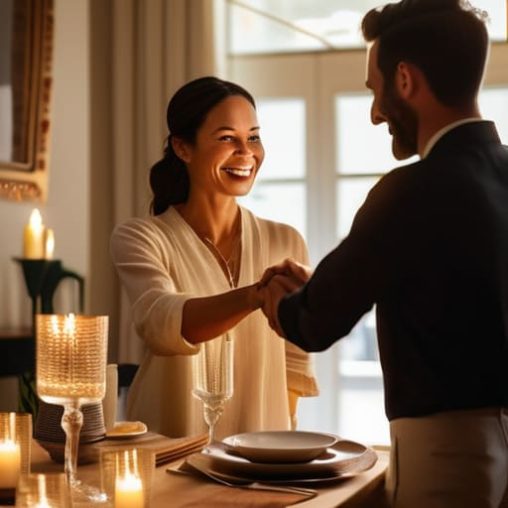
Before a single word is even exchanged, the guest has already decided if they’re going to have a good night or if they’re going to spend the next hour looking for an exit. You can have the finest truffles in the world, but if your host is staring at a POS terminal with their back to the door, you’ve already lost. True professional hospitality etiquette isn’t about a rehearsed line; it’s about presence. It’s the difference between a staff member who looks up, makes eye contact, and offers a genuine half-smile, and one who makes the guest feel like an interruption to their administrative duties.
I used to watch my floor staff like a hawk, looking for those subtle cues in body language for welcoming guests. If a server is slumped or looking at their feet, the guest feels an immediate sense of unease. You want to project an energy that says, “We have been expecting you, and we are ready.” It’s about standing tall, clearing the mental clutter of the kitchen’s chaos, and meeting them at the threshold. You aren’t just opening a door; you are curating their first impression of the entire evening.
The Silent Language Body Language for Welcoming Guests

You can have the most polished verbal greeting techniques in the world, but if your shoulders are slumped or you’re staring too intently at the POS system, you’ve already lost them. I learned this the hard way during a frantic Friday rush in my sixteen-seater. I thought I was being efficient by not looking up, but to the guest, I just looked exhausted and annoyed. When we talk about body language for welcoming guests, we aren’t talking about performing a choreographed dance; we are talking about signal strength. A slight lean toward the guest and an unhurried stance tells them that, despite the chaos in the kitchen, they are currently the most important thing in the room.
It’s also about the eyes. There is a massive difference between a welcoming gaze and a predatory one. You want to catch their eye the moment they cross the threshold—not to pounce, but to acknowledge. This subtle bit of effective communication in hospitality settles the guest’s nerves immediately. They stop scanning the room for permission to exist and start feeling like they’ve actually arrived. If you look like you’re bracing for impact, they will feel like an imposition.
The Real Mechanics of a Welcome: Five Things They Won't Teach You in Hospitality School
- Stop the ‘scripted’ greeting. I spent years watching kids recite “Welcome to [Restaurant Name], how many in your party?” like they were reading a grocery list. It’s hollow. If you see a couple looking lost or a regular walking in, ditch the manual. Acknowledge them as people, not as covers to be processed. A simple, “Good to see you, come on in,” carries more weight than any polished corporate line.
- Watch the eyes, not the floor. When a guest enters, they are scanning the room for permission to exist in your space. If your staff is staring at a POS terminal or a dirty linen pile, the guest feels like an interruption. You need to catch their eye the second they cross the threshold—not to pounce, but to signal that the room is ready for them.
- The ‘Empty Hand’ Rule. There is nothing more demoralizing for a guest than being greeted by a host who is mid-task, perhaps juggling three menus or a stack of dirty ramekins. If you’re about to welcome someone, drop the clutter. You can’t offer genuine warmth when your hands are full of the business’s mess.
- Manage the ‘Wait’ with honesty, not hope. If the table isn’t ready, don’t tell them “it will be just a moment” if you know the kitchen is drowning and that table won’t be cleared for ten minutes. That’s a lie, and guests can smell it. Tell them the truth: “We’re just finishing up a service at that table, would you mind a drink at the bar while you wait?” It gives them agency instead of making them feel ignored.
- Respect the threshold. A greeting isn’t just words; it’s the transition from the street to the dining room. If your host is standing there like a bouncer, the guest stays on guard. If the host is relaxed but attentive, the guest relaxes too. You are setting the tempo for the entire evening in those first thirty seconds; don’t play it too fast, and certainly don’t play it too heavy.
The Real Cost of a Bad First Impression
A greeting isn’t a script to be recited; it’s a handoff. If you’re looking at a computer screen or a POS system instead of the guest’s eyes, you’ve already told them they are an interruption to your job rather than the reason for it.
Timing is everything, but it isn’t just about speed. Acknowledging a guest within ten seconds—even if it’s just a nod and a “I’ll be right with you”—prevents that sinking feeling of being invisible, which is the quickest way to sour a meal before the water is even poured.
Don’t mistake “professionalism” for being stiff. People come to a restaurant to be cared for, not to be processed through a transaction; if your welcome feels like a bank teller’s, you’ve lost the hospitality before you’ve even checked their reservation.
The Cost of a Cold Welcome
A greeting isn’t a checkbox on a training manual; it’s the moment you decide whether that guest is a customer or a person. If you treat them like a transaction before they’ve even sat down, you’ve already lost the profit you were working so hard to make.
Rosalind Achterberg
The Last Word Before the First Bite
At the end of the day, greeting a guest isn’t about perfecting a rehearsed line or standing perfectly still like a statue in the foyer. It’s about the mechanics of respect. It’s about noticing that a couple is shivering because they just walked in from the rain, or seeing the weary look on a businessman’s face and knowing he needs a quiet corner, not a chatty host. You’ve learned that your posture speaks before your mouth does, and that the tiny, unspoken details—the eye contact, the genuine smile, the immediate recognition of their presence—are what separate a dining room from a mere transaction. If you get the welcome wrong, you are spending the rest of the night playing catch-up, trying to fix a foundation that was cracked before they even touched the linen.
I spent twenty-six years watching people walk through my door, and I can tell you this: people will forgive a slightly overcooked scallop or a slow pour of Cabernet, but they will never forget how they felt the moment they stepped inside. Hospitality is a heavy lift, and it is often an exhausting, thankless one, but it is also a profound privilege. When you master the art of the greeting, you aren’t just managing a floor; you are curating an experience that begins the second they cross the threshold. Do it right, and you aren’t just running a business—you’re making people feel seen.
Frequently Asked Questions
What do I do when a guest walks in during the middle of a chaotic, high-pressure service rush?
The worst thing you can do is let them feel like an interruption. I’ve seen it a thousand times: a host looks up, sees a full dining room, and immediately goes cold. That guest will feel that tension in their marrow. Even if you’re drowning, give them three seconds of eye contact and a nod. “I’ll be with you in just a moment.” That’s it. Acknowledge their existence so they aren’t standing there invisible.
How do I handle a guest who arrives without a reservation when we are already fully committed for the night?
The hardest part isn’t the “no,” it’s the way you say it. When you’re fully committed, don’t just shrug and point to the door; that’s how you lose a customer for life. Look them in the eye, offer a genuine apology, and if you can, suggest a specific time for tomorrow or a nearby spot where they’ll actually be fed well. You aren’t just managing a floor; you’re managing their disappointment.
Is there a way to greet a regular guest without making the new tables around them feel like they're intruding on a private club?
It’s a delicate tightrope, isn’t it? I used to worry about this every night. The trick is to acknowledge the regular without performing a private play for the room. You don’t need to shout their name across the dining room or dive into a twenty-minute recap of their weekend. A warm, knowing nod and a “Good to see you again, Arthur” is plenty. It says you belong here without telling the new table you don’t.
