 Written by
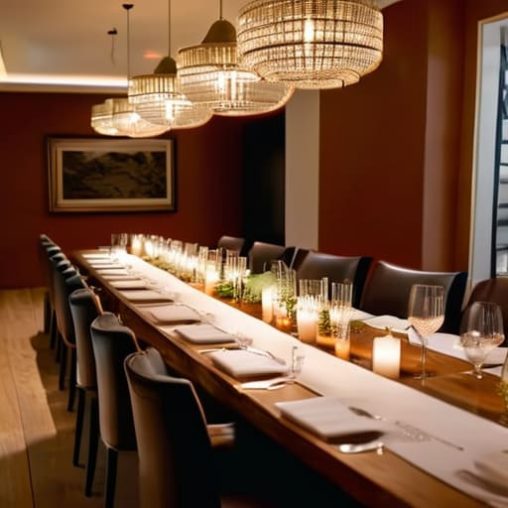
I remember a Friday night in my old sixteen-cover room when a group of twelve decided they didn’t need a reservation; they just assumed that “hospitality” meant being a doormat for whoever had the loudest voice. I watched my head chef’s face turn a shade of grey I can still see when I close my eyes, all because we hadn’t prepared for the sheer mechanical carnage of twelve simultaneous orders hitting the pass at once. Most consultants will try to sell you on fancy software or “synergistic guest management” to help you figure out how to handle large group bookings, but they’ve clearly never had to mop up spilled red wine while trying to explain a credit card authorization to a shouting uncle.
I’m not here to give you a lecture on theoretical hospitality or some glossy, overpriced management manual. I’m going to tell you how to manage the chaos without losing your shirt or your staff’s respect. We’re going to talk about the real math of it—the actual cost of prep, the necessity of set menus to save your kitchen, and why a deposit isn’t being rude, it’s being professional.
The Math Behind Group Dining Logistics and Profit
Most people look at a table of twelve and see a windfall, but I see a math problem that can quickly turn into a deficit. When you’re managing high volume service, you have to realize that a large group doesn’t just take up more chairs; they consume a disproportionate amount of your kitchen’s “mental bandwidth.” If you allow a party of fourteen to order off a twenty-item à la carte menu, you aren’t just being flexible—you are inviting a bottleneck that will starve every other table in the room. This is why I always insisted on a limited set menu for anything over eight people. It isn’t about being difficult; it’s about protecting your margins and ensuring the kitchen doesn’t collapse under the weight of twelve different cooking times.
You also have to account for the invisible costs of group dining logistics. A large party requires more hands on deck—more runners, more clearing, and more focused attention—which means your labor cost per head spikes. If you haven’t baked a set service charge or a minimum spend into your event booking policies, you might find that by the time you’ve paid the extra staff required to keep that table happy, you’ve actually lost money on the meal.
Why Your Reservation Management Is Actually a Risk Assessment
When people talk about restaurant reservation management, they tend to treat it like a glorified Tetris game—just fitting blocks into slots until the board is full. But after twenty-six years of watching a single bad booking derail an entire Tuesday night, I can tell you that a reservation isn’t just a seat; it’s a liability. Every time you hit ‘confirm’ on a party of twelve, you aren’t just booking a table, you are betting your staff’s composure and your kitchen’s ability to maintain its rhythm.
You have to look at your book through the lens of risk. A large group is a beautiful thing for the top line, but if your event booking policies are too loose, you’re inviting disaster. I used to look at a request for twenty people and ask myself: “Do I have the hands to cover this without letting the four tables of two in the corner feel invisible?” If you don’t account for the sheer friction that high-volume service creates, you aren’t managing a dining room; you’re just waiting for something to break.
Five Ways to Stop a Large Table from Sinking Your Service
- Set a fixed, limited menu for anyone over eight people. I don’t care how much your customers want to browse the full list; if I’m running a small kitchen, I cannot have twelve people ordering different proteins and three different dietary requirements at the exact same time without the whole line collapsing. A set menu isn’t a restriction; it’s a peace treaty between the pass and the dining room.
- Demand a deposit or a non-refundable booking fee. I know, it feels “unwelcoming” to some, but let me tell you what it feels like to prep forty portions of sea bass only to have a party of twelve “forget” to show up on a Friday night. A deposit isn’t about being greedy; it’s about covering the food cost of the empty chairs you’ve just left me with.
- Control the wine list with a pre-selected bottle service. When a group of fifteen sits down, the last thing my floor staff needs is to spend forty minutes explaining the nuances of a vintage to every single person. Have three or four solid options ready to pour. It keeps the momentum going, keeps the glasses full, and stops your waiter from being trapped at one table while the rest of the room is screaming for water.
- Charge a mandatory service charge, and be honest about it. Don’t hide it in the fine print like you’re ashamed of it. Large groups require more hands, more prep, and more mental energy from the team. If you’re going to take up half my dining room for three hours, you need to acknowledge that you’re consuming more than just space; you’re consuming labor.
- Know when to say “no” to the layout. If a group wants to sit in a way that blocks the service corridor or forces my staff to walk a marathon just to reach the kitchen, tell them it’s not happening. A table that is physically awkward to serve is a table that will eventually result in a dropped tray or a cold meal, and neither of us wants that.
The Bottom Line: What You Actually Need to Remember
Stop treating a large booking like a windfall and start treating it like a logistical operation; if you haven’t calculated the exact labor cost and the potential for table turnover delays, you aren’t making a profit, you’re just making a mess.
Your reservation book isn’t just a list of names, it’s a map of your kitchen’s breaking point, so learn to say “no” to a group size that will inevitably cause your best server to burn out or your line cook to start sending out grey steak.
Set your group policies—like pre-orders and deposit requirements—not to be “difficult,” but to protect the sanity of your staff and the experience of the single diners who are actually paying full price to sit in your dining room.
## The Hidden Cost of a Full Room
“A table of twelve isn’t just twelve more plates for the kitchen; it’s a massive, breathing organism that can swallow your entire evening’s profit if you haven’t accounted for the extra hands needed to keep the rhythm. If you try to squeeze a large party into a service designed for couples without adjusting your staffing or your menu, you aren’t being ‘efficient’—you’re just deciding which of your staff members is going to break first.”
Rosalind Achterberg
The Bottom Line on the Big Table
At the end of the day, managing a large group isn’t just about having enough chairs or a bigger prep list; it’s about protecting the fragile ecosystem of your entire service. If you don’t nail the math on your margins, if you don’t set clear boundaries on pre-orders, and if you don’t treat every reservation as a calculated risk to your staff’s mental health, you aren’t running a dining room—you’re running a gamble. You can have the most talented chef in the city, but if one party of twenty arrives without a set menu and expects individual service during a Saturday rush, they will sink the ship. Profitability lives in the details you enforce before the first guest even walks through the door.
Running a restaurant is a heavy, beautiful, and often exhausting way to make a living, and big tables can either be the engine that keeps your lights on or the weight that drags you under. Don’t be afraid to say no to a booking if it threatens the soul of your service. I’d much rather turn away a high-spend group than watch my floor staff burn out or my regular tables walk out in frustration. Build your business on intentionality, not just volume, and you might actually find that you enjoy the chaos instead of just surviving it.
Frequently Asked Questions
How do I set a deposit or cancellation policy that actually protects my bottom line without scaring away the customers?
Look, I’ve lost enough money on empty tables to know that a “no-show” isn’t just a missed meal; it’s a hole in your payroll. Don’t be shy about asking for a deposit for groups of eight or more. Frame it as “securing their space” rather than a penalty. If you make it a clear, reasonable part of the booking process, people respect it. It’s not about being difficult; it’s about making sure the lights stay on.
At what point does a "large group" become too big for my kitchen to handle without sacrificing the quality of my other tables?
It’s not a number; it’s a ratio. You don’t hit a wall because you have twelve people instead of eight; you hit it when those twelve people represent more than a third of your total covers for that service. If a single party can choke your line and force you to ignore the quiet couple in corner table four, you’ve overextended. If your prep list can’t absorb the surge without cannibalizing your mise en place, they’re too big.
How do I train my staff to manage the chaos of a big party without making the rest of the dining room feel like they've been abandoned?
You train them to see the room, not just the party. I always told my servers: if you’re spending ten minutes explaining the wine list to a table of twelve, you’ve effectively abandoned the couple at table four. Teach them the “scan and pivot.” They need to check the big group, but their eyes must always return to the quiet corners. A big party is a spotlight; if you don’t manage it, it burns everyone else.
