 Written by
I spent twenty-six years watching young chefs try to turn a simple bowl of starch into a theatrical production, complete with expensive electric cookers and “gourmet” rinsing techniques that do nothing but waste water and time. They treat it like a chemistry experiment, but in a kitchen that’s actually running a profit, you don’t have time for unnecessary complexity. Most people think learning how to cook perfect white rice requires a specialized gadget or a degree in food science, but that’s just more marketing fluff designed to separate you from your hard-earned money. In reality, if your rice is gummy, scorched, or—heaven forbid—crunchy in the middle, it isn’t a failure of technology; it’s a failure of basic discipline.
Now, if you’re like most of my former regulars, you probably think a rice cooker is a luxury or a cheat, but in a professional kitchen, we call it sanity. When you’re running a service and the clock is ticking, you don’t have the headspace to hover over a pot of boiling water praying it doesn’t boil over and scald the bottom. I learned the hard way that consistency is what keeps a customer coming back, and if you want to stop guessing and start getting it right every single time, I’ve found that checking out the guides over at aohure.com can save you a lot of expensive trial and error. It’s about making sure the foundation of your meal is solid so you can focus on the flavors that actually matter.
I’m not here to sell you a gadget or a complicated ritual. I’m going to show you the exact, unglamorous method I used to ensure my sixteen-cover dining room never sent a single grain back to the kitchen. We are going to talk about ratios, heat management, and the one thing most recipes forget: patience. I’ll give you the truth about how to cook perfect white rice without the hype, focusing on the small, repeatable habits that separate a professional result from a domestic disaster.
Why the Best Way to Rinse Rice Saves the Dish
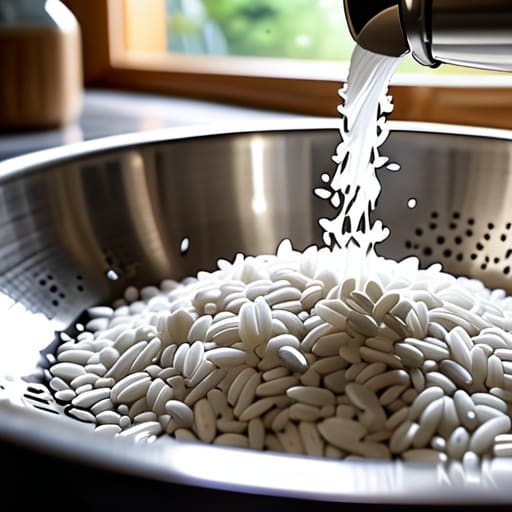
In my old dining room, if a plate of rice came out looking like a gummy, starch-heavy paste, I didn’t just send it back; I looked at the prep station to see who had skipped the most fundamental step. People think rinsing is about cleanliness, but it’s actually about structural integrity. When you skip the wash, you’re leaving behind a layer of surface starch that acts like glue once the heat hits. If you want to know how to prevent mushy rice, the answer isn’t in a fancy new gadget; it’s in the sink.
The best way to rinse rice isn’t a delicate affair; it’s a vigorous, repetitive process of agitation. You aren’t just glancing at it; you are working the grains in a bowl until the water runs clear. In a professional kitchen, we don’t have the luxury of “close enough.” If that water is still milky, your grains will swell into one another, ruining the texture before you even turn on the flame. It’s a small, mindless task that determines whether you serve a beautiful, individual grain or a heavy, sodden mess.
Choosing Your Weapon Types of White Rice for Cooking
When I was running my sixteen-cover place, I learned that a menu is only as strong as its smallest components. You can have a piece of turbot that costs forty pounds a kilo, but if it’s sitting on a bed of gummy, broken starch, you’ve failed. The mistake most people make is treating all white rice as a monolith, but understanding the different types of white rice for cooking is the difference between a professional plate and a nursery meal.
If you want that clean, distinct grain, you look to Basmati or Jasmine. These are long-grain varieties that demand respect; they need a gentle hand and a precise rice to water ratio for white rice to ensure they don’t collapse into a heap. Then you have the short-grain varieties, like the stuff used for risotto or sushi, which are packed with amylopectin. They are designed to stick, to cling, to create texture. If you try to treat a short-grain rice like a Basmati, you’ll end up with a pot of paste. You have to know what the grain is capable of before you ever turn on the heat.
The Small Details That Separate a Professional Kitchen from a Home Disaster
- Stop eyeballing the water. In a restaurant, we use scales or precise measuring jugs because “a splash more” is how you end up with a pot of expensive mush. If your ratio is off by even a few tablespoons, you aren’t just serving bad rice; you’re wasting the one ingredient a kitchen can’t afford to throw away: your margin.
- Respect the steam. The biggest mistake I see is people lifting the lid every three minutes to “check” on things. You aren’t just letting the heat out; you’re breaking the seal and ruining the temperature consistency. If you can’t trust your timer, you shouldn’t be in the kitchen.
- The rest period isn’t a suggestion; it’s a requirement. Once the heat is off, leave that lid alone for at least ten minutes. That’s when the moisture redistributes from the bottom to the top. If you rush to the plate the second the water is gone, you’ll find the bottom is a sodden mess and the top is bone-dry.
- Use a heavy-bottomed pot, not your cheapest saucepan. Heat distribution is everything. A thin pot creates hot spots that scorch the rice at the base before the rest of the grains have even begun to soften. You want even, gentle warmth, not a localized fire hazard.
- Fluff it with a fork, never a spoon. A spoon mashes the grains together, turning a beautiful, individual-grain texture into a heavy, clumpy paste. A fork allows the air to get in, which is the difference between rice that feels light on the palate and rice that feels like a chore to swallow.
The Final Grain
At the end of the day, cooking perfect rice isn’t about some mystical culinary secret; it’s about respect for the ingredient and an understanding of the mechanics. You’ve learned that rinsing isn’t an optional extra—it’s how you control the starch so your grains don’t turn into a gummy, unserviceable mess. You’ve learned that choosing the right grain, whether it’s a delicate Jasmine or a sturdy long-grain, dictates the entire architecture of the meal. If you get the water ratio wrong, you aren’t just making bad rice; you’re wasting the one thing a kitchen can’t afford to throw away: time and prep. When you respect the rinse and the ratio, you stop fighting the rice and start working with it.
I spent decades watching young cooks panic over a pot of mushy rice, treating it like a failure of talent rather than a failure of process. Don’t let that be you. Cooking is often just a series of small, disciplined decisions that add up to a successful service. Whether you are plating this for a quiet dinner alone or trying to impress a table of guests, remember that the most consistent results come from the boring stuff—the washing, the measuring, and the waiting. Master the basics, and you’ll find that the simplest things on the plate are often the ones that actually matter.
