 Written by
I remember a Tuesday night in my old dining room, watching a young man in a perfectly tailored suit look absolutely miserable because he felt he had to perform for the room. He was so busy checking his reflection in the wine glasses that he didn’t notice his companion had stopped talking entirely. People think modern etiquette is about velvet ropes and enforcing rules to keep the “wrong” crowd out, but they couldn’t be more wrong about how dress codes work now. In reality, a dress code isn’t a weapon for elitism; it’s a tool for atmosphere control. When a restaurant asks you to leave the gym gear at the door, they aren’t trying to be snobs—they are trying to stop the room from feeling like a transit lounge.
I’m not here to give you a lecture on which tie goes with which waistcoat. Instead, I’m going to pull back the curtain on the business logic behind what you wear. I’ll tell you why certain venues lean into casualness to move more tables, why some still cling to formality to justify a higher margin, and how you can navigate any room without feeling like an imposter.
The Blurred Line Between Business Casual vs Smart Casual
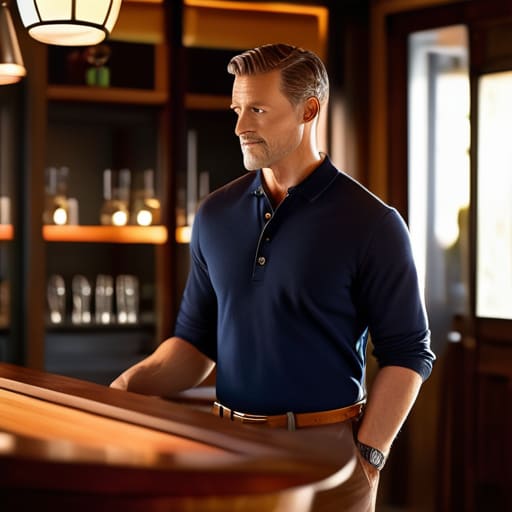
The confusion between business casual and smart casual isn’t just a semantic debate for fashion magazines; it’s a logistical headache that lands squarely on the shoulders of the front-of-house staff. When a guest walks in, the server has to make a split-second judgment call. Is that polo shirt “smart” enough, or is it leaning too far into the territory of a Sunday afternoon at the pub? The problem is that business casual vs smart casual has become a moving target. In my old dining room, “casual” meant you weren’t wearing a tracksuit, but “smart” meant you understood that the environment required a certain level of intentionality.
Nowadays, the lines are so blurred they’ve practically vanished. We see these evolving office fashion standards bleeding into the dining room, where the “zoom shirt” mentality—a nice top paired with whatever comfortable trousers one can find—is becoming the default. To a restaurant owner, this ambiguity is a risk. If we loosen the reins too much, the room loses its soul and starts feeling like a shared workspace; if we hold too tightly, we look like we’re clinging to a bygone era. It’s a delicate, expensive balance to strike.
Evolving Office Fashion Standards and the Cost of Conformity

When I ran my dining room, I knew exactly who was walking through the door by the sound of their shoes on the pavement. Today, that certainty has evaporated. We’re seeing evolving office fashion standards that mirror the shift in how we actually live our lives, moving away from the rigid armor of the power suit toward something much more fluid. It isn’t just about comfort, though that’s a large part of it; it’s about the fact that the physical boundaries of “the office” have dissolved.
The real headache, however, lies in the hidden tax of these shifting norms. When we talk about professionalism in hybrid environments, people often forget the mental energy it takes to constantly recalibrate. There is a distinct, exhausting cost to conformity—the constant checking of a Zoom camera to ensure your polo shirt doesn’t look too much like a pajama top, or the anxiety of wondering if your “smart casual” interpretation aligns with the unspoken rules of the boardroom. It’s a subtle, expensive kind of performance that most people are paying without even realizing it.
The Real Rules: What to Wear When Nobody Tells You What to Wear
- Read the room before you read the menu. If you’re heading to a place where the lighting is dim and the tablecloths are heavy linen, don’t show up in your “Friday office” khakis. In the modern era, the dress code is rarely written on a sign; it’s written in the footwear of the people sitting at the next table.
- Respect the “unspoken” hierarchy of service. If you’re dining at a place that prides itself on white tablecloths, dressing down isn’t a statement of equality—it’s a disruption. It tells the staff you don’t value the effort they’ve put into setting the stage, and quite frankly, it makes the person sitting next to you feel underdressed and uncomfortable.
- Understand that “Smart Casual” is a trap designed to test your judgment. To a restaurateur, smart casual means you’ve made an effort, not that you’ve given up. A dark pair of well-fitted jeans and a structured blazer is a safe harbor; a t-shirt with a faded graphic is a gamble that usually ends with you feeling out of place.
- Invest in the “Bridge Piece.” I spent thirty years watching people struggle with transitions. A good pair of leather loafers or a sharp, unstructured jacket is your insurance policy. It’s the piece that allows you to move from a high-stakes business lunch straight into a cocktail bar without looking like you’re wearing a costume.
- Don’t mistake comfort for lack of intent. There is a massive difference between a high-quality knit sweater that looks intentional and a hoodie that looks like you rolled out of bed. In a professional or fine-dining setting, your clothes signal your level of respect for the occasion; if you look like you couldn’t be bothered, the service will eventually reflect that.
The Real Cost of Getting It Wrong
A dress code isn’t about policing your personality; it’s about managing the energy of the room so the staff can actually do their jobs without feeling like they’re babysitting a playground.
When a venue asks for ‘smart casual,’ they aren’t being vague to be difficult—they are trying to protect a specific atmosphere that allows them to charge professional prices without looking like a stiff, old-fashioned banquet hall.
The most expensive mistake you can make is misreading the room, because once you’ve dressed too far down, you’ve signaled that you don’t respect the service, and that’s a debt no amount of tipping can quite settle.
The Hidden Math of the Dress Code
People think a dress code is about fashion or making guests feel fancy, but in a small room, it’s actually about the math of the atmosphere. If you let in a sea of hoodies and trainers, you aren’t just ‘being inclusive’—you’re signaling to the person who spent forty pounds on a bottle of Burgundy that the room has become a high-traffic thoroughfare rather than a destination. A dress code isn’t a velvet rope to keep people out; it’s a way to manage the energy of the room so the service can actually breathe.
Rosalind Achterberg
The Bottom Line on Looking the Part
At the end of the day, whether we are talking about a boardroom or a dining room, these shifting standards aren’t just about vanity or some arbitrary rulebook. We’ve seen how the line between “business casual” and “smart casual” has become a moving target, and how the cost of keeping up with these expectations can weigh heavily on both a person’s wallet and their sense of self. But more importantly, we have to recognize that a dress code is ultimately a tool for setting the tempo of the room. When the standards are clear, the friction disappears; when they are vague, you end up with a room that feels disjointed, like a kitchen where half the staff is in whites and the other half is in t-shirts.
If there is one thing I learned from twenty-six years of running my own place, it’s that you can’t control everything, but you can control the intention behind the atmosphere. Don’t get lost in the anxiety of whether your trousers are “correct” or if your blazer is too formal for a Tuesday. Instead, aim for a sense of purposeful presentation. Dress in a way that tells the people around you—and more importantly, tells yourself—that you are present, you are prepared, and you respect the occasion. Whether you’re closing a deal or sitting down for a quiet meal, the most important thing you can wear is the quiet confidence of someone who knows exactly why they are there.
Frequently Asked Questions
If the lines between casual and smart are blurring, how do I know when I'm actually underdressed without looking like I'm trying too hard?
Look, if you’re staring at your reflection wondering if you’ve missed the mark, you’re already overthinking it. The trick isn’t about the brand of your shoes; it’s about the “finish.” If you’re wearing denim, make sure it’s dark and structured, not the kind you’d wear to fix a leaky tap. When in doubt, lean toward the “smart” side. It’s much easier to dial back a blazer than it is to recover from a wrinkled t-shirt.
Does a relaxed dress code actually save a business money, or is it just a way to mask a lack of professional standards?
It’s a bit of both, isn’t it? On paper, ditching the suits saves a fortune on dry cleaning allowances and uniform procurement. But let’s be honest: if a “relaxed” code becomes an excuse for a staff member to show up looking like they just rolled out of bed, you haven’t saved money—you’ve just devalued your brand. A dress code isn’t about the fabric; it’s about the discipline of showing up ready to work.
At what point does "dressing for the job you want" become an expensive burden that eats into a person's actual take-home pay?
It becomes a burden the moment you’re subsidizing the company’s brand with your own rent money. I saw it for years: staff buying expensive linen shirts or polished brogues just to meet a “standard” that wasn’t in their contract. If you’re spending twenty percent of your weekly take-home pay just to look the part, you aren’t “investing in your career”—you’re paying a hidden tax to stay employed. That’s not professional; it’s bad math.
