 Written by
 I remember a Tuesday night in my old sixteen-seater, right toward the end of a grueling service, when a family of four walked in. The parents looked terrified, clutching a toddler like a live grenade, while the child was already halfway to a meltdown. Most “experts” will give you a complete guide to dining with children that involves fancy high chairs, organic puree pouches, and a list of kid-friendly bistros that are actually just overpriced gastropubs with a coloring sheet. They talk about “creating memories,” but they never talk about the math of the room—the fact that a screaming four-year-old in a tight corner can kill the atmosphere for three other tables, or how a kitchen’s rhythm breaks when a plate of pasta is sent back because it “smells funny.”
I’m not here to tell you how to dress your kids for a Michelin-starred lunch. I’m here to tell you how to navigate a restaurant without feeling like an intruder or a nuisance. I’ll give you the unvarnished truth about timing your arrival, reading the room before you book, and how to spot a restaurant that actually wants your business versus one that is just tolerating it. This isn’t about perfection; it’s about strategic survival.
Preparing Children for Public Meals Before the Check Arrives

You can’t wait until the waiter is standing there with a notepad to start the negotiation; by then, the kitchen is already under pressure and your patience is likely gone. Real preparing children for public meals starts in your own kitchen, not at the table. I always told my staff that a guest who arrives “ready” is a gift, and that applies to children too. If they’ve never held a fork without using it as a catapult, a white tablecloth is going to be a disaster. Practice the mechanics of a meal at home—sitting still for twenty minutes, using a napkin, and understanding that the food doesn’t arrive the second they ask for it.
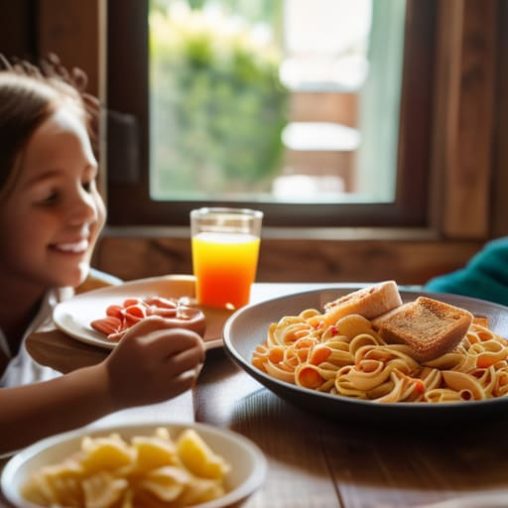
It is also about managing expectations regarding the menu. When you are managing picky eaters at restaurants, don’t treat the menu like a battleground. If you know your child only eats plain pasta, check the menu beforehand so you aren’t making a scene of indecision while the table behind you is waiting for their appetizers. The goal isn’t to turn them into mini-connoisseurs, but to teach them that a restaurant is a shared space where everyone is working toward the same goal: a quiet, decent meal.
Managing Picky Eaters at Restaurants Without Breaking the Service

When you’re sitting in a room with limited covers, a child refusing a plate of pasta isn’t just a family drama; it’s a logistical bottleneck. If a dish comes back untouched, that’s a wasted margin and a wasted plate that could have gone to someone else. My advice for managing picky eaters at restaurants is to stop treating the menu like a battlefield and start treating it like a negotiation. Before you even look at the wine list, scan for the “safe” basics—the simple grains, the unadorned proteins. Don’t expect a kitchen to perform culinary miracles on a whim; they are working a service, not a playground.
The real secret to stress-free family dining is managing expectations regarding timing. If you know your toddler has a ten-minute window before the meltdown begins, ask the server to fire the simplest kid-friendly option immediately. You aren’t being rude; you’re helping the kitchen pace the meal so you aren’t caught in a standoff between an empty stomach and a slow-moving sauté station. The goal is to keep the rhythm of the table moving, because once the service breaks, it’s very hard to fix.
The Math of the Table: 5 Hard Truths for Dining with Kids
- Respect the seating capacity. If you’re booking a sixteen-cover room with a high chair and a toddler who treats the floor like a sandbox, you aren’t just a customer; you are a logistical hurdle. Choose larger, more robust venues for family outings so the staff isn’t constantly tripping over a stroller just to reach the salt.
- Timing is your only real currency. Do not attempt a 7:30 PM reservation with a child who hasn’t mastered the art of the quiet lull. Aim for the “dead zone” between the lunch rush and the dinner service; you’ll get better attention from the staff, and the kitchen won’t be in the middle of a frantic ticket spike when your child decides to drop their fork.
- Understand the “hidden” cost of modifications. When you ask a kitchen to strip a dish of garlic, onions, and sauce to suit a picky eater, you are asking for extra labor during their most expensive hours. If the menu doesn’t explicitly offer child portions, expect to pay closer to the adult price—it’s not a penalty, it’s the cost of the prep work.
- The waiter is not your babysitter. A good server is a master of timing, but they are working for the entire room, not just your table. If your child is escalating, handle it yourself before the staff has to intervene; once a server has to step in to manage a tantrum, the professional rhythm of the dining room is broken for everyone.
- Learn the anatomy of a menu before you sit down. Don’t be the person staring at a laminated sheet for ten minutes while the kitchen waits. Scan the menu for “safe” staples—bread, pasta, simple proteins—so you can order quickly and get the food moving before the hunger-induced meltdown begins.
The Bottom Line: What Every Parent Needs to Remember
Respect the math of the room: If you are bringing a high-energy child to a small, intimate dining room, understand that you are essentially occupying a seat that carries a specific cost; being mindful of noise isn’t just about politeness, it’s about respecting the business’s ability to serve everyone else.
Timing is your best tool: Don’t try to fight the kitchen’s rhythm; aim for the lull between service rushes so the staff isn’t stretched thin and you aren’t forcing a cook to choose between a complex order and a toddler’s immediate meltdown.
The “hidden” cost of service: A good waiter can save your evening, but they can’t perform miracles; if you see the floor is slammed, don’t add more complexity to the staff’s plate—keep your requests simple and your expectations realistic.
The Math of the Table
When you bring a child into a small dining room, you aren’t just bringing a guest; you are bringing a variable that the kitchen didn’t account for in the prep list. If you want to be a good patron, stop treating the restaurant like a playground and start treating it like the high-wire act it is—because once the service starts, the margin for error is much thinner than your toddler’s patience.
Rosalind Achterberg
The Final Bill

At the end of the day, dining out with children is a negotiation between your desire for a civilized evening and the mathematical reality of a working kitchen. We’ve talked about the groundwork—the prep work at home, the way you manage a child who decides suddenly that broccoli is an enemy of the state, and the importance of respecting the rhythm of the service. It isn’t about being perfect; it’s about understanding the ecosystem you are entering. When you arrive prepared, you aren’t just a customer; you are a partner in the room’s success, making it possible for the staff to do their jobs without the added weight of avoidable chaos.
Don’t let the fear of a spilled glass or a loud protest keep you tucked away at home. Yes, it costs more in patience, and yes, it might cost a little more on the final check when you’re ordering extra sides to keep the peace, but these moments are where the real memories are baked in. A restaurant is a place for life to happen, and life is rarely quiet. Take the leap, be kind to the person carrying the tray, and remember that even the most seasoned restaurateur knows that a little bit of mess is just a small price to pay for a seat at the table.
Frequently Asked Questions
How much extra should I actually budget for the "hidden" costs of dining with kids, like service charges or the inevitable extra drink order?
Don’t just look at the menu prices; that’s a rookie mistake. If you’re dining with kids, add a 25% buffer to your mental math immediately. You aren’t just paying for the extra juice or the side of fries; you’re paying for the service charge that covers the staff working twice as hard to manage the chaos, and the inevitable “oops, I dropped that” moments. Budget for the friction, not just the food.
At what point does a child’s behavior move from "normal toddler energy" to something that is genuinely disrupting the restaurant's ability to serve other tables?
It moves from “energy” to “disruption” the moment the staff stops serving your table and starts managing your child. If the waiter is spending more time eyeing your toddler’s flying pasta than checking on the regulars at table four, you’ve crossed the line. It’s not about the noise level; it’s about the focus. When your child’s behavior forces the room to revolve around them instead of the service, you’re no longer a guest—you’re a liability.
How can I communicate my needs to the staff without feeling like I'm being "that parent" or making the service harder for them?
Look, the staff isn’t judging your child; they’re judging your timing. If you need a highchair or a kids’ menu, tell the host the moment you sit down. Don’t wait until the server is mid-stride with a tray of hot soup. If you need to step out because a meltdown is brewing, a quick, quiet nod to the waiter is all it takes. Communication is a courtesy, not a confrontation. Clear expectations make for a smoother service for everyone.
