 Written by
 Most people think a “complete guide to front of house service” is about teaching a twenty-year-old how to carry a tray without wobbling or memorizing the vintage of a Bordeaux. They focus on the performance, the polished silver, and the scripted smiles that feel as hollow as a cheap meringue. But after twenty-six years of running my own sixteen-cover room, I can tell you that true service isn’t a theatrical production; it’s a high-stakes exercise in logistics and temperament. If your floor staff can’t read the tension in a table of two or realize that a misplaced water glass is actually a symptom of a broken system, all the fancy etiquette in the world won’t save your margins.
I’m not here to give you a textbook lecture on hospitality etiquette that ignores the reality of a Friday night rush. Instead, I’m going to give you the truth about what actually keeps a dining room breathing. We are going to look at the unseen mechanics—from managing the invisible dance between the kitchen pass and the floor, to the precise way staffing levels dictate your profit. This is about the grit, the math, and the quiet precision required to turn a chaotic room into a seamless business.
Mastering Table Service Protocols Without Losing Your Soul

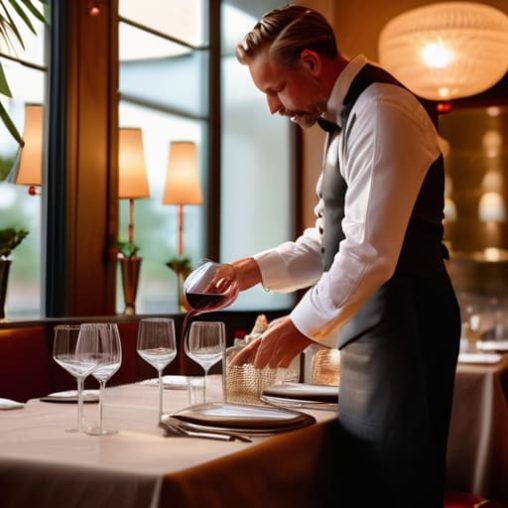
You can study every manual on fine dining etiquette until your eyes bleed, but no textbook will teach you how to read the tension in a customer’s shoulders after a long day at the office. Real table service protocols aren’t about which hand you use to pour the water; they are about timing. It is the difference between hovering like a nervous shadow and being so efficient that you become invisible. I always told my staff: if the guest has to look around the room to find your eyes, we have already failed.
The trap most young managers fall into is thinking that guest experience management is just a series of scripted pleasantries. It isn’t. It is the ability to pivot when a kitchen mistake happens or a wine cork crumbles. You have to balance the rigid mechanics of the floor with enough human intuition to know when a table wants a chat and when they want to be left alone with their thoughts. If you treat service like a mechanical checklist, you might be efficient, but you will never be hospitable. You’ll just be a well-trained machine, and machines don’t make people feel welcome.
Guest Experience Management Why the Small Details Cost Everything

People love to talk about “the magic of hospitality” as if it’s some ethereal, unquantifiable cloud floating over the dining room. It isn’t. In my sixteen-seat room, guest experience management was a game of inches and margins. It was knowing that if a water glass stayed empty for more than ninety seconds, I wasn’t just failing at service—I was actively eroding the perceived value of the meal. When a guest feels neglected, they don’t just complain about the water; they start looking for reasons to justify why they shouldn’t come back.
The truth is, the small details are often the most expensive part of the business. I’m not talking about the linen or the silver, though those have their place. I’m talking about the invisible labor of the staff. It’s the mental load required for a server to remember that Table 4 is celebrating an anniversary but hates lilies, or that the gentleman at the bar prefers his gin with a twist, not a slice. You can’t teach that kind of intuition in a weekend training seminar. To achieve true restaurant hospitality excellence, you have to realize that every minor oversight is a tiny, slow leak in your profit margin.
The Hard Truths of the Floor: Five Things They Don't Teach You in Hospitality School
- Learn to read the room, not just the reservation book. A table of two celebrating an anniversary requires a completely different energy than a business lunch where the silence is the point; if you treat every guest with the same scripted “enthusiasm,” you aren’t providing service, you’re just performing, and guests can smell a performance a mile away.
- Master the art of the “invisible” correction. If a wine glass is slightly off-center or a napkin has slipped, fix it without making a scene or drawing attention to the error; the best service is the kind that feels like magic, where the guest feels looked after but never watched.
- Understand that your menu knowledge is actually a sales tool, not a trivia contest. Don’t just memorize ingredients; know which dish survives a long delay in the kitchen and which wine will actually save a customer who is undecided, because a well-timed recommendation is the difference between a high check average and a table that lingers too long on water.
- Protect your staff like they’re your own family, because the floor is a battlefield. If you let a customer berate a junior server without stepping in, you haven’t just lost a staff member, you’ve lost the morale of the entire room, and once that trust is gone, your service will inevitably follow it out the door.
- Respect the clock, even when the guests don’t. You have to balance the “flow” of the dining room—knowing when to push a dessert order to clear a table for the next seating and when to back off so a guest doesn’t feel rushed—because a restaurant that can’t manage its turns is a restaurant that won’t be able to pay its rent.
The Hard Truths They Don't Teach in Catering School
Service isn’t about being “friendly”—it’s about managing the rhythm of the room so the kitchen doesn’t drown and the guests don’t feel rushed; if your floor staff can’t read the tempo of a table, your margins will bleed out before the dessert course.
Every “small detail” you obsess over has a price tag, whether it’s the cost of a wasted linen or the extra twenty minutes of labor spent polishing glassware, so learn to distinguish between a necessary standard and a vanity project that’s eating your profit.
The best service is often the kind you don’t notice, because true professionalism means solving a problem—like a slow pour or a missing side of sauce—before the guest even has the chance to realize something went wrong.
The Real Cost of a Smile
Everyone talks about the “magic” of service, but there is no magic in a well-run floor—only the relentless, invisible management of margins, timing, and human fatigue. A truly great front-of-house isn’t defined by the person who performs for the guests, but by the person who manages the chaos so quietly that the guests never even realize a crisis was averted five minutes ago.
Rosalind Achterberg
The Bottom Line of the Floor
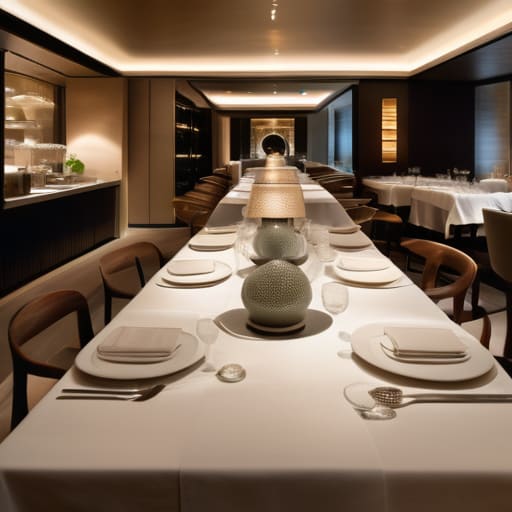
At the end of the day, front of house service isn’t about whether the napkins are folded into perfect swans or if the wine was poured at the exact right angle. It’s about the invisible architecture that keeps a restaurant from collapsing under its own weight. It is the seamless coordination between the kitchen’s pace and the guest’s hunger; it is the calculated precision of a floor plan that maximizes covers without making people feel like they’re eating in a train carriage; and it is the ability to handle a broken glass or a late arrival without letting the panic reach the dining room. You have to remember that every interaction is a transaction of both money and trust, and once you lose the latter, the former won’t save you.
If you are just starting out, or if you are running a room and feeling the weight of the overheads pressing in on you, don’t let the spreadsheets make you forget why we do this. The math has to work, absolutely—if the numbers don’t balance, the lights go out—but the human element is what brings them back through the door. Service is a hard, exhausting, often thankless business, but there is a specific kind of magic in a room that is humming perfectly. Aim for that quiet, professional excellence where the guest feels cared for, the staff feels supported, and the profitability is a byproduct of respect for the craft. Now, go get some sleep; you’ll need it for service tomorrow.
Frequently Asked Questions
How do you balance the need for strict service standards with the reality of a kitchen that’s running twenty minutes behind and a floor staff that's short-handed?
You don’t balance it; you triage it. When the kitchen is drowning and the floor is thin, “standards” shift from perfection to honesty. You stop pretending everything is fine and start managing expectations. I’d rather a guest be annoyed by a twenty-minute delay they were warned about than feel ignored by a waiter trying to maintain a facade of calm. Communication is your only currency when the margins are failing. Tell the truth, or lose the table.
When does "personalized service" cross the line into being inefficient and eating into my labor margins?
Personalization is a scalpel, not a sledgehammer. It’s remembering a guest’s preference for sparkling water; it is not a waiter spending ten minutes debating the nuances of a vintage with a solo diner when there are three empty tables waiting for menus. When “connection” starts delaying the next turn or forcing your staff into overtime, you aren’t being hospitable—you’re being inefficient. Good service anticipates needs; it doesn’t stall the business to perform a monologue.
How do I train staff to spot the difference between a guest who wants privacy and a guest who is actually unhappy and waiting to be noticed?
You train them to watch the eyes, not the hands. A guest wanting privacy will look at their partner or their menu; they’re leaning in, creating a bubble. An unhappy guest is looking at the door, the clock, or the empty water glass. They aren’t “relaxing”—they’re scanning the room for a savior. Tell your staff: if a guest’s gaze is searching, they aren’t enjoying the atmosphere; they’re waiting for service.
