
 Written by
 I remember a Tuesday night in my old dining room, right toward the end of a grueling service, when a guest quietly mentioned a severe nut allergy. The kitchen was a battlefield of steam and shouting, and my head chef—a brilliant boy but a terrible communicator—nodded with a confidence he hadn’t earned. I watched that plate go out, and for a second, my heart didn’t just sink; it stopped. It wasn’t about the paperwork or the liability insurance that kept me awake that night; it was the terrifying realization that we had treated a life-or-death requirement as just another special request. If you want to learn how to look after guests with allergies, you have to stop treating it like a checkbox on a digital ordering system and start treating it like the most critical moment of the entire shift.
I’m not here to give you a sanitized manual of corporate protocols that look good on a training certificate but fail the moment the printer jams. I want to talk about the real mechanics: the way you brief a commis, the way you audit your pantry, and how to build a culture where a mistake isn’t just a bad review, but a catastrophe. I’ll show you how to manage the chaos without breaking your staff or your spirit.
Safe Food Preparation for Guests Is Not an Option
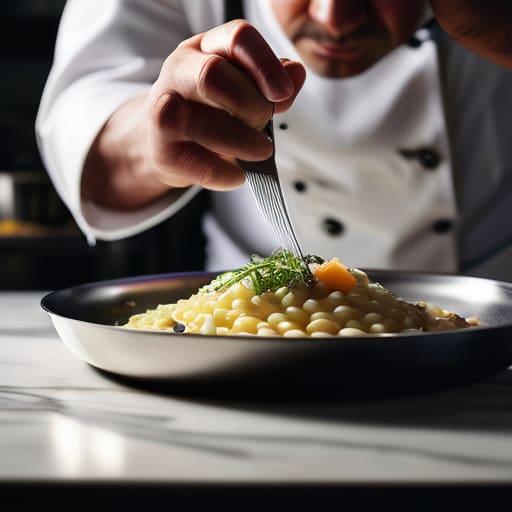
I remember a Tuesday night in my old dining room, about ten years in, when a young man ordered a risotto, specifically mentioning a severe dairy allergy. I watched the junior chef reach for the parmesan without a second thought. I stepped in, not with a lecture, but with a quiet, terrifyingly calm command to start again. That moment stayed with me because safe food preparation for guests isn’t about following a checklist to satisfy a health inspector; it’s about the heavy, silent responsibility of knowing that a single stray flake of cheese can turn a lovely evening into a medical emergency.
In a busy kitchen, the danger isn’t usually a chef being malicious; it’s the sheer, frantic momentum of service. It’s the shared cutting board, the spoon dipped into two different pots, or the tongs that haven’t seen a wash since the lunch rush. Preventing cross-contamination in the kitchen requires a level of discipline that most people mistake for being “fussy.” It isn’t fussy. It is the absolute baseline of professional respect. If your team views an allergy request as a hurdle to clear rather than the most critical task of the ticket, you don’t have a kitchen—you have a liability.
Preventing Cross Contamination in Kitchens Without Breaking Workflow
The problem with most kitchen manuals is that they are written for a laboratory, not a service rush. In a sixteen-cover room, you don’t have the luxury of a sterile zone, but you do have the responsibility of a controlled one. Preventing cross-contamination in kitchen environments during a Friday night surge isn’t about having a separate room; it’s about the discipline of the “clean station” mindset. I used to tell my commis that an allergen request wasn’t just another ticket—it was a different language entirely. You need dedicated boards, fresh knives, and a pan that hasn’t even looked at a piece of gluten, or you might as well not bother.
The real danger is the “just this once” mentality when the printer starts screaming. If you’re trying to manage a rush, you can’t let the workflow dictate your safety standards. I learned the hard way that communicating dietary restrictions between the front of house and the pass is where the battle is won or lost. It’s not enough to shout “no nuts” over the sound of the extractor fan; it requires a physical pause, a moment of absolute clarity, and a system where the chef acknowledges the risk before the flame even touches the pan.
The Human Side of the Ticket: Five Ways to Get It Right
- Make the server the bridge, not the barrier. I’ve seen too many front-of-house staff treat an allergy request like a personal insult to the chef’s creativity; you need to train your team to see it as a high-stakes briefing, where the waiter’s job is to relay the information to the kitchen with absolute, unshakeable clarity.
- Implement a “double-check” culture that doesn’t feel like a interrogation. It’s not enough to ask the guest once; you need a system where the person plating the food and the person running the plate both confirm the allergy aloud, because in a busy service, a single moment of distraction is all it takes for a mistake to reach the table.
- Audit your “hidden” ingredients during the prep shift, not during the rush. You can’t rely on a chef’s memory when the printer is screaming and the pass is full; you need to know exactly which bouillon contains gluten or which house-made mayo uses mustard, because “I didn’t think it was in there” is a sentence that will cost you your reputation.
- Manage the guest’s anxiety with transparency, not false reassurances. If a guest asks if a dish is safe, don’t just give them a quick, nervous “yes” to keep things moving; tell them exactly how you are handling it—”I’m having the chef use a clean pan and fresh oil for your risotto”—because certainty is the most valuable thing you can serve them.
- Design your menu with “safe zones” to protect your kitchen’s sanity. If your entire menu is a minefield of nuts, shellfish, and dairy, you are setting your staff up for a catastrophic error; a smart menu offers a few naturally “safe” paths so that your team can provide excellent service without operating under a constant state of terror.
The Real Bottom Line of Allergy Management
Treat every allergy request as a high-stakes briefing, not a dietary preference; a single misunderstood ingredient isn’t just a mistake, it’s a potential catastrophe that can end a business overnight.
Build allergy safety into your existing kitchen rhythm rather than treating it as an extra chore, because if a protocol is too complicated to follow during a busy Friday rush, it won’t be followed at all.
Remember that clear communication between the front and back of house is your only real safety net; the waiter who double-checks the ticket and the chef who confirms the prep are the ones actually protecting your reputation.
## The Weight of a Single Ingredient
“When a guest tells you they have an allergy, they aren’t making a special request or being difficult; they are handing you their life in a small, quiet sentence. In my kitchen, we didn’t treat an allergy as a menu modification—we treated it as the most high-stakes order of the night, because I knew all too well that a single stray crumb or a shared spoon is the difference between a loyal regular and a legal nightmare.”
Rosalind Achterberg
The Bottom Line of Hospitality
At the end of the day, managing allergies isn’t about memorizing a list of prohibited ingredients or ticking a box on a health and safety audit; it is about the integrity of your entire operation. It requires a seamless marriage between a kitchen that respects its prep stations and a front-of-house team that understands the weight of a guest’s question. You cannot have one without the other. If your chef is diligent but your waiter forgets to flag the modification to the pass, the system fails. If your staff is attentive but your pantry is a mess of unlabelled containers, the system fails. It is a continuous loop of communication that demands constant vigilance, because in this business, the smallest oversight carries the heaviest price.
I spent twenty-six years watching how people treat each other in the quiet moments between the rushes. When a guest tells you they have an allergy, they aren’t trying to be difficult or complicate your life; they are handing you their trust, plain and simple. If you handle that trust with care, you aren’t just serving a meal—you are providing the rare, precious gift of peace of mind. That is what builds a regular. That is how you turn a dining room into a community. Build your business on that foundation of safety and respect, and I promise you, the rest will take care of itself.
Frequently Asked Questions
How do I handle a guest who is being overly cautious or demanding about their allergy without making them feel like a burden to the staff?
Listen, I’ve had those tables. The ones who ask five questions before the menus even hit the wood. My instinct used to be to roll my eyes, but that’s a rookie mistake. You don’t treat them like a nuisance; you treat them like a professional. Listen to them, take notes, and repeat the requirement back to them clearly. When they feel heard, the “demanding” behavior usually evaporates. You aren’t being a servant; you’re being a specialist.
When the kitchen is in the middle of a Friday night rush, how do we actually ensure the "special" order doesn't get lost in the chaos of the pass?
The Friday night rush is where good intentions go to die. When the tickets are screaming and the pass is a battlefield, an allergy note is just more ink on a piece of paper. You don’t rely on memory; you rely on a physical ritual. I always taught my team: the allergy ticket must be physically separated, often flagged with a colored clip or a specific marker, and it requires a verbal “double-check” between the chef and the runner. If it hasn’t been spoken aloud twice, it hasn’t been heard.
At what point does a menu become too risky to serve, and how do I decide which allergens are worth the extra labor cost of managing?
You don’t decide which allergens are “worth it”—that’s a slippery slope that ends in a lawsuit or a closed kitchen. Instead, you look at your menu through the lens of complexity. If a dish requires five different prep stations and three separate pans just to make it gluten-free, you aren’t running a kitchen anymore; you’re running a laboratory. If the labor to make it safe eats your entire margin, pull the dish. Simplify the menu, not the safety.
