 Written by
 I remember a Saturday night in my old sixteen-cover room when a local business group called, thinking they could pivot a casual Tuesday booking into a party of twenty-four with just a phone call and a polite “we’ll figure it out later.” I watched from the pass as my two servers—who were already drowning in a standard service—tried to manage the sudden influx of complex orders, spilled wine, and the inevitable chaos of uncoordinated appetites. Most people will give you a complete guide to large group dining that focuses on which tablecloth looks best or how to pick a trendy venue, but they completely ignore the physics of a kitchen trying to breathe under pressure.
I’m not here to talk to you about aesthetics or which sparkling water is currently in fashion. Instead, I’m going to give you the version of a complete guide to large group dining that actually matters: the one that covers pre-set menus to save your sanity, the real reason why a deposit isn’t an insult but a necessity, and how to navigate the math of a bill without losing your friends. I’ve made the mistakes, I’ve paid the invoices, and I’m going to tell you how to host a dinner that actually feels like a celebration rather than a logistical disaster.
The Art of Pre Ordering Food for Large Crowds
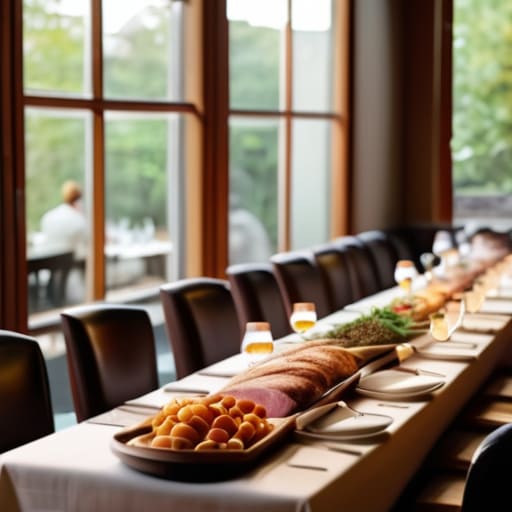
Listen, if you walk into a restaurant with twelve people and expect to browse the menu like you’re on a casual Tuesday date, you are setting the kitchen up for a disaster. Most people think pre-ordering is a chore, but in reality, it is the only way to ensure your guests aren’t sitting there staring at empty plates for forty minutes while the line cook battles a sudden influx of contradictory tickets. When you are pre-ordering food for large crowds, you aren’t just picking dishes; you are managing the rhythm of the service. I always told my staff that a large group without a pre-set menu is just a ticking clock that eventually runs out of patience.
The real headache, however, isn’t the steak or the sea bass—it’s the logistics of the “invisible” guests. You must be ruthless about managing dietary restrictions in groups long before the first glass of wine is poured. Don’t just ask if anyone is allergic to nuts; get a definitive list of the gluten-free, the vegan, and the “I don’t eat onions” crowd. If you leave those details to the waiter once the party has sat down, you haven’t planned an event; you’ve just staged a logistical nightmare that will leave the kitchen scrambling and your guests hungry.
Navigating Group Dining Etiquette Without Ruining the Evening

The biggest mistake people make when organizing a group is thinking that “etiquette” is only about which fork to use. In reality, the most important part of group dining etiquette is being mindful of the staff. If you are the person in charge, you are the buffer between the chaos of your friends and the rhythm of the kitchen. Don’t be the guest who spends twenty minutes at the table debating whether to get the sea bass or the steak while the rest of the table stares at you. It stalls the pass, it stresses the runners, and it makes the entire room feel like it’s waiting on you.
You also need to be the one to handle the awkwardness of the check. Nothing kills the post-dinner glow faster than a waiter standing there for ten minutes while five people try to do mental math on their phones. If you want to avoid a disaster, come prepared with a plan for splitting restaurant bills efficiently—whether that’s one card for the whole lot or a pre-arranged split. If you can’t decide, just pay the whole thing and settle up privately later. Your server has enough to worry about without playing accountant for your social circle.
The Hidden Math of the Big Table: 5 Things They Won't Tell You
- Understand that a “set menu” isn’t a suggestion, it’s a survival tactic. When you have twenty people, the kitchen needs to know exactly what’s going on so they can time the pans. If you try to let a large group order à la carte, you aren’t being “flexible”—you are actively sabotaging the chef and ensuring your guests will be sitting there for three hours waiting for a steak that’s fighting for space on a crowded stove.
- Respect the service charge, and don’t try to negotiate it. In a small room, a large group is a massive disruption to the flow of the evening; that extra percentage isn’t just a “tip,” it’s the cost of the extra hands required to make sure your table doesn’t feel neglected while the rest of the room is being served.
- The “Buffer Zone” rule: Never book a large group for a time slot that is immediately adjacent to a major service peak. If you want a party of twelve at 7:30 PM on a Saturday, you’re asking for a collision. Aim for the shoulder hours—early or late—where the kitchen has the mental bandwidth to actually care about your dietary requirements.
- Account for the “Silent Cost” of drinks. A group that orders one bottle of sparkling water and then sits for two hours is a financial drain on any small business. If you’re organizing the night, encourage a round of cocktails or a shared bottle of something decent; it keeps the energy up and ensures the restaurant actually wants to see you again.
- Designate one human as the Point of Contact. I have seen many a lovely evening ruined because five different people were trying to settle the bill or ask about the wine list at once. Pick one person to handle the logistics and the money; it keeps the server’s life sane and prevents that awkward, frantic scramble at the end of the night when everyone is trying to do math in their heads.
The Hard Truths of Group Dining
Respect the kitchen’s rhythm by choosing a limited menu; if you demand a la carte for twenty people, you aren’t being “flexible,” you’re just ensuring the person at table four gets cold food while the person at table twelve waits an hour.
A group booking is a financial commitment, not a suggestion, so understand that deposits and cancellation policies exist because a vacant table for twelve is a hole in a restaurant’s soul that no amount of “good vibes” can fill.
The best group experiences are built on invisible logistics—if the service feels seamless, it’s because the host did the heavy lifting of coordinating dietary needs and timing well before the first drink was poured.
The Myth of the Seamless Feast
Everyone wants the magic of a large, boisterous table, but nobody wants to talk about the math of it; if you don’t realize that a party of twenty is actually a high-speed stress test for the kitchen’s capacity, you aren’t planning a celebration—you’re just paying a lot of money to watch a service collapse in real time.
Rosalind Achterberg
The Final Check Before the First Course
At the end of the day, a successful large group dinner isn’t about the grandeur of the venue or how much you’re willing to spend on a vintage Bordeaux; it’s about the invisible architecture of the evening. It’s the pre-orders that prevent the kitchen from drowning, the etiquette that keeps the table from descending into a shouting match, and the understanding that logistics are the foundation of hospitality. If you manage the expectations of your guests and the constraints of the staff, you aren’t just feeding people—you are managing a complex, moving machine. Remember, the goal isn’t to avoid every hiccup, but to build enough structure so that when a hiccup inevitably happens, it doesn’t derail the entire night.
I spent twenty-six years watching people celebrate the biggest moments of their lives across my sixteen tables, and I learned that the most memorable meals aren’t always the most expensive ones. They are the ones where the food arrives on time, the wine keeps flowing, and the host actually gets to sit down and enjoy the company. Don’t get so caught up in the performance of being a “host” that you forget to be a guest at your own table. Plan well, respect the house you’re entering, and then let the evening breathe. That is how you turn a mere reservation into a memory.
Frequently Asked Questions
How do I handle the inevitable guest who refuses to pre-order and insists on ordering a steak from the main menu mid-service?
Look, I’ve seen this dance a thousand times. That one guest thinks they’re an individual, but in a room of twenty, they’re a logistical grenade. If you let them order that steak mid-service, you aren’t just slowing down the kitchen; you’re delaying the other nineteen plates. My advice? Be firm before they even sit down. Tell them the menu is set for the group to ensure quality and timing. If they push back, offer a compromise—but never let them break the rhythm.
At what point does a "large group" actually become a "private event" in terms of pricing and service expectations?
It usually happens at twelve covers, or whenever you ask for a single, unified bill. Once you demand a set menu to keep the kitchen from choking, you’ve crossed the line. You aren’t just “a big table” anymore; you’re a logistical commitment. At that point, I’m not just assigning a waiter; I’m pulling a senior staffer off the floor and losing the flexibility of my dining room. That’s why the service charge jumps.
If I'm the one organizing the booking, how do I manage the bill without that awkward, expensive silence at the end of the night?
The “bill dance” is the quickest way to kill a lovely evening. If you’re the organizer, do not leave it to chance. Decide before the first drink arrives: are you treating them, or is it split? If it’s split, tell the server before you sit down. Most restaurants can handle separate checks for six people, but for twelve? That’s a nightmare for the floor staff. Better yet, use an app or collect funds beforehand. Don’t make the waiter do your math.
