
 Written by
 If you search for a “complete guide to hospitality careers” online, you’ll mostly find glossy brochures from hotel chains or LinkedIn influencers talking about “passion” and “synergy.” Let me tell you something: passion doesn’t pay the electric bill, and synergy won’t help you when a server calls in sick ten minutes before a Friday rush. I spent twenty-six years in a sixteen-cover dining room, and I learned that this industry isn’t built on grand visions; it’s built on the grit of people who know how to manage a broken dishwasher while simultaneously calming a regular who’s had one too many gins.
I’m not here to sell you on the glamour of the lifestyle; I’m here to tell you how the gears actually turn. This isn’t some academic lecture—it is a realist’s map of the terrain, from the grueling years of the commis chef to the lonely, high-stakes math of being the owner. I will show you which roles actually lead to a sustainable life and which ones are just expensive ways to burn out. If you want to know what it actually costs—in sweat, in money, and in sanity—to make a life in this trade, you’ve come to the right place.
Starting at the Bottom the Reality of Entry Level Hospitality Positions

When people talk about entry-level hospitality positions, they tend to use words like “opportunity” or “foundation.” They rarely use words like “blisters,” “burnout,” or “the sheer mental math of a Friday night rush.” I started my journey peeling mountains of onions in a hotel kitchen, and let me tell you, nobody mentions the smell of shallots that stays in your hair for three days. You aren’t just learning how to carry a tray; you are undergoing a brutal, unscripted masterclass in human psychology and crisis management.
If you’re looking at various hospitality industry job roles thinking it’s a straight line to a corner office, you’re in for a shock. The reality is that the bottom rung is where you learn the most important lesson: the difference between being busy and being productive. You’ll learn why a table of four can derail a whole service and why a calm server is worth three times their weight in gold. It isn’t glamorous, and the pay won’t make you rich, but if you can survive the first year without losing your temper or your dignity, you’ve actually started to learn the trade.
Navigating the Climb Realities of Hotel Management Career Paths

Once you’ve survived the trenches of the kitchen or the chaos of a Friday night shift, you’ll start looking upward. People talk about hotel management career paths as if they are a paved highway, but in reality, it’s more like a series of steep, uneven staircases. You move from being the person who fixes the problem to the person who has to explain to the owner why the problem happened in the first place. It’s a shift from tactical thinking to strategic survival. You aren’t just managing people anymore; you are managing margins, rotas, and the crushing weight of expectations from both the guests and the board.
The biggest shock for most is that your technical skills—knowing how to pour a perfect Burgundy or run a seamless service—become secondary to your ability to read a P&L statement. You’ll find that hospitality industry job roles at the management level are less about “hospitality” in the warm, fuzzy sense and much more about logistics and crisis control. If you’re chasing the title for the sake of the prestige, you’ll burn out by month six. You stay because you realize that managing a complex operation is a high-stakes puzzle, and there is a specific, quiet thrill in solving it.
Five Hard Truths for Anyone Trying to Make a Living in This Trade
- Learn the math, not just the menu. You can be the most charming person in the dining room, but if you don’t understand food cost percentages or how a single dropped bottle of vintage Bordeaux affects your weekly margin, you aren’t a manager—you’re just a very expensive guest.
- Respect the person holding the knife. I spent my first year peeling onions until my eyes stung, and I learned more about kitchen discipline from a grumpy commis than I ever did from a management textbook. If you treat the back-of-house like they’re invisible, you’ll never be able to run a smooth floor.
- Master the art of the “invisible” service. The most successful people in this industry aren’t the ones making grand gestures; they are the ones who anticipate a guest’s need for a fresh napkin or a water top-up before the guest even realizes they’re thirsty. If you have to announce your presence, you’ve already failed.
- Build a reputation for reliability, not just talent. In a business where people call out sick at 4:00 PM on a Saturday, being the person who actually shows up, on time, and ready to work is worth more than any culinary degree or fancy certification. Reliability is the only currency that never devalues.
- Protect your stamina like it’s your most valuable asset. This isn’t a sprint; it’s a marathon run in heavy shoes on hard floors. If you don’t learn how to manage your own energy and mental health early on, the business will chew you up and spit you out long before you ever reach the level of ownership.
The Hard Truths They Don't Teach in Catering College
Forget the glamour of the dining room; true career longevity is built on the unglamorous grit of understanding your numbers, from food waste percentages to the brutal math of a labor rota.
A promotion isn’t just a change in title, it’s a shift in responsibility where your success is no longer measured by how well you cook or serve, but by how well you manage the people who do.
The most valuable skill you can develop isn’t technical, it’s the ability to stay calm when the kitchen is crashing, the wine is corked, and your best server has just called in sick—because in this business, you are paid to be the anchor.
The Myth of the Ladder
Everyone talks about the hospitality career ladder like it’s a straight climb toward a corner office, but they forget that most of the ascent is spent in the heat, the noise, and the frantic math of trying to make ends meet before the shift ends. You don’t build a career by mastering a title; you build it by learning how to stay calm when the kitchen is crashing, the staff is short, and the profit margin is thinner than the slice of ham on a breakfast roll.
Rosalind Achterberg
The View From the Other Side of the Pass
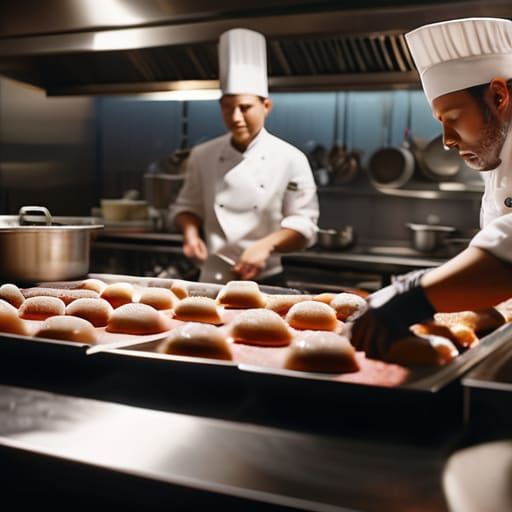
If you’ve followed me this far, you know I haven’t been interested in selling you a dream of white tablecloths and effortless glamour. We’ve looked at the grit of the entry-level roles, the sheer logistical exhaustion of hotel management, and the reality that this industry is built on razor-thin margins and even thinner patience. Whether you are peeling potatoes in a basement kitchen or balancing a P&L statement in a corporate office, the truth remains the same: success in hospitality isn’t about how many Michelin stars you can chase, but about how well you manage the unpredictable human element—the staff who show up, the guests who arrive late, and the sudden broken fridge at 9:00 PM.
But don’t mistake my cynicism for a warning to stay away. There is a specific, quiet magic in this trade that you won’t find in a cubicle. It’s the feeling of a perfectly timed service when the room is full, the loyalty of a regular who treats you like family, and the pride of knowing you’ve built something tangible and real. This business will break your heart and empty your pockets more than once, but if you approach it with your eyes open and a thick skin, it will give you a life that is anything but ordinary. It is a hard road, but for those who actually care about the craft, it is the only one worth walking.
Frequently Asked Questions
I’ve seen the ladder, but how do I know if I’m climbing toward a career or just running on a treadmill of endless shifts and diminishing returns?
You’re on a treadmill if you’re only learning how to move plates and refill water. A career happens when you start understanding the why behind the chaos. Are you learning how to manage a food cost percentage? Do you know why the rota is built the way it is? If you aren’t being taught the math and the mechanics of the business, you aren’t climbing; you’re just getting tired.
Is it actually possible to move into the "office side" of the business—the numbers, the ordering, the real control—without losing the respect of the people on the floor?
It’s a tightrope walk, isn’t it? The moment you pick up a spreadsheet, the floor staff starts looking at you like you’ve grown a second head. But here’s the truth: you only lose their respect if you stop smelling the kitchen. If you move into the office and forget that a 2% rise in food cost means the commis is working an extra hour for the same pay, you’re gone. Use the numbers to protect them, not just the profit.
At what point in the climb should I stop focusing on learning every station and start focusing on the math that actually keeps a restaurant from folding?
The moment you stop being a pair of hands and start being a brain. You don’t need to be a master of the sauce station to understand a P&L, but you do need to stop thinking in plates and start thinking in percentages. Once you’ve mastered the rhythm of a service, you must pivot. If you can’t calculate your theoretical food cost against your actual wastage, you aren’t climbing; you’re just working harder to go broke.
