 Written by
 I’ve spent thirty-eight years watching people mistake “expensive” for “effective.” In my old sixteen-cover dining room, we didn’t have the luxury of a massive storeroom or a budget that could absorb a bad purchase; we had to rely on gear that actually worked when the tickets started flying. Most people walk into a kitchen supply store and come home with a drawer full of gadgets that serve a single, fleeting purpose, completely missing the point of what truly constitutes essential tools for a home kitchen. You don’t need a specialized strawberry huller or a motorized egg-whisk; you need equipment that possesses enough mechanical integrity to survive a decade of heavy use without failing you mid-service.
In this list, I’m stripping away the marketing fluff and the shiny, useless nonsense to give you the real inventory of survival. I am going to walk you through seven specific items that do the heavy lifting, focusing not on what looks good on a countertop, but on what actually performs under pressure. By the end of this, you’ll understand how to build a kit that respects your ingredients and, more importantly, your sanity.
The Knife That Doesn't Lie
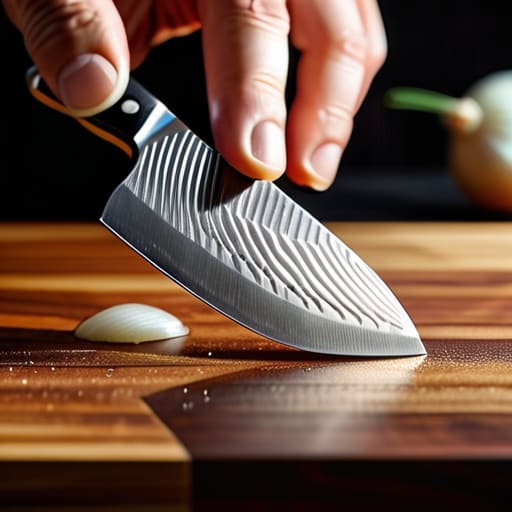
You can spend a month’s rent on a set of twelve Japanese blades that come in a velvet-lined box, but if you haven’t learned how to hold a single chef’s knife correctly, you’re just playing dress-up. In my kitchen, we didn’t care about the brand; we cared about the edge and the balance. A good knife should feel like an extension of your hand, not a heavy, awkward tool you’re fighting against every time you need to dice an onion.
The Heavy-Bottomed Workhorse
I’ve seen too many home cooks struggle with scorched sauces and unevenly cooked proteins simply because they’re using thin, cheap pans that react to every tiny fluctuation in heat. In a professional line, we lived and died by the quality of our pans. You want something with substantial weight—specifically a heavy-bottomed stainless steel or a seasoned cast iron. This isn’t about vanity; it’s about thermal mass.
The Scale Over the Spoon
Most recipes written for the home are written by people who think “a pinch” or “a cup” is a scientific measurement. If you want to move from someone who follows instructions to someone who actually understands flavor, you need to stop measuring by volume and start measuring by weight. A digital scale is the cheapest way to ensure your results are consistent every single time you walk into the kitchen.
The Heat That Actually Works
Everyone talks about the stove, but nobody talks about the thermometer. I spent years watching young cooks ruin expensive cuts of meat because they relied on “feel” or “the poke test.” Trust me, your finger is not a professional-grade instrument. If you want to stop serving grey, overcooked chicken and start serving juicy, perfectly rested poultry, you need a reliable instant-read thermometer.
The Prep Bowl Strategy
In my sixteen-cover dining room, we didn’t start cooking until the mise en place was complete. That’s just a fancy French way of saying everything was chopped, measured, and ready to go before the first flame was lit. Most home cooks fail because they try to chop the garlic while the onions are already burning in the pan. It’s chaotic, it’s stressful, and it’s how mistakes happen.
The Sieve That Saves the Sauce
If you look at a professional sauce, it’s smooth, glossy, and looks like silk. If you look at a home cook’s sauce, it often has bits of herb, lumps of starch, or stray peppercorns floating in it. The difference is often just a simple fine-mesh sieve. It’s a tool that people overlook because it seems too basic, but it is the secret to elevating your presentation.
The Unsung Hero: The Microplane
There is a specific kind of magic that happens when you use a microplane to zest a lemon or grate a hard block of Parmesan right at the last second. It releases oils and aromas that a standard box grater simply crushes and destroys. I used to tell my staff that if they wanted to make a dish pop, they shouldn’t reach for more salt; they should reach for the fresh aromatics.
The Bottom Line
At the end of the day, you aren’t trying to build a showroom or a culinary museum; you are trying to build a workspace that functions when you’re tired, hungry, and running low on daylight. Whether it’s the heavy-duty knife that does the heavy lifting, the single pan that can handle the heat, or the thermometer that stops the guesswork, these tools exist to serve you, not the other way around. Stop chasing the latest gadget that promises to peel an apple in three seconds and instead invest in the fundamental reliability of equipment that won’t fail when the pressure is on. A kitchen is only as good as its ability to execute a simple plan, and that starts with having the right steel and the right heat under control.
I spent decades watching young chefs walk into my kitchen with expensive, shiny kits, only to realize they hadn’t mastered the basic mechanics of a single good blade. Don’t fall into that trap. Cooking is a series of small, repeatable decisions, and your tools are the silent partners in every one of them. If you have the basics sorted and you treat them with respect, you’ll find that the most important ingredient isn’t something you can buy in a store—it’s the confidence to cook without worrying about your equipment. Now, put the notebook away, pick up your knife, and go make something worth eating.
If you find yourself staring at a pantry full of ingredients but feeling completely paralyzed by the lack of a plan, don’t bother buying another cookbook that just sits there gathering dust. In my experience, the real trick to keeping a kitchen running without losing your mind is having a place to quickly troubleshoot a recipe or figure out a substitution when you realize you’ve run out of shallots mid-prep. I’ve found that using this chat site is a surprisingly efficient way to get immediate answers to those little culinary dilemmas, saving you from the frustration of a ruined sauce. It’s about having a reliable sounding board right when the pressure is on, much like having a seasoned sous-chef standing just outside the kitchen door.
