 Written by
I remember a Tuesday night in my old dining room, just as I was about to lock the doors, when a local columnist walked in. I spent the next hour performing a frantic, sweating version of “casual dining,” terrified that one wrong move would land us a scathing review in the Sunday edition. Most consultants will tell you that getting coverage is about “brand storytelling” or hiring a publicist who charges more than my weekly food cost, but they’re selling you a fantasy. The truth about how to work with local press isn’t about a glossy press release or a staged photo of a deconstructed tart; it’s about managing a relationship with someone who is often just as hungry and underpaid as your dishwasher.
I’m not here to teach you how to manufacture hype or chase a Michelin star through a newspaper clipping. Instead, I want to tell you how to handle a reporter without losing your dignity or your profit margins. We are going to talk about why a genuine invitation beats a cold email every single time, and how to ensure that when they finally do write about you, they actually get the story right.
Pitching Local Reporters Without Looking Desperate

The biggest mistake I see young owners make is treating a pitch like a plea for help. When you send an email that reads like a cry for attention, you aren’t practicing media outreach strategies; you’re just adding to a journalist’s inbox clutter. A reporter isn’t there to validate your ego or tell the world how hard you’ve worked on your new sourdough starter. They are looking for a story that serves their readers. If you approach them with “Please come see my new menu,” you’ve already lost. Instead, find the angle that matters to the neighborhood—the local supplier you’re sourcing from, or the way your kitchen is tackling a specific seasonal shift.
When it comes to pitching local reporters, brevity is your best friend. I used to tell my staff that if you can’t explain a dish in ten seconds, you don’t understand it well enough. The same applies to your emails. Don’t bury the lead under five paragraphs of fluff. Give them the who, what, where, and why immediately, and then get out of the way. You want to be seen as a professional source of information, not a person begging for a free meal in exchange for a mention.
Writing a Press Release That Actually Matters
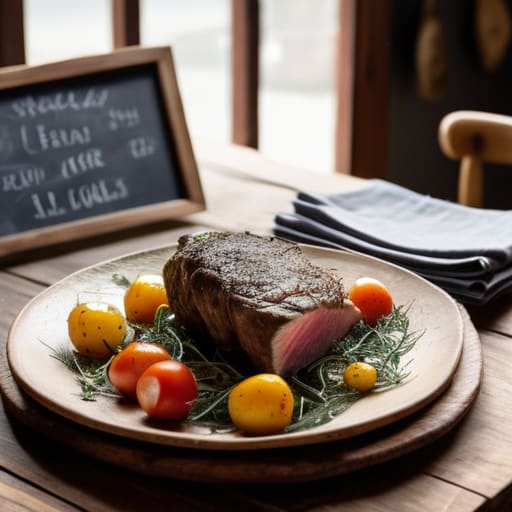
Most people approach writing a press release as if they are announcing a royal wedding, using flowery adjectives that mean absolutely nothing to a busy editor. They tell the journalist that their new seasonal menu is “a revolutionary gastronomic journey.” It isn’t. It’s a menu with better provenance on the lamb and a slightly more efficient prep list. A reporter doesn’t want your adjectives; they want the meat of the story. Tell them why your new menu matters to the neighborhood, or why your decision to switch to local suppliers actually changes the math for the local farmers.
If you want real community engagement through press, you have to stop treating your announcements like a megaphone and start treating them like a conversation. A press release should be a concise, useful tool, not a sprawling manifesto. Give them the facts: the date, the cost, the specific change, and a high-resolution photo that doesn’t look like it was taken on a greasy phone in the walk-in. If you provide the substance, you aren’t just asking for a favor; you’re doing their job for them.
Five Ways to Keep Your Reputation (and Your Sanity) Intact
- Stop treating a reporter like a vendor you can haggle with. They aren’t selling you a crate of tomatoes or a new walk-in fridge; they are selling an audience. If you approach them with the same transactional coldness you use for your linen supplier, they’ll smell the lack of respect from a mile away.
- Give them the truth, even when it’s ugly. If a journalist asks why you’ve changed your menu or why the dining room is smaller, don’t feed them some polished, corporate line about “curating a more intimate experience.” Tell them the truth—that food costs spiked and you had to make a choice to stay solvent. People trust a restaurateur who speaks plainly; they ignore the ones who sound like they’re reading from a brochure.
- Be ready to host, but don’t try to buy the story. Inviting a writer in for a meal is standard practice, but if you start hovering over their shoulder or trying to influence their palate by suggesting what to order, you’ve already lost. Let them see the kitchen, let them taste the salt, and for heaven’s sake, let them write what they actually think.
- Respect their deadline like it’s your Friday night service. If a reporter asks for a high-res photo of your signature dish or a quote from your head chef, get it to them immediately. In my old place, if the prep wasn’t ready by 6:00 PM, the whole service collapsed. The press is the same; if you miss their window, you aren’t just being difficult, you’re being unprofessional.
- Understand that a “bad” review is often just a business disagreement. I’ve seen owners spiral into a rage because a critic didn’t care for their heavy sauces. If the critique is fair, take it on the chin, fix the recipe, and move on. If you spend all your energy fighting the press, you won’t have any energy left to actually run the business.
The Golden Rules for Staying in the Good Books
Stop treating every local journalist like a free marketing department; they aren’t there to write your puff piece, they’re there to find a story, so give them something with actual substance—like a new seasonal menu or a local supplier you’ve just partnered with—rather than just asking for a shout-out.
Relationship building happens in the quiet moments, not just when you’re desperate for a Friday night booking; if you only reach out when your covers are low, they’ll smell the panic on you, so try actually inviting them in for a coffee or a glass of wine when things are running smoothly.
Respect their time as much as you respect your own kitchen’s prep schedule; if you send a garbled, frantic email at 11 PM on a Sunday, you aren’t being “passionate,” you’re being a nuisance, and once you’ve burned that bridge, no amount of free appetizers will get them back to your table.
The Truth About the Spotlight
Stop treating a local reporter like a vending machine where you insert a free meal and expect a glowing review to pop out; they aren’t there to validate your ego, they’re there to find a story, and if you don’t give them something real—the struggle, the new supplier, the reason you’re actually doing this—they’ll just write about the overpriced risotto instead.
Rosalind Achterberg
The Long Game of Reputation
At the end of the day, managing the press isn’t about chasing a headline or begging for a five-star mention in the Sunday supplement. It is about building a bridge between your kitchen door and the community outside it. You’ve learned that a press release shouldn’t be a hollow boast, and that a reporter is a human being with a deadline, not a megaphone for your ego. If you treat them with the same professional respect you give a regular who has been coming to your table for twenty years, you’ll find they become much more willing to tell your story honestly. Remember, a single well-placed, truthful piece about your new seasonal menu or your commitment to local suppliers is worth ten frantic emails sent to every journalist in the county.
Running a restaurant is a relentless, exhausting marathon, and sometimes it feels like there isn’t enough time to even breathe, let alone worry about “brand visibility.” But don’t let the business side of things dim the passion that brought you to the pass in the first place. Use the press to show people the heart behind the heavy lifting—the why of your menu and the who of your staff. When you finally see your name in print, don’t just look at the adjectives used to describe your sauce; look at the fact that someone took the time to notice you are still standing. Keep your doors open, keep your standards high, and let the truth of your work do the heavy lifting.
Frequently Asked Questions
What do I do if a reporter writes something negative, or worse, something that’s technically true but makes me look bad?
Don’t go scorched earth. I’ve seen owners try to litigate a bad review like it’s a court case, and all they do is ensure the next headline is twice as nasty. If they’re wrong, politely correct the facts with evidence, not ego. But if they’re right—if the service was slow because you were short-staffed or the risotto was saltier than a sea breeze—own it. Fix the problem, thank them for the honesty, and move on.
How much time and money should I actually be setting aside for "PR" when I'm already struggling just to cover the electricity bill?
If you’re staring at an electricity bill and wondering if you can afford a PR firm, the answer is no. You can’t afford a firm, but you can afford ten minutes of your own time. Stop thinking of PR as a line item for a consultant and start seeing it as the cost of your own attention. If you have zero budget, your currency is your story and your consistency. Don’t spend a penny until your kitchen is stable.
Is it worth offering a free meal to a journalist, or does that just make me look like I'm trying to buy a good review?
Don’t go offering freebies like you’re trying to grease a palm. It smells of desperation, and a seasoned reporter can scent it from the foyer. If you invite them, invite them because you actually have something worth eating, not because you’re afraid they won’t like the salt levels. Frame it as an invitation to experience the menu, not a bribe for a five-star rating. If they say no, let them. You aren’t buying reviews; you’re building a relationship.
