 Written by
I remember sitting in my dining room back in the late nineties, looking at a cellar list that felt like a predictable, beautiful map of the world. You knew exactly what you were getting with a Burgundy or a Bordeaux, and the seasons felt like they had a certain reliable rhythm. But lately, when I’m sitting at a bar somewhere new, I see the wine lists changing in ways that feel less like evolution and more like a scramble for survival. People love to talk about the science in grand, sweeping terms, but they miss the practical reality of how climate change is affecting wine on the plate and in the pocketbook. It isn’t just about melting glaciers; it’s about why that crisp, elegant Riesling you used to love is suddenly hitting you with twenty percent more alcohol and a heavy, jammy finish that feels entirely out of place.
I’m not here to give you a lecture on atmospheric carbon or drown you in academic jargon. I want to talk about what this actually means for your next dinner out and the bottom line for the people making the bottles. I’ll tell you why certain classic regions are becoming luxury graveyards, why your favorite labels are getting more expensive without necessarily getting better, and how to spot the producers who are actually navigating this mess instead of just riding the hype.
Rising Sugar Levels and the Death of Balance
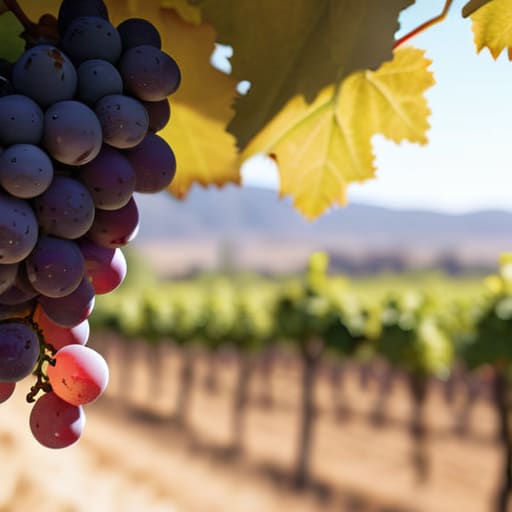
I remember the vintages from my early days in the trade—they had a certain structural integrity, a tension between fruit and acid that felt like a conversation. Now, when I’m tasting through a new flight, it often feels more like a monologue. Because of these extreme weather events in vineyards, the grapes are ripening faster and harder than they have any right to. We are seeing massive rising sugar levels in grapes across almost every region, which translates to higher alcohol content and a heavy, syrupy mouthfeel that lacks any real backbone.
It isn’t just about the heat, though. The real tragedy is what it’s doing to the changing grape acidity profiles. When the sun cooks the fruit this aggressively, the acidity evaporates before the harvest even begins. You end up with a wine that is technically “ripe” but structurally hollow. For a restaurateur, this is a nightmare for pairing; it’s hard to balance a dish when the wine is shouting at you with 15% ABV and no brightness to cut through the fat. We are losing that delicate equilibrium that makes a great wine feel alive.
The High Price of Extreme Weather Events in Vineyards
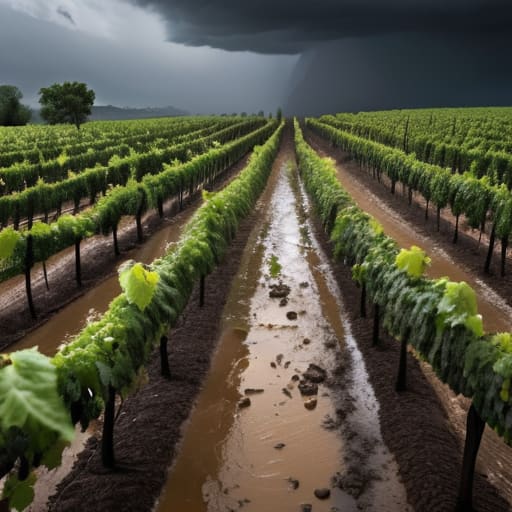
It isn’t just the steady, creeping heat that keeps growers up at night; it’s the volatility. I remember talking to a supplier once who looked like he hadn’t slept since the spring thaw. He wasn’t worried about a warm summer; he was worried about the unpredictable violence of the season. One week you have a drought that turns the soil into dust, and the next, a hailstorm rolls through like a localized war zone, shredding a year’s worth of profit in twenty minutes. These extreme weather events in vineyards aren’t just bad luck; they are a direct hit to the bottom line that many small, family-run estates simply cannot absorb.
When a frost hits late, or a deluge comes right at harvest, it does more than just ruin a crop—it destroys the predictability of the vintage. For a restaurateur, predictability is everything. We rely on knowing that a certain region will deliver a certain character. But when the weather swings wildly, we see a devastating impact on terroir consistency. You end up with bottles that don’t match their labels, forcing us to rewrite menus and renegotiate with suppliers on the fly, all because the sky decided to change the rules mid-game.
What to Look for on the Wine List When the Weather Goes Mad
- Don’t panic when the alcohol percentage looks a bit higher than usual; it’s just the heat doing its work, but keep an eye out for that missing acidity that makes a wine feel “flabby” or heavy on the palate.
- Start paying attention to the vintage years more closely, because a “great year” in the old sense might now mean a year that was simply too hot to maintain any elegance.
- Keep an open mind about geography; you’ll soon see names on your list that used to be “cool climate” regions suddenly acting like they’re in the middle of Provence.
- Look for producers who talk more about “resilience” and “soil health” than “perfection”—the ones fighting the climate are the ones who actually care about the integrity of the bottle.
- Watch your wallet for the “premium” labels that haven’t changed their pricing despite the skyrocketing costs of crop insurance and irrigation, because someone, somewhere, is paying for that stability.
The Bottom Line for Your Glass and Your Wallet
When the heat pushes sugar levels through the roof, you aren’t just losing elegance; you’re losing the ability to price a bottle reasonably because the “balance” that once made a wine approachable is being replaced by sheer, expensive alcohol.
Extreme weather isn’t just a headline; it’s a line item on a balance sheet, where every lost harvest or frost-damaged vine translates directly into higher prices for the person sitting at the table.
The “terroir” we all talk about is becoming a moving target, meaning the wines we love today might become luxury relics if we don’t stop treating climate shifts as a theoretical problem and start seeing them as a fundamental change to the supply chain.
The Myth of the Perfect Vintage
We used to talk about ‘good years’ and ‘bad years’ based on whether the rain arrived on time, but now we’re talking about survival. When the heat hits like this, you aren’t just fighting for a balanced acidity; you’re fighting to keep the soul of the wine from being cooked right out of the grape. It’s getting harder to serve a glass of wine that tastes like a place, rather than just a glass of high-alcohol fruit.
Rosalind Achterberg
The Bottom Line on the Bottle
At the end of the day, what we are seeing isn’t just a change in flavor profiles; it is a fundamental shift in the economics of the cellar. We have talked about the sugar levels climbing and the sheer, terrifying cost of a single hailstorm wiping out a vintage, but the reality is that the math is changing. When a grower has to spend more on irrigation, more on canopy management, and more on insurance just to achieve a baseline of quality, that cost eventually lands on the guest’s check. We are moving away from an era where a decent bottle was a predictable staple, into an era where every vintage is a gamble against a climate that refuses to play by the old rules.
But I don’t write this to make you stop buying wine; I write it so you can appreciate the craft a little more deeply. There is a quiet, stubborn resilience in the people who tend these vines, and I have seen that same grit in every chef and owner I ever worked with. We are entering a season of adaptation, where the most important thing isn’t sticking to a tradition that no longer works, but having the courage to evolve. If we support the producers who are thinking ahead rather than just looking backward, we might find that the wine of the future is more interesting, more honest, and more vital than anything we’ve tasted before.
Frequently Asked Questions
If the grapes are getting more alcoholic and heavy, are we going to lose the crisp, light styles of wine that I used to serve with a summer lunch?
The short answer is: yes, we’re fighting a losing battle with the thermometer. When the heat spikes, the grapes pump out sugar like it’s going out of fashion, and sugar means alcohol. You can try to pick early to keep that acidity, but then you’re left with a wine that tastes like nothing but green grass and unripe acid. It’s a brutal trade-off. We aren’t just losing flavors; we’re losing the elegance that made summer dining feel effortless.
How much of this price hike is actually due to the weather, and how much is just clever marketing to cover the rising cost of doing business?
It’s a bit of both, but don’t let the marketing fluff fool you. The weather is driving the baseline cost up—insurance premiums are skyrocketing and crop yields are becoming a gamble. That’s the reality. However, once that cost hits the bottle, some producers use “climate scarcity” as a convenient cloak to pad their margins. They’re using a genuine crisis to justify a price hike that’s actually just covering their own rising overheads.
Does this mean the traditional "famous" wine regions are going to be replaced by places we've never even heard of before?
It’s not a replacement so much as a forced migration. The names on the map aren’t disappearing, but the profiles are. You’ll still buy Bordeaux, but it might taste less like elegant structure and more like a jammy powerhouse. Meanwhile, the “new” regions aren’t just accidents; they’re where the math finally works. When the heat makes the old guard too expensive or too inconsistent to bank on, the money—and the drinkers—will follow the climate.
