
 Written by
I remember sitting in my little sixteen-seat dining room on a Tuesday in November, watching the rain lash against the windowpane while the street outside turned into a grey, sodden mess. I had three bookings, a half-empty bottle of Chardonnay on the bar, and a sudden, hollow feeling in my chest as I stared at the prep list. Most business consultants will tell you to launch a flashy social media campaign or offer a “stormy special” to drive footfall, but they’ve never had to balance a ledger while the wind is howling. They don’t understand that learning how to handle bad weather trade isn’t about clever marketing; it’s about the quiet, brutal math of survival when the customers simply aren’t coming.
I’m not here to sell you on expensive digital gimmicks that won’t stop a torrential downpour. Instead, I want to talk about the real levers you can pull—the ones that actually protect your margins without burning out your kitchen team. We’re going to look at the practicalities of adjusting your labor costs on the fly, the logic of tightening your prep to avoid waste, and how to make your regulars feel like your dining room is the only dry sanctuary in the city.
Managing Order Cancellations in Bad Weather Without Losing Your Mind
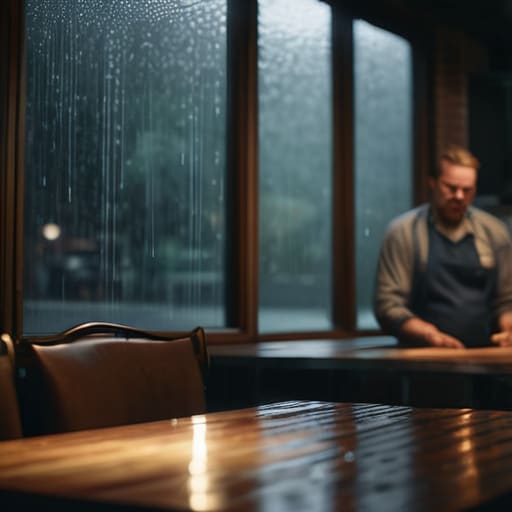
There is a specific kind of hollow feeling that settles in your stomach when the phone rings at 5:00 PM and it’s a table of four calling to cancel because the rain has turned the streets into rivers. You smile, you tell them to stay safe, and then you hang up and stare at your prep list, knowing that those four covers were supposed to cover your entire labor cost for the night. Managing order cancellations in bad weather isn’t just about being polite on the phone; it’s about the immediate, cold math of a shrinking margin. When the dining room empties out, you aren’t just losing sales—you are staring directly at the impact of extreme weather on logistics, from the food you’ve already prepped to the staff you’ve already clocked in.
You can’t control the clouds, but you can control your reaction. I learned the hard way that trying to squeeze every last cent out of a storm is how you burn out your team. Instead of fighting the tide, I started looking at it as a form of trading risk management strategies. If the cancellations start rolling in, you don’t just sit there bleeding money; you pivot. You send a junior staff member home early, you adjust your prep for tomorrow, and you stop treating a weather event like a personal insult to your bottom line.
Adapting Trading Plans for Disruptions Before the Rain Starts

The mistake most owners make is treating a storm like a surprise party. By the time the first raindrop hits the window, you’ve already lost the battle. Real trading risk management strategies aren’t about reacting to the weather; they are about anticipating the shift in your entire ecosystem before the clouds even turn grey. If the forecast looks grim, you don’t just sit there and hope for the best. You look at your prep lists and your bookings and you make a call.
I used to tell my head chef that if a gale was coming, we weren’t prepping delicate, high-cost seafood that might sit under a heat lamp for four hours. You pivot. You tighten the menu to items that hold their margin and their integrity. You have to account for the impact of extreme weather on logistics—if your supplier’s van is stuck on a flooded B-road, you can’t be promising a nightly special that relies on a specific catch. You adapt your trading plans for disruptions by simplifying the board, protecting your cash flow, and ensuring that when the few people who do brave the elements walk through your door, they aren’t met with a kitchen that’s struggling to keep up.
Five Ways to Stop the Bleeding When the Sky Turns Grey
- Watch your prep like a hawk, not a hawk-eyed critic. When the weather turns, your prep list shouldn’t be a suggestion; it needs to be a survival guide. If the forecast says a storm is coming, cut your vegetable prep and your butchery by thirty percent immediately. There is nothing more painful than staring at a bin full of wilted herbs and expensive protein at 11:00 PM because the rain kept your regulars at home.
- The “Quiet Night” Rota is your best friend. I learned the hard way that being “fully staffed” for a Tuesday is a luxury you can’t afford when the wind is howling. Don’t be too proud to send a commis home early or move a server to a part-time shift. You aren’t being “cheap”; you are protecting the business from the crushing weight of a wage bill that doesn’t match the covers in the room.
- Pivot your menu to comfort, not complexity. If people are braving a deluge to see you, they aren’t looking for a delicate, deconstructed foam; they want something that feels like a hug and keeps the kitchen running efficiently. Switch to dishes that use stable, pantry-heavy ingredients and require less “hands-on” time per plate. It keeps the ticket times low and the stress levels even lower when you’re working with a skeleton crew.
- Lean into your delivery and takeaway margins, but watch the quality. If the dining room is a ghost town, your delivery drivers shouldn’t be sitting idle. However, don’t chase the volume if it means your kitchen is churning out lukewarm, soggy pasta. It’s better to cap your delivery orders than to ruin your reputation for the sake of an extra fifty quid in revenue.
- Use the silence to fix what you usually ignore. If the room is empty, don’t just sit there staring at the clock—that’s how morale dies. This is when you do the deep cleaning, the inventory counts, or the staff training that you’re too busy to do during a Friday rush. If you can’t make money from the tables, make sure you’re making progress on the business.
The Bottom Line When the Clouds Roll In
Stop trying to force a full service on a ghost town; it is better to cut the rota early and send a good chef home with their dignity intact than to watch them stand around bleeding your labor costs dry.
Use the quiet to fix the things that actually matter, like deep-cleaning the grease traps or finally finishing that inventory count, so you aren’t playing catch-up when the sun comes back out.
Focus on the regulars who actually show up; if you can turn a rainy Tuesday into a cozy, intimate experience with a thoughtful soup special, you’ll win the loyalty that keeps a business alive through the lean months.
The True Cost of a Rainy Tuesday
When the clouds break and the cancellations start rolling in, don’t just look at the empty chairs; look at the prep you’ve already paid for and the staff you’ve already promised a shift to. Bad weather isn’t just a dip in revenue—it’s a quiet, expensive drain on your margins that happens while you’re staring at a kitchen full of perishable stock and a dining room that feels far too large for the mood.
Rosalind Achterberg
The Bottom Line and the Long Game

At the end of the day, managing a storm isn’t about some grand strategy; it’s about the unglamorous, granular details. It’s about having the foresight to trim your prep lists before the clouds turn grey, the backbone to adjust your staffing levels without making your team feel disposable, and the grace to handle a cancellation without letting the frustration show on your face. You have to balance the immediate bleeding of margins against the long-term necessity of keeping your lights on. If you can master the art of the pivot—adjusting your menu, your rota, and your expectations—you stop being a victim of the weather and start being a manager of it.
There will be nights when the dining room feels cavernous and the silence from the kitchen is deafening, and in those moments, it’s easy to wonder why you ever bothered opening the doors in the first place. But remember that a restaurant isn’t just a collection of recipes; it is a resilient ecosystem of people. The way you treat your staff when the covers drop, and the way you protect your overheads when the rain won’t quit, defines the kind of owner you are. Weather the storm, keep your eyes on the books, and trust that the sun will eventually come out—and when it does, your tables will be waiting.
Frequently Asked Questions
How do I handle the staff rota when the weather is unpredictable—do I send people home early to save on wages, or keep them on just in case the storm breaks?
The Rota: The High Cost of “Just in Case”
When the dining room is half-empty because of the rain, is it better to lean into the quiet with a cozy atmosphere, or does that just make the lack of money feel more obvious?
Lean into the cozy. If you try to fight the emptiness with bright lights and loud music, you just look desperate, and customers can smell that blood in the water. A half-empty room shouldn’t feel like a failure; it should feel like an escape. Dim the lights, pull the staff closer to the pass, and make the few covers you do have feel like they’ve discovered a secret sanctuary. It’s better to be intimate than hollow.
How much of a loss should I realistically expect to swallow on a bad weather night before I decide it’s actually cheaper to just lock the doors and try again tomorrow?
You have to look at your break-even point for the night, not just your projected profit. If the weather is so foul that your covers drop below the cost of your basic labor and prep, you’re paying for the privilege of being miserable. If you’re staring at a room that’s 70% empty, don’t chase the ghosts of a few covers. Cut the staff, stop the prep, and go home. It’s better to lose a night’s margin than to bleed out your soul and your savings.
